Which Is Not a Vegetable? The Surprising Truth About Tomatoes
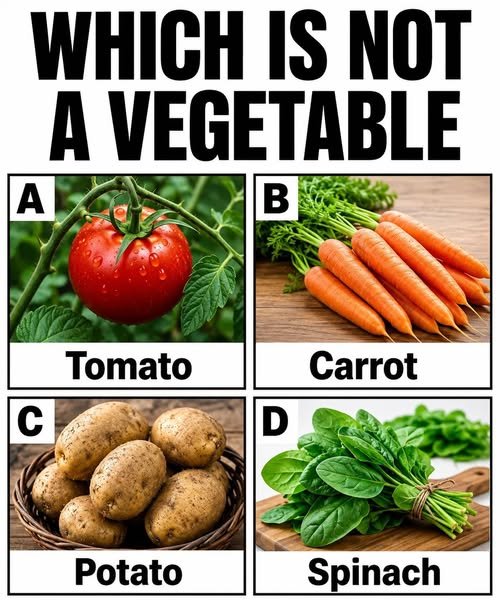
We often group certain foods together in the kitchen without thinking about their scientific classifications. The image above presents a simple question: which of these four items is not a vegetable? The options are a tomato, a carrot, a potato, and spinach. Many people would quickly point to the tomato. But why? The answer lies in the difference between how we use foods in cooking and how they are classified in botany.
The Common Answer: Tomato
For most people, the immediate answer is the tomato. In everyday cooking, tomatoes are treated like vegetables. They are used in salads, sauces, soups, and stews. They are not typically found in fruit salads or dessert recipes. This culinary tradition is why the tomato is often grouped with vegetables at the grocery store and in everyday conversation.
The Scientific Truth
However, from a botanical perspective, a tomato is actually a fruit. Botanists define a fruit as the mature ovary of a flower that contains seeds. Tomatoes develop from the flower of the tomato plant and contain seeds inside their fleshy interior. This makes them a true fruit, just like apples, oranges, and berries.
What About the Others?
Let us look at the other options. A carrot is a root vegetable. It is the taproot of the carrot plant. A potato is a tuber, which is a swollen underground stem that stores energy for the plant. Spinach is a leafy green vegetable, consisting of the leaves and stems of the plant. None of these are fruits. They are all classified as vegetables in both culinary and botanical terms.
Why the Confusion?
The confusion between fruits and vegetables comes from the different ways we use these terms. In botany, the classification is based on the structure and function of the plant part. In cooking and everyday life, the classification is based on taste, texture, and how the food is used. Because tomatoes are savory and used in main dishes, they are treated as vegetables.
The Legal Ruling
Interestingly, this debate even reached the United States Supreme Court in the late 19th century. The court ruled that the tomato should be classified as a vegetable for the purpose of tariffs, based on its culinary use rather than its botanical definition. This decision highlights how cultural and practical considerations often override scientific classification.
The Verdict
So, which is not a vegetable? The answer is the tomato. While it is used as a vegetable in cooking, it is scientifically a fruit. The carrot, potato, and spinach are all vegetables. This question is a great example of how language and science do not always align perfectly.
The next time you slice a tomato for your salad, you can impress your friends by telling them you are actually adding a fruit to your meal.
So, did you guess correctly? The answer might change the way you look at your salad.