The Truth About Natural Remedies for Knee Pain and Joint Health
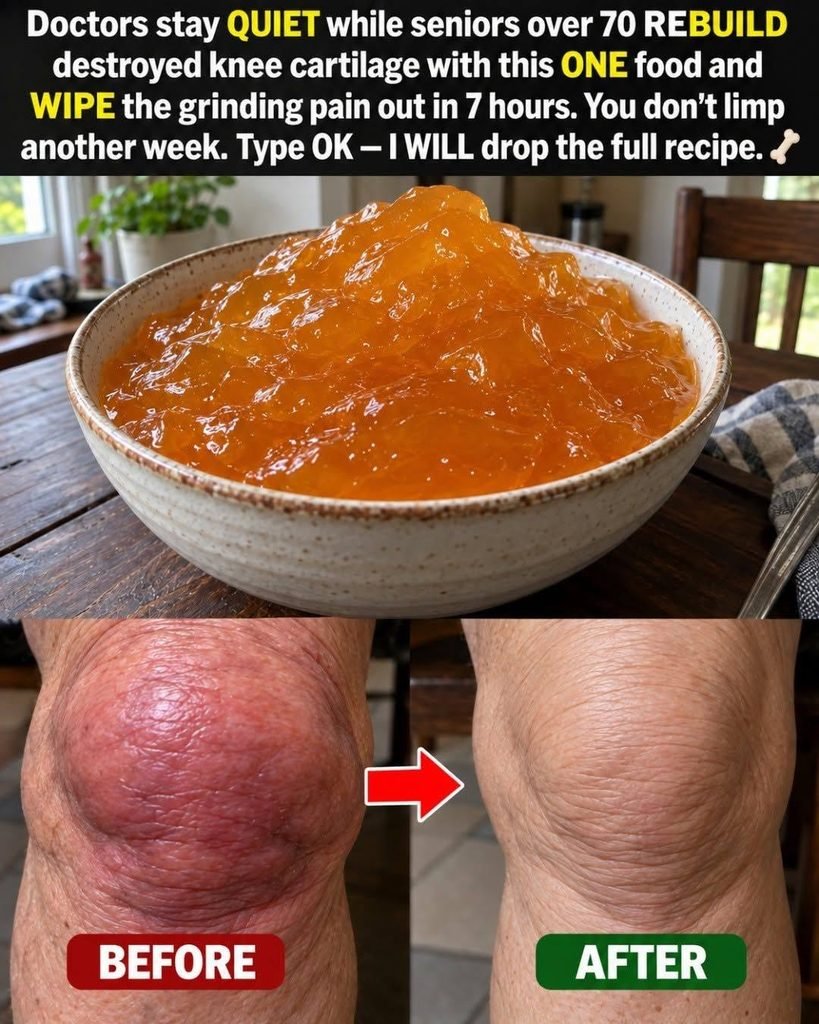
Knee pain is a common complaint, especially among older adults. It can make everyday activities like walking, climbing stairs, or even standing up from a chair feel difficult. The image above shows a bowl of orange-colored food alongside a before-and-after comparison of a swollen knee. It suggests that a simple home remedy can dramatically reduce inflammation and restore joint comfort. While this is an appealing idea, it is important to understand what is actually happening in the body and which remedies have real scientific support.
Understanding Joint Pain and Swelling
Joint pain often comes with swelling and stiffness, which are signs of inflammation. In conditions like osteoarthritis, the cartilage that cushions the bones gradually wears away. This can cause the joint to become painful and swollen. While a warm compress or a gentle topical treatment can help soothe the area temporarily, it is important to manage the underlying cause with proper medical care.
The Truth About the “Miracle” Food
The image claims a specific food can “rebuild” knee cartilage in hours. In reality, no single food or drink can rebuild cartilage overnight. Cartilage is a complex tissue that does not regenerate quickly. However, certain nutrients can support joint health over time. A diet rich in antioxidants, omega-3 fatty acids, and vitamins can help reduce inflammation. Foods like fatty fish, nuts, and colorful vegetables are excellent choices for a joint-friendly diet.
Home Remedies for Sore Knees
While a “miracle cure” does not exist, there are several simple, safe home remedies that can help ease knee pain and swelling. Applying a cold pack wrapped in a cloth to the affected area can help reduce swelling and numb the pain. Elevating the leg above heart level can also help drain excess fluid. Gentle stretching and strengthening exercises, when done correctly, can improve flexibility and support the joint. It is always best to consult a doctor before starting any new exercise routine.
When to Seek Medical Help
If you experience persistent knee pain, severe swelling, or difficulty bearing weight, it is essential to see a healthcare professional. They can diagnose the cause of your pain and recommend appropriate treatments. These may include physical therapy, medications, or in some cases, surgery. Delaying proper care can make the condition worse over time.
The Bottom Line
There are no shortcuts to joint health. While a bowl of warm, comforting food can be part of a healthy lifestyle, it is not a substitute for medical treatment. The best approach is to combine a balanced diet, gentle exercise, and professional medical advice to keep your knees as healthy as possible.