White Mulberry: What You Need to Know About This Unique Fruit
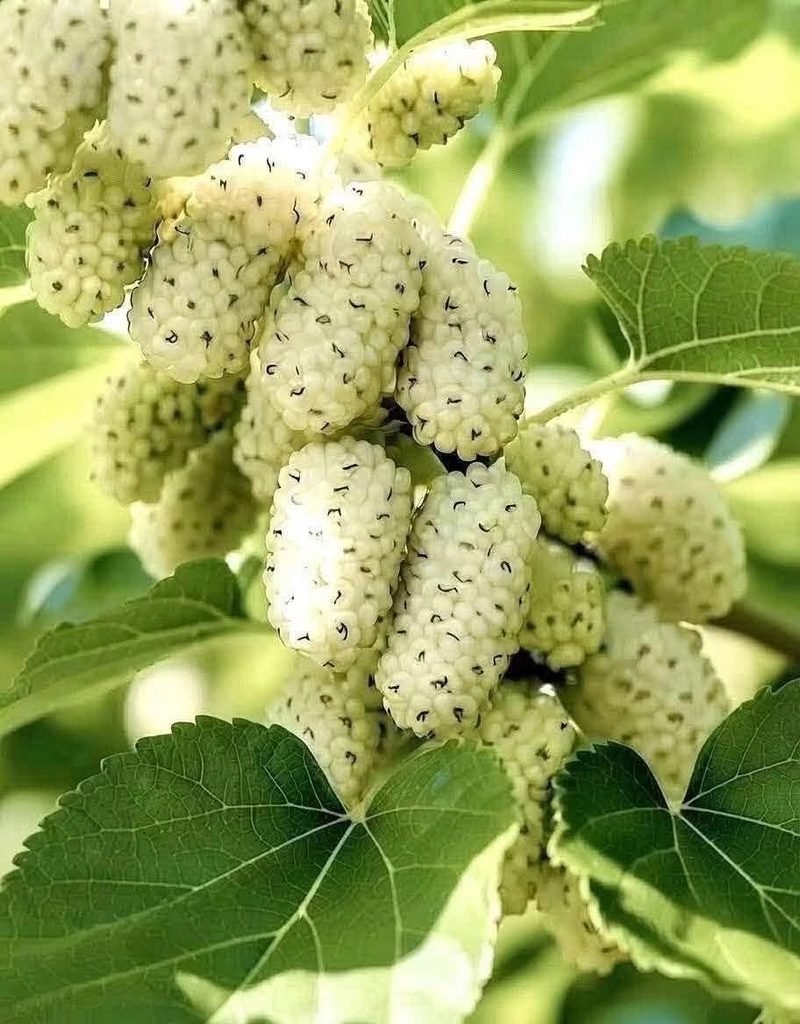
Have you ever come across a fruit that looks like a cluster of tiny white beads? That is exactly what you are seeing in the image. This is a white mulberry, a fruit that surprises many people because it looks quite different from the common dark purple mulberries found in stores or growing wild. The fruit has a distinctive appearance, with small white or pale pink segments that look almost like a miniature bunch of grapes.
What Exactly Is a White Mulberry?
The white mulberry, known scientifically as Morus alba, is a fruit native to China. It was brought to other parts of the world for silk production because its leaves are the preferred food source for silkworms . The tree eventually spread widely, and today it can be found growing in many regions with temperate climates.
Why Does It Look Like That?
The fruit’s unusual appearance is due to the fact that it is a multiple fruit, formed from a cluster of many tiny flowers that fuse together as they ripen . When it is young and unripe, it is green and hard. As it matures, it turns a pale, creamy white, and the tiny seeds inside become visible as black dots. Even though the name says “white,” some varieties can turn a light pink or even a dark purple when fully ripe, depending on the specific cultivar .
How Does It Taste?
If you are lucky enough to try one, white mulberries are known for being very sweet and mild. They are often described as having a flavor similar to honey or a very sweet melon. They are soft and juicy when ripe, and they are often eaten fresh, but they can also be used in jams, pies, and desserts.
How to Enjoy Them Safely
If you find white mulberries growing on a tree, you can usually eat them fresh, but it is always best to wash them thoroughly first. The ripe berries are the ones that are soft and easily come off the stem. If you have any doubts about identifying a plant, it is always safer to check with a local expert before eating it.
A Final Thought
Finding a white mulberry is a delightful surprise. It is a fruit that is both beautiful and delicious, and it opens the door to learning about the rich variety of nature. If you see one again, you will know exactly what it is.