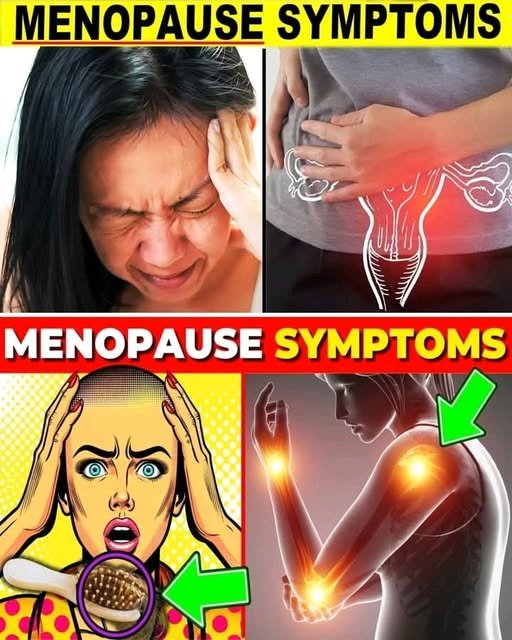
Menopause is a natural biological process that marks the end of a woman’s reproductive years. It is diagnosed after 12 consecutive months without a menstrual period. However, the transition to menopause, known as perimenopause, can begin years earlier and bring a wide range of symptoms. The image above highlights some of the common experiences, such as headaches, abdominal pain, hair loss, and joint pain. Here are nine signs that you may be going through menopause.
Irregular Periods
One of the first signs of perimenopause is a change in your menstrual cycle. Periods may become shorter, longer, heavier, or lighter. You may also skip months entirely. This happens because hormone levels, particularly estrogen and progesterone, begin to fluctuate.
Hot Flashes and Night Sweats
Hot flashes are a sudden feeling of heat that spreads over the body. They can cause flushing and sweating. Night sweats are hot flashes that happen during sleep and can disrupt your rest. These are among the most common symptoms of menopause.
Mood Changes
Fluctuating hormones can affect your mood. You may feel irritable, anxious, or depressed. Some women experience mood swings that are similar to premenstrual syndrome but more intense. It is important to seek support if these feelings become overwhelming.
Sleep Problems
Many women going through menopause have trouble sleeping. This can be due to night sweats, anxiety, or hormonal changes. Lack of sleep can worsen other symptoms, so it is important to practice good sleep hygiene.
Vaginal Dryness
Lower estrogen levels can cause the tissues of the vagina to become drier and thinner. This can lead to discomfort, especially during intercourse. It can also increase the risk of urinary tract infections.
Weight Gain and Metabolic Changes
Menopause can lead to weight gain, particularly around the abdomen. Hormonal changes can also affect how your body processes sugar and fat. A balanced diet and regular exercise can help manage these changes.
Joint and Muscle Pain
Many women experience joint and muscle pain during menopause. This can be due to hormonal changes and inflammation. Staying active and maintaining a healthy weight can help reduce discomfort.
Hair Thinning and Skin Changes
Hormonal shifts can affect your hair and skin. You may notice thinning hair or dry, itchy skin. Using gentle hair and skin care products can help.
Memory and Concentration Issues
Some women report difficulty with memory and concentration during menopause. This is often referred to as “brain fog.” It is usually temporary but can be frustrating.
When to Seek Help
If you are experiencing these symptoms and they are affecting your daily life, it is important to talk to a doctor. They can help confirm whether you are in menopause and discuss treatment options. There are many ways to manage symptoms, including lifestyle changes, hormone therapy, and other medications.
The Bottom Line
Menopause is a natural phase of life, but it can come with challenging symptoms. Recognizing the signs can help you prepare and seek the support you need. Every woman’s experience is different. Listen to your body and take care of yourself.