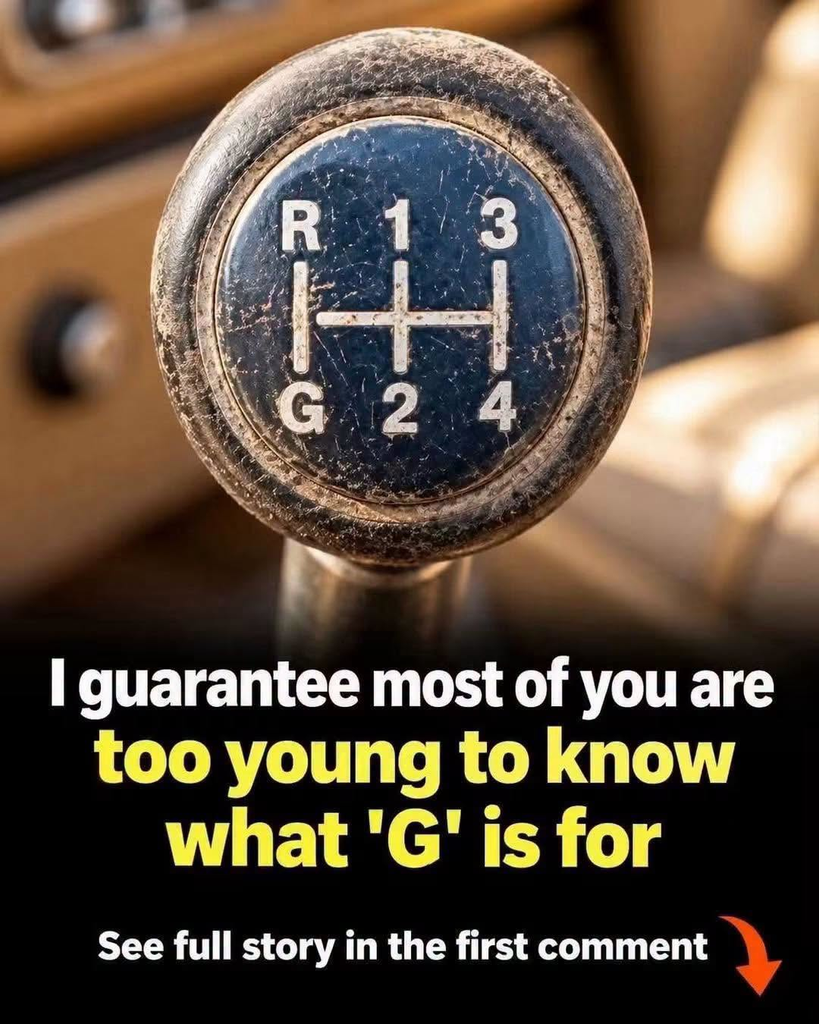
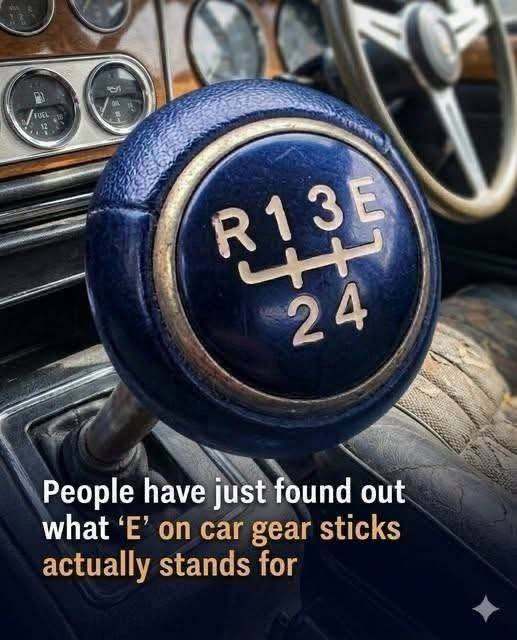
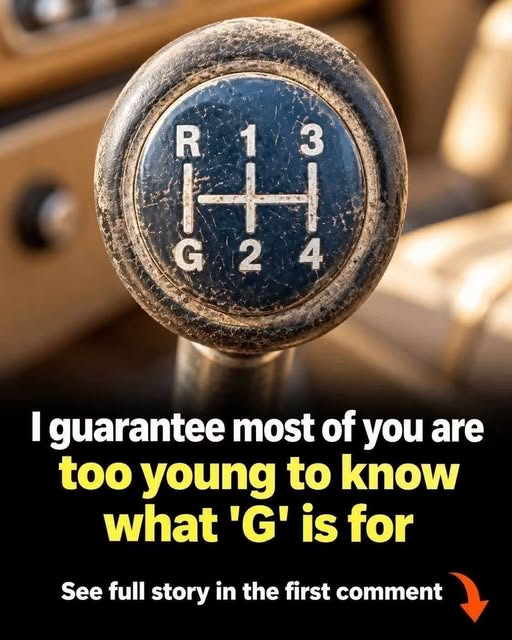
The image above shows a close-up of a worn, vintage gear shift knob. The letters R, 1, 3, G, 2, and 4 are printed on the face. The text below suggests that many people are too young to know what the “G” stands for. For modern drivers accustomed to five or six-speed transmissions, this layout can look unusual. The “G” is not a typo or a mystery code; it represents a specific, practical feature found in older vehicles.
The Meaning of the “G”
In this gear shift pattern, the “G” stands for Granny Gear or Compound Low. It is an extra-low first gear designed to provide maximum torque at very low speeds. Unlike a standard first gear, which is meant for normal acceleration, a granny gear is used when a vehicle needs to move slowly while applying significant power. It is a feature that was once common in heavy-duty trucks, off-road vehicles, and some older passenger cars.
Why Is It Called a Granny Gear?
The term “granny gear” is an informal nickname that has been used for decades. It likely comes from the idea that the gear is so low and slow that even a grandmother could drive the vehicle safely in difficult conditions. The name stuck because it perfectly describes the gear’s function: it is a slow, cautious gear that prioritizes power over speed.
When Would You Use a Granny Gear?
A granny gear is useful in several specific situations. If you are driving on steep, rough terrain, a granny gear allows you to climb slowly without stalling the engine. If you are pulling a heavy trailer or a boat out of the water, it provides the extra torque needed to get the load moving. It is also helpful for maneuvering in tight spaces at very low speeds, such as when parking a large truck. In some cases, it can be used to start a vehicle on a slippery surface, like ice or mud, where a normal first gear might cause the wheels to spin.
The History of the Granny Gear
Granny gears were most common in the mid-20th century. During that era, engines were often less powerful, and transmissions had fewer gears. A granny gear was a practical solution for drivers who needed to handle heavy loads or difficult terrain. As engines became more powerful and transmissions became more advanced, the need for a dedicated granny gear diminished. Modern vehicles often use a low-range transfer case to achieve a similar effect, especially in four-wheel-drive systems.
The Layout of the Gear Shift
The gear shift pattern in the image shows the “G” in the bottom-left position, where a fifth gear might normally be. The “R” is at the top left, followed by 1 and 3 on the top row. The bottom row has “G”, 2, and 4. This layout is typical of some older European and American vehicles. The placement of the “G” reflects its role as an alternative to first gear for specific situations. The wear on the knob suggests that the vehicle has seen many years of use.
Why It Is Less Common Today
Today, most cars have five or six-speed transmissions, and some have even more. These transmissions provide a wide range of gear ratios, making a dedicated granny gear unnecessary for everyday driving. However, the concept of a very low gear is still used in heavy-duty trucks, tractors, and off-road vehicles. These vehicles often have a separate low-range gearbox that serves the same purpose as the old granny gear.
Frequently Asked Questions
Is a granny gear the same as a low gear? Yes, in most contexts, a granny gear is a type of low gear. It is the lowest gear in the transmission, designed for maximum torque and minimum speed.
Can you drive normally in a granny gear? No, a granny gear is not meant for normal driving. It is too low to reach highway speeds. It is used only for specific situations where slow speed and high power are needed.
Do modern cars have granny gears? Most modern cars do not have a dedicated granny gear. However, some trucks and off-road vehicles have a low-range transfer case that provides a similar function.
The Bottom Line
The “G” on a vintage gear shift stands for Granny Gear. It is a very low gear used for pulling heavy loads or driving in difficult conditions. It is a piece of automotive history that many drivers today have never experienced. If you ever see one, you will know exactly what it is for. It is a reminder of a time when vehicles were built to handle tough jobs with simple, mechanical solutions.
Have you ever driven a vehicle with a granny gear? Share your experience in the comments below.