The Mystery of the ‘G’ Gear: Why Older Manual Transmissions Had a Crawler Gear
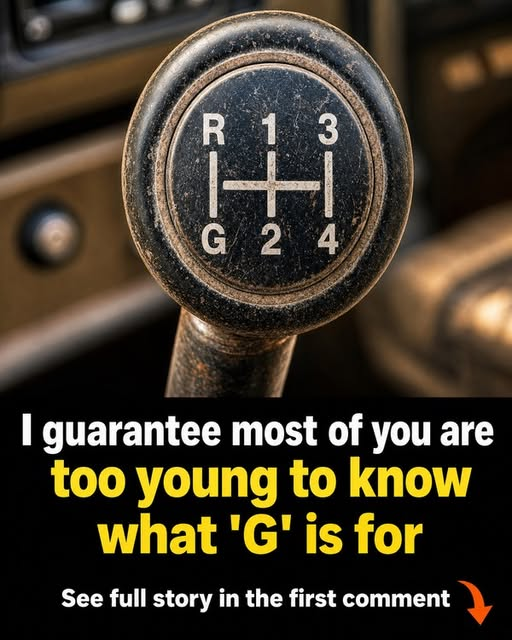
Modern cars have become increasingly automated, and for many drivers today, the manual transmission is a relic of the past. In a world dominated by automatic gearboxes, continuously variable transmissions, and the rise of electric vehicles, seeing a traditional stick shift is becoming a rare occurrence. However, the image of an old, worn gear shifter with a distinct “G” on the shift pattern has sparked curiosity and nostalgia online. The caption suggests that most young people have never seen this before, and it raises a fascinating question: what exactly was the “G” gear used for?
The answer lies in the history of automotive engineering, specifically in the era of heavy-duty trucks, off-road vehicles, and early agricultural machinery. The “G” stands for “Granny gear” or “Crawler gear.” It was a specialized, ultra-low first gear designed for extreme conditions where immense torque and slow, controlled movement were necessary. Understanding this feature requires a look back at how vehicles were built and used before the advent of sophisticated electronic traction control and powerful modern engines. This article explores the origins, function, and eventual decline of the granny gear, explaining why it was an essential feature for a generation of drivers.
What Was the “G” Gear?
The “G” on the shift knob in the image represents a unique gear ratio that was once common in manual transmissions, particularly in trucks and off-road vehicles. While the standard shift pattern usually includes Reverse (R), First (1), Second (2), Third (3), and Fourth (4), the inclusion of a “G” indicates a gear that is even lower than the standard first gear. In automotive terminology, this is known as a “granny low” or “creeper gear.”
Its purpose was simple: to provide maximum torque at the wheels while moving at an incredibly slow speed. In a standard first gear, a vehicle might be able to accelerate to 15 or 20 miles per hour. In a granny gear, the maximum speed was often limited to just a few miles per hour, and the engine would be running at a high RPM. This extreme reduction in speed allowed drivers to navigate challenging terrain or pull heavy loads without stalling the engine.
The Primary Uses of a Granny Gear
The granny gear was not intended for everyday driving. It was a specialized tool for specific situations where control and power were paramount.
Towing and Hauling Heavy Loads
The most common application for a granny gear was in heavy-duty trucks. When a vehicle is loaded to its maximum capacity with cargo, or is towing a heavy trailer, the engine needs a massive amount of torque to get the load moving from a standstill. A standard first gear might not provide enough mechanical advantage, leading to engine stalling or excessive clutch wear. The granny gear provided the necessary leverage to get the vehicle rolling smoothly. Once the load was in motion, the driver would quickly shift up to standard first gear for normal driving.
Off-Roading and Navigating Difficult Terrain
For off-road enthusiasts, the granny gear was invaluable. When driving over rocks, steep inclines, or through deep mud, maintaining precise control is essential. The ultra-low gear ratio allowed drivers to move at a walking pace, or even slower, with full control over the vehicle’s momentum. This prevented the vehicle from lurching forward, which could cause loss of traction or damage to the undercarriage. It also allowed the engine to maintain power without the need to feather the clutch, a technique that is difficult to master on uneven ground.
Agricultural and Industrial Applications
Before modern tractors became highly specialized, vehicles used in agriculture and industry often relied on granny gears. These vehicles needed to move very slowly and steadily while performing tasks like plowing fields, pulling stumps, or operating heavy machinery. The granny gear provided a consistent, slow speed that was essential for these operations, allowing the engine to power both the wheels and auxiliary equipment simultaneously.
The Evolution of Transmission Technology
The prevalence of the granny gear has diminished significantly over the decades, and this decline is due to several factors in automotive technology. As engines became more powerful and efficient, the need for an extreme low gear decreased. Modern trucks and SUVs often have enough torque at low RPMs to handle heavy loads without the need for a specialized granny gear.
The rise of automatic transmissions has also played a major role. Modern automatic transmissions, especially those with eight, nine, or ten speeds, are incredibly versatile. They can electronically select the optimal gear ratio for any situation, effectively providing the benefits of a granny gear without the driver needing to manually shift. Additionally, the development of advanced four-wheel-drive systems, electronic locking differentials, and traction control has made navigating difficult terrain much easier. These electronic aids can distribute power to the wheels with traction, reducing the need for extreme gear reduction.
The Nostalgia and Cultural Impact
For many older drivers, seeing a “G” on a shift knob brings back a sense of nostalgia. It represents a time when driving was more of a physical skill, requiring the driver to understand the mechanics of the vehicle and the physics of motion. Driving a vehicle with a granny gear was a distinct experience. It required a different style of driving, particularly when downshifting into the granny gear, which often required double-clutching or rev-matching to avoid grinding the gears.
The “G” gear has also become a symbol of ruggedness and capability. In the world of classic trucks and off-road vehicles, a transmission with a granny gear is often highly sought after by collectors and enthusiasts. It is a badge of honor, indicating that the vehicle was built for serious work and can handle extreme conditions.
Modern Alternatives to the Granny Gear
While the traditional manual granny gear is mostly a thing of the past, the concept of low-range gearing remains relevant. Modern off-road vehicles often feature a “low-range transfer case,” which effectively doubles the gear ratios of the transmission. This provides a similar effect to a granny gear, allowing for extremely slow, controlled movement in challenging terrain.
In the world of heavy-duty commercial trucks, the granny gear concept is still alive, though it has evolved. Many large trucks use automated manual transmissions or complex automatic gearboxes that simulate the effect of a granny gear by using planetary gear sets to achieve very low ratios. For the average consumer driving a modern SUV, the granny gear has been replaced by a simple button that engages a low-range mode or hill descent control.
Frequently Asked Questions
What does the “G” stand for on a gear shift? The “G” typically stands for “Granny gear” or “Crawler gear.” It is an ultra-low first gear used in older manual transmissions, particularly in trucks and off-road vehicles, to provide maximum torque at very low speeds.
Can you drive a car in the “G” gear on the highway? No. Driving a vehicle in a granny gear at high speeds is dangerous and will likely cause severe damage to the engine. This gear is designed for very slow movement only, typically under five miles per hour.
Why did manufacturers stop making cars with a “G” gear? Manufacturers stopped including a dedicated granny gear primarily because modern engines and multi-speed automatic transmissions can provide sufficient torque and control without the need for an extra-low gear. Electronic traction control and low-range transfer cases also replaced its function.
Was the “G” gear only found in trucks? While most commonly found in heavy-duty trucks and off-road vehicles, some early cars and agricultural vehicles also featured a granny gear. It was less common in standard passenger cars.
How do you shift into the “G” gear? Shifting into a granny gear usually required coming to a complete stop. In many older transmissions, the gear was unsynchronized, meaning the driver had to double-clutch or rev-match the engine to engage it without grinding the gears.
Conclusion
The “G” on the gear shift is a fascinating artifact of automotive history. It represents an era when mechanical simplicity and raw torque were prioritized over electronic convenience. The granny gear was a practical solution to the challenges of moving heavy loads and navigating difficult terrain, and it required a level of skill and understanding from the driver that is less common today. While modern technology has largely rendered the granny gear obsolete, its legacy lives on in the design of modern off-road vehicles and the nostalgia of classic car enthusiasts. For those who remember driving a vehicle with a granny gear, the “G” is a symbol of a time when driving was a more hands-on, mechanical experience.
SEO Information
1. SEO Title: The Mystery of the ‘G’ Gear: Why Older Manual Transmissions Had a Crawler Gear
3. Meta Description: Wondering what the ‘G’ on an old gear shift means? Discover the history and purpose of the “granny gear,” an ultra-low crawler gear used in vintage trucks and off-roaders.
4. Primary Keyword: what is a granny gear
5. Secondary Keywords:
G gear on manual transmission
crawler gear
low gear truck
vintage manual transmission
granny low gear
6. Suggested Image Alt Text: A close-up of a worn, vintage manual transmission gear shift knob displaying a “G” for granny gear alongside standard gears R, 1, 2, 3, and 4.