The Mystery of the “G” on the Gear Shift: What It Really Stands For
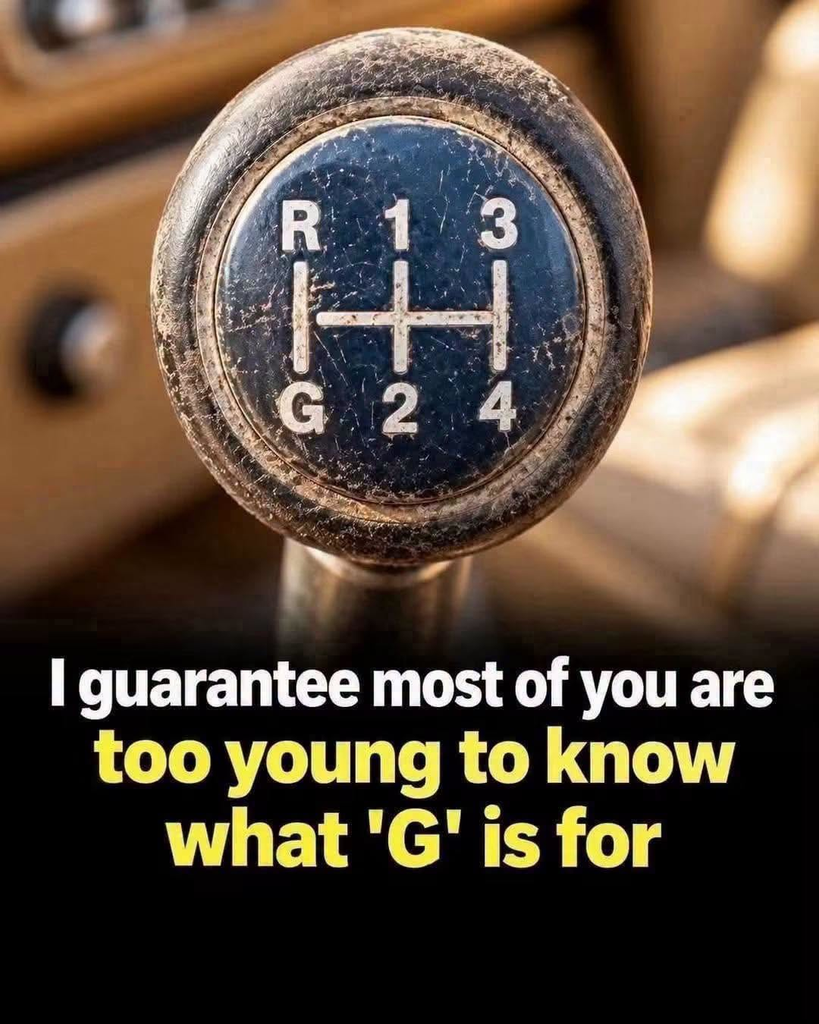
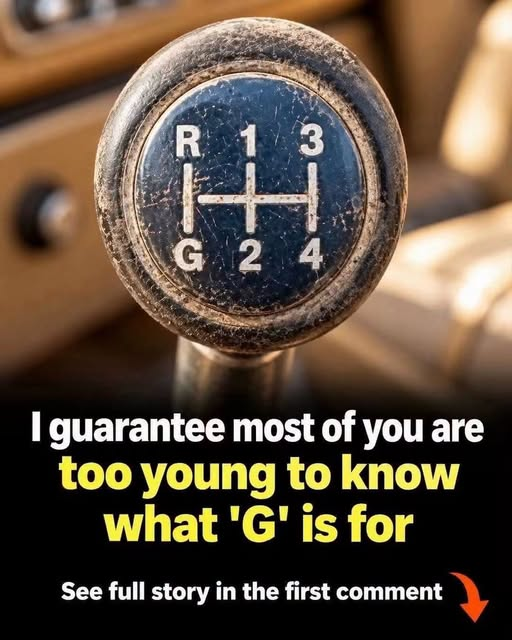
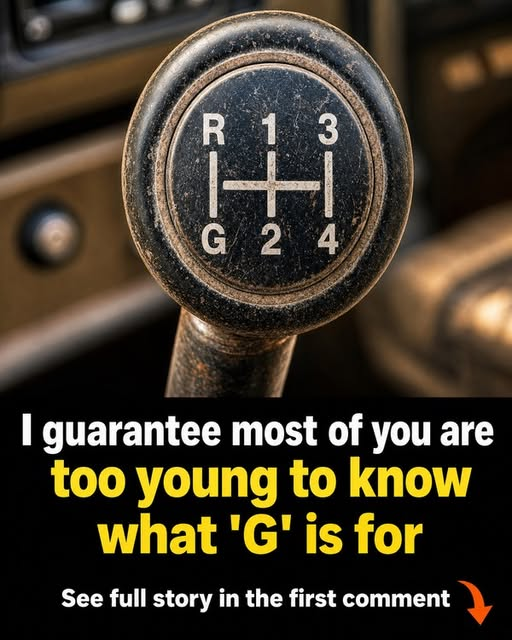
For anyone who has ever driven a vintage car, the image of a worn, leather-bound gear shift knob with an unusual pattern is a familiar sight. But for a younger generation accustomed to automatic transmissions, the layout—with “R” at the top left, “1, 2, 3, 4” in a standard H-pattern, and a mysterious “G” at the bottom left—can look like a puzzle. The viral caption claims that most people are “too young to know what ‘G’ is for,” sparking curiosity and a bit of nostalgia.
The answer is surprisingly practical and speaks to the engineering of a bygone era. The “G” stands for “Granny Gear” or “Gelände” (the German word for “terrain” or “off-road”). This specific gear was a hallmark of many classic off-road vehicles, most notably the legendary Volkswagen Beetle and the early VW Bus (Transporter). It was a special, ultra-low first gear designed for extreme conditions, and its presence on the shifter is a clue to the vehicle’s capabilities and its era.
What Is a “Granny Gear”?
A “Granny Gear” is an extremely low gear ratio designed to provide maximum torque at very low speeds. In the context of the VW Beetle and Bus, the “G” gear was not intended for normal driving. Instead, it was a specialized tool for situations where the vehicle needed to crawl slowly and powerfully.
The Purpose of the “G” Gear
The primary function of the “G” gear was to help the vehicle climb steep inclines, navigate rough terrain, or start from a standstill on a steep hill without stalling. Because the gear ratio was so low, the engine could deliver immense pulling power to the wheels at a very slow pace. This was particularly useful for the air-cooled, rear-engine VW Beetle, which was designed to be a rugged, go-anywhere vehicle for the masses.
In the early VW Bus, the “G” gear was often referred to as “Gelände,” reflecting its intended use in off-road or difficult conditions. It allowed the driver to maintain control and momentum on unpaved roads, muddy tracks, or snowy paths where a normal first gear might not provide enough traction or power.
The Driving Experience
Driving with a “Granny Gear” was a unique experience. The top speed in this gear was very low—often around 10 to 15 miles per hour. The engine would rev loudly, and the vehicle would move at a crawl. For everyday driving, the driver would typically start in second gear, using the “G” gear only when the situation demanded it. This is why many owners of vintage VWs rarely used the “G” gear, but they knew it was there as a reliable backup for tough conditions.
The Cultural and Historical Context
The presence of the “G” gear on these vintage shifters is a fascinating piece of automotive history. It reflects a time when vehicles were designed to be versatile and capable in a wide range of environments, long before the advent of modern, electronically controlled all-wheel-drive systems.
The VW Beetle and the “G” Gear
The VW Beetle is one of the most iconic cars in history, and the “G” gear was a standard feature on many of its early models. The car was designed to be simple, reliable, and capable of handling the rough roads of post-war Europe. The “G” gear was a practical solution to the challenges of driving in mountainous regions or on unpaved roads. It was a testament to the engineering philosophy of the time: build a car that can go anywhere and do anything.
The Shift Pattern and the “G” Gear
The shift pattern in the image—with “G” at the bottom left—is a classic layout for a four-speed manual transmission with a “Granny Gear.” The pattern is often described as an “H” pattern, with the gears arranged in two columns. The “G” gear is separate from the main 1-2-3-4 sequence, highlighting its special purpose. This layout is a visual reminder of the era when manual transmissions were the norm and drivers had to understand the mechanics of their vehicles to get the most out of them.
Why the “G” Gear Disappeared
The “G” gear eventually fell out of favor as automotive technology advanced. Modern cars have more powerful engines, better transmissions, and sophisticated electronic systems that can handle tough conditions without the need for an ultra-low gear. The rise of automatic transmissions and the increasing popularity of SUVs with advanced all-wheel-drive systems made the “Granny Gear” obsolete in most passenger vehicles.
However, the “G” gear is not entirely extinct. It can still be found in some heavy-duty trucks, off-road vehicles, and agricultural machinery, where its ability to provide immense torque at low speeds remains valuable. But for the average driver, the “G” gear is a relic of the past, a piece of automotive history that is remembered fondly by those who grew up driving vintage VWs.
Conclusion: A Piece of Automotive Nostalgia
The “G” on the gear shift knob is more than just a letter; it is a window into a different era of driving. It stands for “Granny Gear” or “Gelände,” a special ultra-low gear that allowed vintage vehicles like the VW Beetle and Bus to conquer steep hills and rough terrain. For those who remember it, the “G” gear is a symbol of a time when cars were simpler, more mechanical, and built to be truly versatile. For those who are too young to know, it is a fascinating piece of automotive trivia that connects us to the past.
Frequently Asked Questions
What does the “G” on a gear shift stand for?
The “G” typically stands for “Granny Gear” or the German word “Gelände,” meaning terrain. It is an ultra-low gear used for off-road driving, climbing steep inclines, or starting on steep hills.
Which cars had a “G” gear?
The “G” gear was a common feature in vintage Volkswagen Beetles and early VW Buses (Transporters), particularly in the 1950s and 1960s.
When would you use the “G” gear?
You would use the “G” gear when you needed maximum torque at very low speeds, such as driving up a steep hill, navigating rough terrain, or starting from a standstill on a steep incline.
Why is it called a “Granny Gear”?
The term “Granny Gear” is a colloquialism that refers to the very low, slow nature of the gear—like the pace of a grandmother. It is also sometimes called a “creeper gear.”
Is the “G” gear still used today?
In modern passenger cars, the “G” gear is largely obsolete. However, it can still be found in some heavy-duty trucks, off-road vehicles, and agricultural machinery where low-end torque is essential.