Which Bottle Is Filled Correctly? A Guide to Baby Bottle Safety
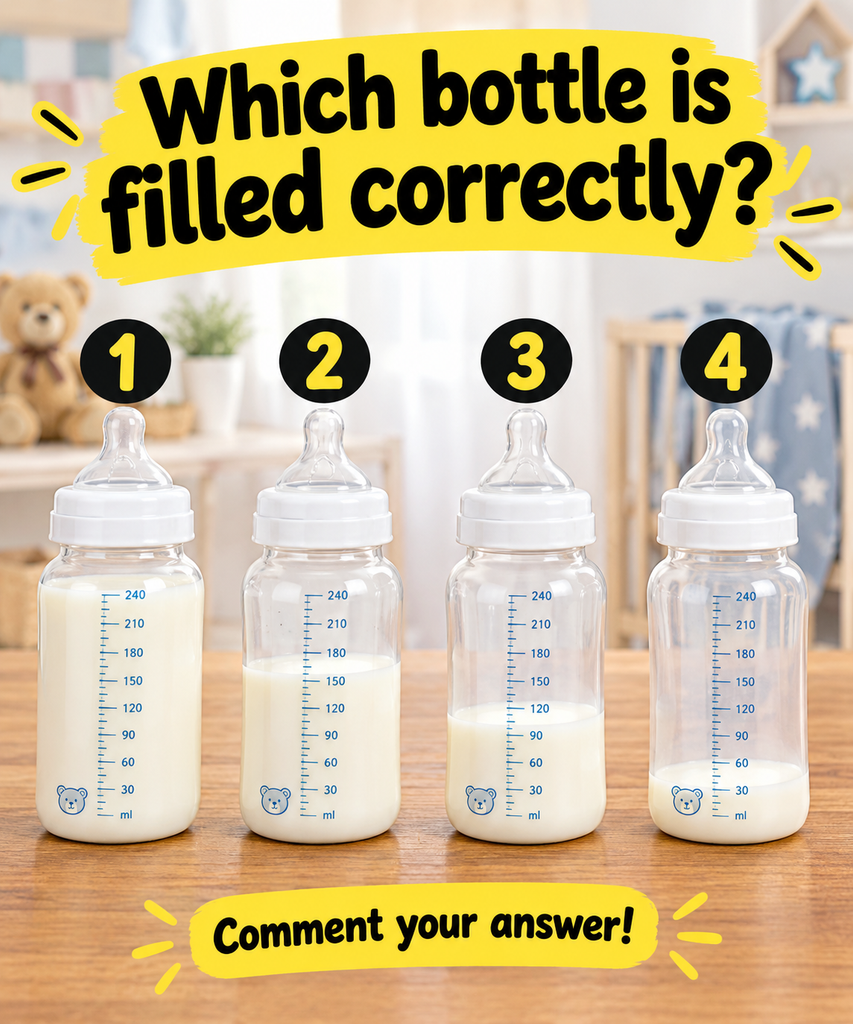
Feeding a baby is one of the most important tasks for any parent or caregiver. The image above presents a simple question: which bottle is filled correctly? It shows four baby bottles, each containing a different amount of milk. While it may seem like a matter of preference, there are actually important safety guidelines for preparing and filling baby bottles.
Understanding the Measurements
The bottles in the image have clear measurement markings on the side, ranging from 30 ml to 240 ml. Bottle number one is filled nearly to the top. Bottle number two is filled to about the 150 ml mark. Bottle number three is filled to around the 90 ml mark. Bottle number four has only a small amount at the bottom.
Why Overfilling Is a Problem
Bottle number one is filled too high. Overfilling a baby bottle can lead to several issues. It can cause the nipple to become clogged, making it difficult for the baby to feed. It can also lead to excessive air intake, which can cause gas and discomfort. Additionally, a bottle that is too full may leak when the nipple is attached.
Why Underfilling Can Be an Issue
Bottle number four has very little milk. While this is not dangerous, it may not provide enough for a full feeding. It can also be frustrating for a hungry baby who has to stop frequently for refills. However, a small amount can be useful for a quick snack or for mixing formula.
The Ideal Fill Level
Bottle number two appears to be filled to a reasonable level, around 150 ml. This is a common amount for a single feeding, depending on the baby’s age and appetite. However, the “correct” amount ultimately depends on the baby’s individual needs. Some babies may drink more, and some may drink less.
The Importance of Following Instructions
When preparing formula, it is crucial to follow the instructions on the packaging. Using the correct amount of water and formula powder ensures that the baby gets the right balance of nutrients. Always use the measurement markings on the bottle to ensure accuracy. Do not guess or estimate.
Safety Tips for Bottle Feeding
Always wash your hands before preparing a bottle. Use clean, sterilized bottles and nipples. Mix the formula according to the instructions. Test the temperature of the milk on your wrist before feeding. Discard any leftover milk after a feeding, as bacteria can grow quickly. Never prop a bottle up for a baby to feed alone, as this can pose a choking hazard.
The Verdict
Based on general safety and practicality, bottle number two is filled correctly. It provides a suitable amount of milk without being too full or too empty. However, the most important thing is to feed your baby according to their hunger cues and to follow safe preparation guidelines.