Which Glass Is Filled Correctly? The Art of Pouring Wine
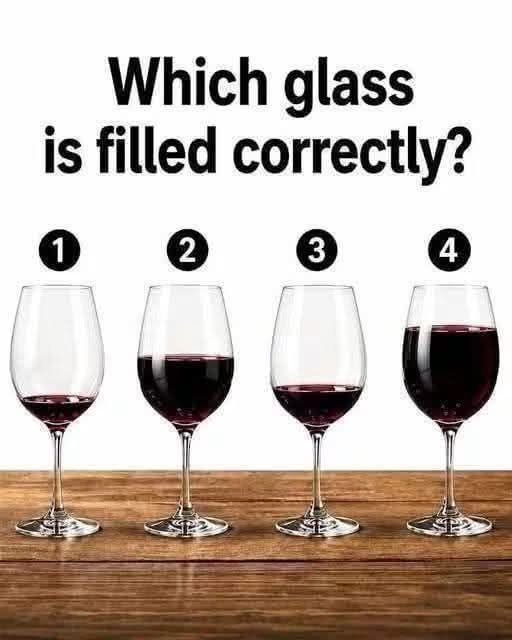
The image above presents a simple but often debated question: which glass is filled correctly? It shows four wine glasses, each with a different amount of red wine. The options range from a small splash to a nearly full glass. While it may seem like a matter of personal preference, there are actually traditional guidelines for how much wine should be poured into a glass.
The Standard Pour
In most restaurants and wine tastings, the standard pour for a glass of wine is about five ounces. This amount allows the wine to breathe and releases its aromas. It also leaves enough space in the glass for swirling, which helps oxygen mix with the wine and enhances its flavor. Looking at the image, glass number three appears to have the closest amount to a standard pour.
Why Not Fill It to the Top?
Filling a wine glass to the brim, like glass number four, is generally not recommended. Wine needs room to breathe. The empty space at the top of the glass, known as the “headspace,” allows the aromas to collect. When you bring the glass to your nose, you can better appreciate the complex scents of the wine. A full glass also makes it difficult to swirl without spilling.
The Importance of Swirling
Swirling is an important part of wine tasting. It introduces oxygen into the wine, which softens the tannins and releases the aromas. If the glass is too full, you cannot swirl properly. This is why wine glasses are designed with a wide bowl and a narrow rim. The shape helps direct the aromas toward your nose while keeping the wine contained.
The Role of Glass Shape
Different wines are served in different types of glasses. Red wines are typically served in larger glasses with wider bowls to allow for more oxygen exposure. White wines are served in smaller glasses to help preserve their cool temperature. Sparkling wines are served in tall, narrow flutes to preserve their bubbles. The glass in the image is a standard red wine glass, which is designed to enhance the drinking experience.
Personal Preference vs. Tradition
While there are traditional guidelines, how much wine you pour is ultimately a personal choice. Some people prefer a smaller pour to savor the flavor slowly. Others may prefer a larger pour for a more generous serving. However, if you are hosting a dinner party or serving wine to guests, following the standard pour is a safe and elegant choice.
The Verdict
Based on traditional wine service standards, glass number three is filled correctly. It provides enough wine to enjoy without overwhelming the glass. It allows for proper swirling and aroma appreciation. Glass number one is too empty, glass number two is a bit low, and glass number four is too full.
The next time you pour a glass of wine, remember that a little space goes a long way. It is not just about the amount; it is about the experience.