Spiky Neck Growth on a Teenager: What Parents Should Know Before a Recital
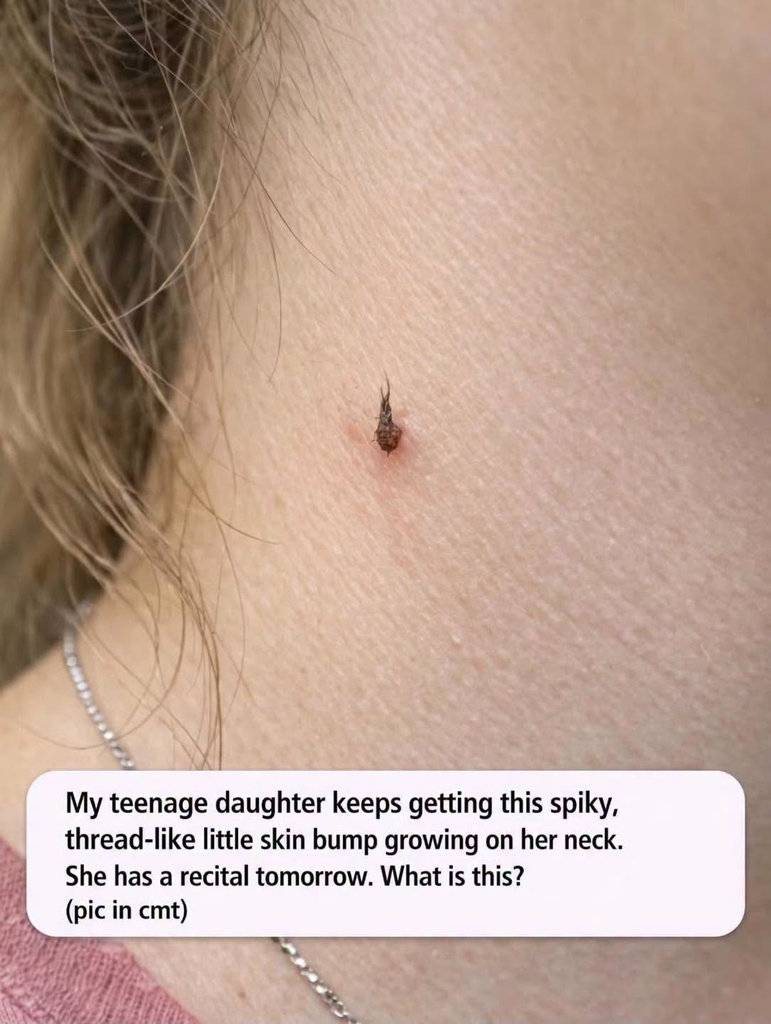
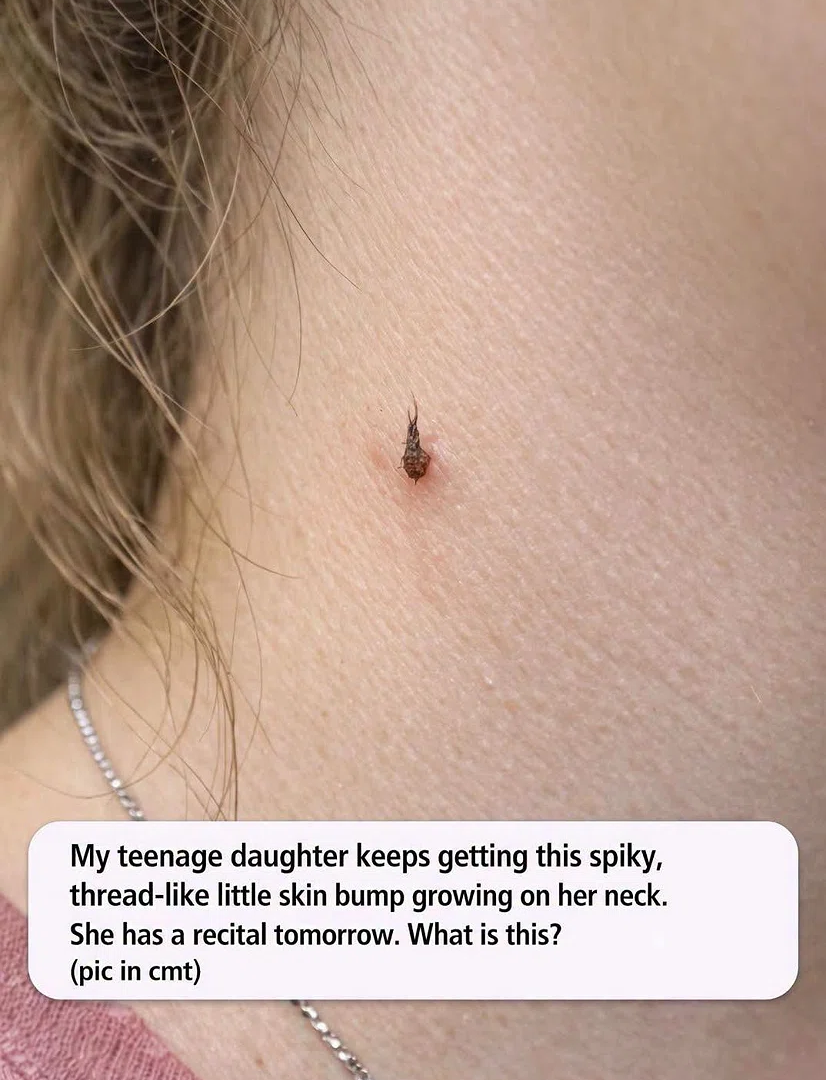
It is always worrying when a teenager develops an unexpected skin growth, especially when a major event is just around the corner. The appearance of a small, thread-like or spiky bump on the neck—as seen in the image—can be alarming for both the parent and the child. The immediate concern is often cosmetic, particularly with a recital looming and stage lights ready to illuminate every detail. However, the priority should always be safety and proper identification.
The visual characteristics described—spiky, thread-like, and growing on the neck—are classic signs of a filiform wart. While this is a common and generally harmless condition, it is essential to understand that several other skin conditions can mimic this appearance . This article provides a detailed exploration of what this bump likely is, how to manage it safely before a performance, and the appropriate medical steps to take afterward.
Identifying the Spiky Bump: The Most Likely Culprit
When a parent describes a “spiky” or “thread-like” growth, the most probable medical diagnosis is a filiform wart. These are a distinct type of verruca caused by specific strains of the human papillomavirus (HPV) .
Characteristics of Filiform Warts
Unlike the rough, dome-shaped warts commonly found on hands or feet, filiform warts have a unique morphology. They are characterized by narrow, elongated projections that extend outward from the skin surface, often resembling tiny threads, fingers, or a miniature brush . They are frequently found on the face, eyelids, lips, and neck—areas where the skin is delicate. Because they grow outward rather than inward, they can be quite noticeable, especially under bright lighting or when the hair is pulled back.
Why They Appear
The HPV strains responsible for filiform warts thrive in warm, moist environments and are highly contagious. They can be spread through direct skin-to-skin contact or by touching contaminated surfaces. For a teenager, this could mean sharing makeup, towels, or sporting equipment. The virus can enter the skin through tiny micro-abrasions, which are often invisible to the naked eye.
Alternative Possibilities: What Else Could It Be?
While a filiform wart is the leading candidate, it is medically irresponsible