Spiky, Thread-Like Bump on a Teen’s Neck: What It Likely Is and What to Do Before a Recital
Finding a new, unusual growth on a teenager’s skin can be alarming, especially when a major event like a recital is just around the corner. The description of a “spiky, thread-like little skin bump” on the neck points to a few common dermatological possibilities, most of which are benign. The timing, however, matters: a recital tomorrow means the priority is to avoid irritation, bleeding, or a visible red mark, rather than attempting a quick removal at home. Understanding what the lesion most likely is, how it differs from similar growths, and what safe steps can be taken immediately will help a parent make a calm, informed decision.
The Most Likely Candidates
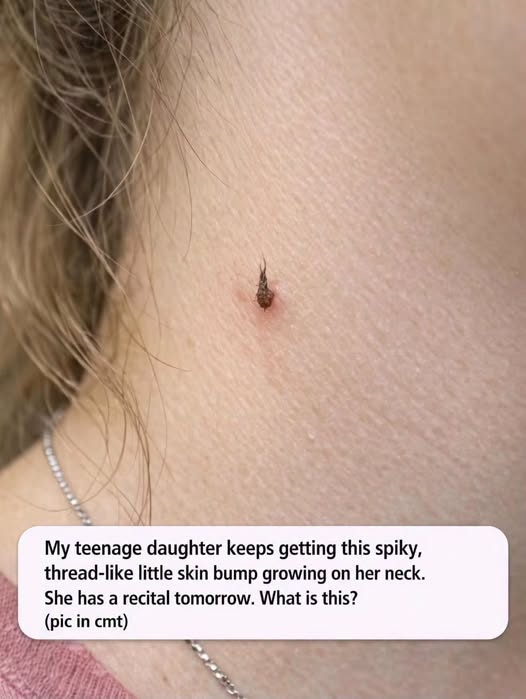
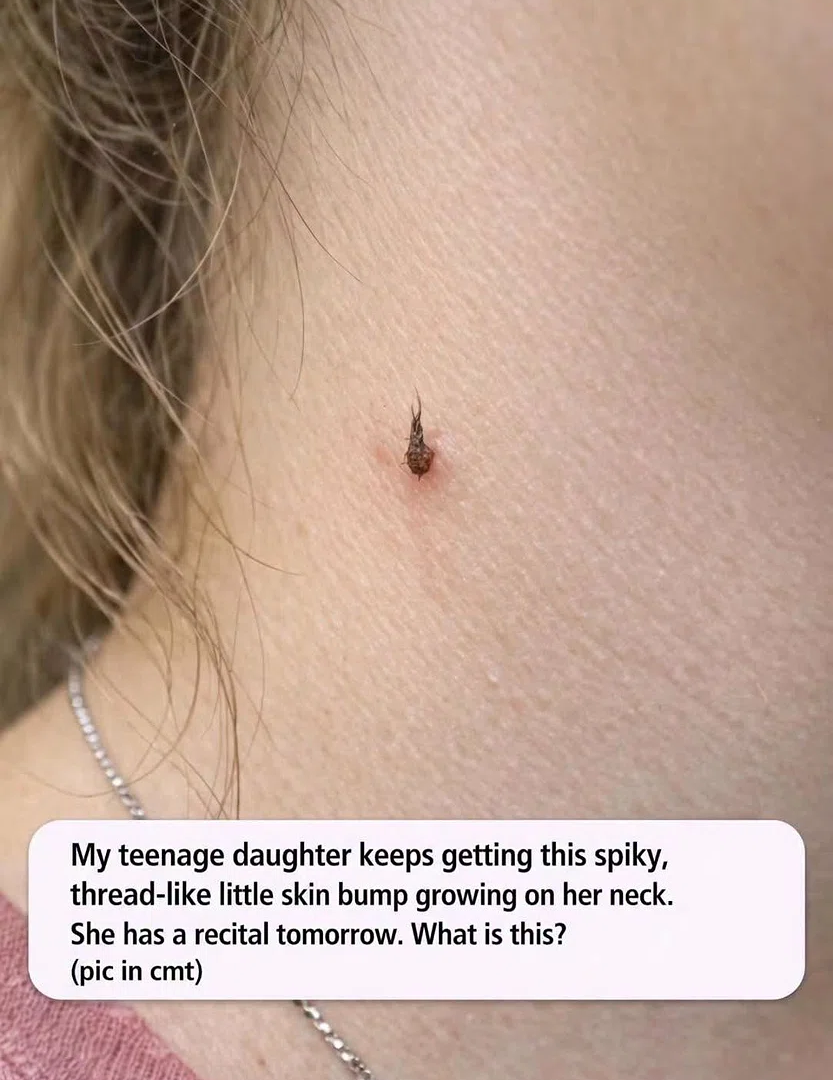
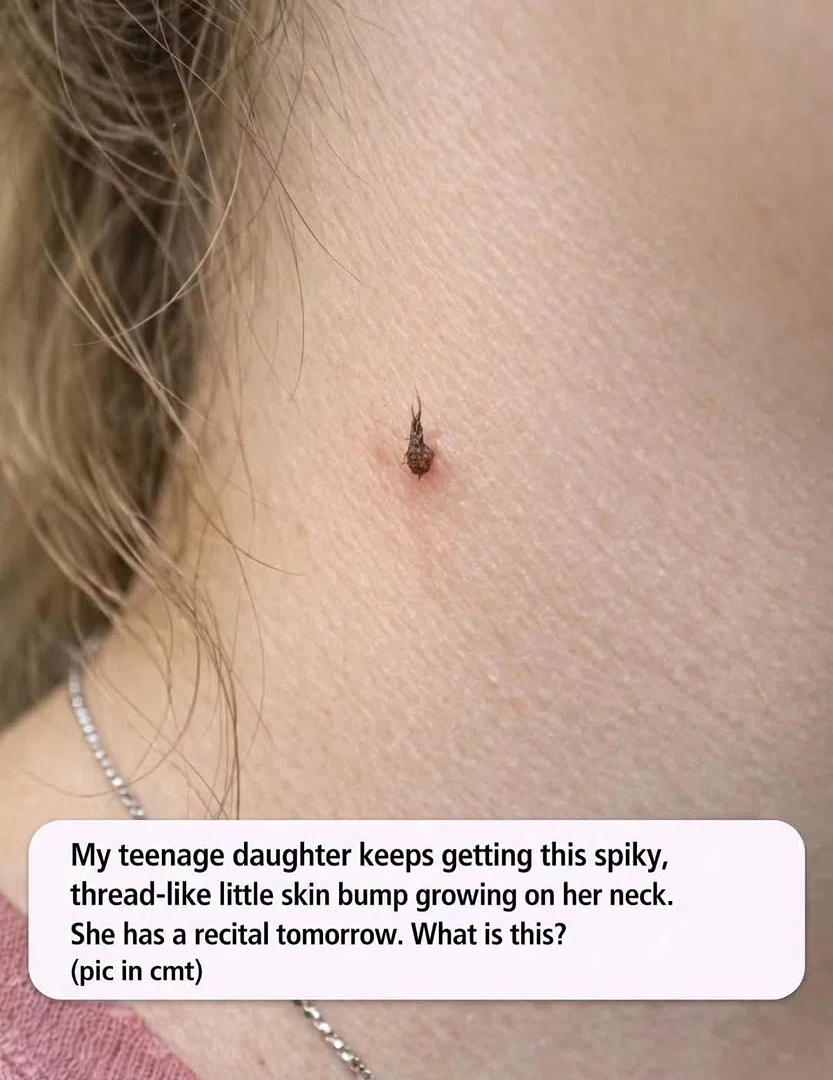
Based on the visual description and location, two benign skin growths are the leading possibilities: a skin tag (also called an acrochordon or soft fibroma) and a filiform wart (a type of wart caused by human papillomavirus, or HPV). Both can appear on the neck, both can have a thread-like or stalk-like shape, and both are generally harmless. However, they have different causes and different implications for contagion and treatment.
Skin Tags: Harmless Folds of Skin
Skin tags are extremely common, soft, skin-colored growths that often hang from a narrow stalk. They are most frequently found on the neck, underarms, eyelids, and other areas where skin rubs against skin or clothing. The Mayo Clinic notes that they are not cancerous and do not pose other health concerns. The cause is not fully understood, but friction, obesity, and genetic factors are thought to contribute. Importantly, skin tags are not contagious and are not caused by an infection. In rare cases, the development of multiple skin tags may be a sign of an underlying hormonal or endocrine syndrome, such as polycystic ovary syndrome.
Filiform Warts: Caused by HPV
Filiform warts are a subtype of common warts caused by HPV. They present as thin, elongated, thread-like projections, often on the face, neck, or eyelids. Unlike skin tags, filiform warts are caused by a viral infection and can spread through direct contact or by touching the wart and then touching another part of the body—a process called autoinoculation. This means a filiform wart may multiply if it is picked or scratched. The surface of a filiform wart is often rougher or more spiky than a skin tag, which tends to be smoother and softer.
A Third Possibility: Lichen Spinulosus
A less common but relevant possibility is lichen spinulosus, a benign skin condition that causes small, spiny bumps to form in hair follicles. These bumps have tiny, scaly spines and can form rough patches that feel like sandpaper. This condition mostly occurs in children and adolescents, and it usually resolves on its own within months to a year or two. While the bumps in lichen spinulosus are typically smaller and clustered rather than a single thread-like growth, the description of a “spiky” texture makes it worth mentioning as a possibility.
Why the Two Are Hard to Tell Apart
Even dermatologists acknowledge that distinguishing between a small skin tag and a filiform wart can be difficult without close examination. Both can be flesh-colored, both can have a narrow base, and both can appear on the neck. The key differences are subtle: skin tags are typically softer and smoother, while filiform warts may feel firmer and have a rougher, more keratinized surface. Because the two require different approaches—warts may need treatment to prevent spread, while skin tags are purely cosmetic unless irritated—a proper diagnosis matters.
What to Do the Day Before a Recital
With a recital scheduled for tomorrow, the most important advice is simple: do not try to remove or cut the growth at home. Self-removal carries risks of bleeding, infection, and scarring. A teenager’s neck is a visible area, and an attempted removal could leave a red, irritated, or bleeding spot that is far more noticeable than the original bump.
Immediate Steps for Comfort and Appearance
If the bump is not bleeding or painful, the safest approach is to leave it alone. The teenager can wear clothing with a collar that does not rub against the area, and avoid necklaces or tight scarves that could catch on the growth. If the bump is catching on hair or clothing, a small, breathable adhesive bandage can be applied temporarily to protect it, but it should be removed gently afterward to avoid pulling. For the recital itself, hair can be styled to fall away from the neck if the teenager is self-conscious, or a small amount of concealer can be used if the skin is not irritated—though makeup should not be applied to broken skin.
What Not to Do
Do not tie string or dental floss around the base, do not use fingernail clippers, and do not apply harsh chemical treatments. If the growth is a wart, picking at it can also spread the virus to nearby skin. Over-the-counter wart removers are not appropriate for use on the neck without medical guidance, and they are not designed for use on skin tags in this context.
When to See a Doctor
After the recital, scheduling a routine appointment with a primary care doctor or dermatologist is the appropriate next step. A clinician can confirm the diagnosis, rule out less common possibilities, and recommend removal if desired. In-office removal methods for skin tags include snipping, freezing (cryotherapy), burning (cauterization), or laser treatment. For filiform warts, similar physical treatments such as cryotherapy or laser are commonly used.
Signs That Warrant Prompt Attention
While most neck bumps are benign, certain changes should prompt a call to a doctor sooner rather than later. These include rapid growth, bleeding without trauma, persistent pain, a change in color, or the appearance of many new similar growths in a short period. If the teenager has a personal or family history of skin cancer, or if the bump has a firm, fixed base rather than a narrow stalk, a professional evaluation is especially important.
Understanding the Broader Picture
For parents, a new skin growth on a teenager can also raise questions about overall health. Skin tags are more common in people with obesity or insulin resistance, and they can run in families. The presence of multiple skin tags, especially in a younger person, is sometimes considered a reason to check for underlying metabolic or hormonal issues. This does not mean the bump is dangerous, but it can be a useful prompt for a broader conversation with a pediatrician. Filiform warts, by contrast, are simply a common viral infection and are not linked to metabolic health. Lichen spinulosus is also benign and often resolves without treatment.
Conclusion: Calm, Protect, and Follow Up
The appearance of a spiky, thread-like bump on a teenager’s neck is most likely a benign skin tag or filiform wart. Neither is an emergency, and neither needs to be addressed the night before a recital. The best course of action is to protect the area from friction and trauma, avoid any home removal attempts, and allow the teenager to participate in the recital without added stress. Afterward, a routine medical visit can provide a definitive diagnosis and discuss removal options if the bump is bothersome. For now, reassurance and a gentle approach are the most helpful responses.
Frequently Asked Questions
Is a spiky neck bump on a teenager dangerous?
In the vast majority of cases, no. Skin tags and filiform warts are benign. However, any new growth that changes rapidly, bleeds, or is painful should be evaluated by a doctor.
Can I remove it at home before the recital?
No. Home removal attempts can cause bleeding, infection, or scarring, and may spread a wart virus. Leave it alone and protect it from friction if needed.
Is it contagious?
Skin tags are not contagious. Filiform warts are caused by HPV and can spread through skin-to-skin contact or by touching the wart and then another part of the body.
What should I do if it starts bleeding?
Apply gentle pressure with a clean cloth. If bleeding does not stop or the area looks infected, seek medical attention.
Will it go away on its own?
Skin tags typically do not go away without removal. Filiform warts may resolve on their own over time, but they can also spread. A doctor can advise on the best approach.