Silverfish: If This Animal Comes to Your Home, Here Is What It Really Means
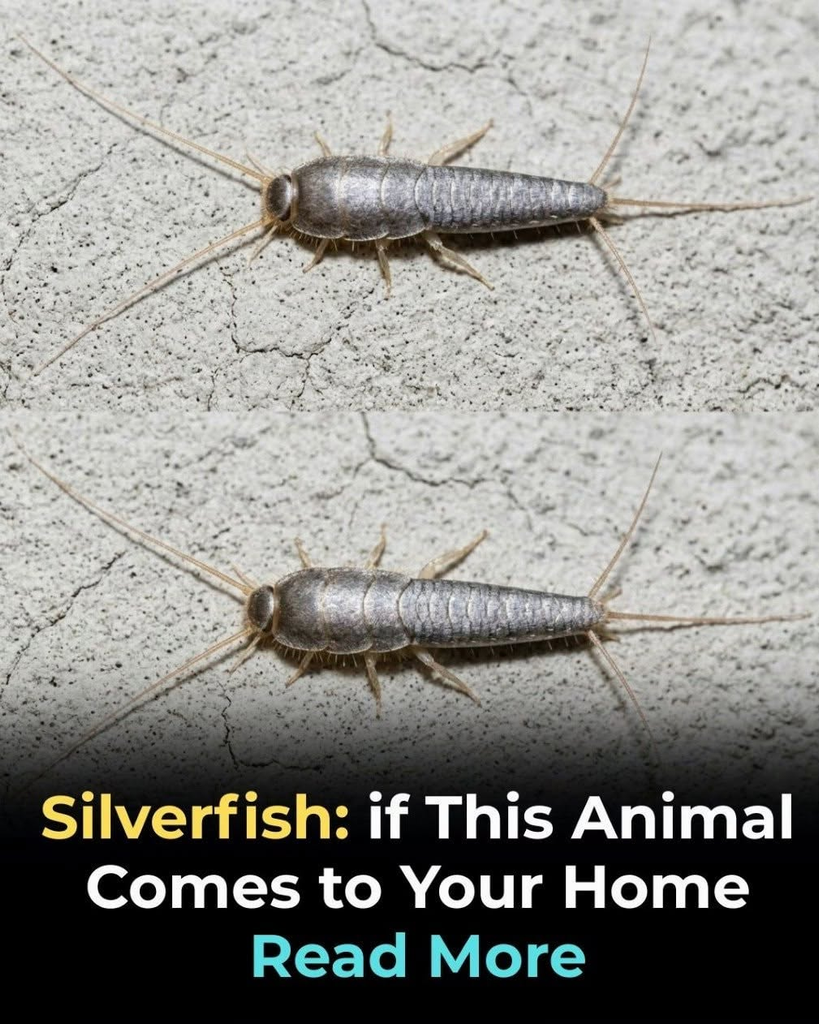
The image shows a small, silvery, carrot-shaped insect with long antennae and three tail-like appendages. The caption asks what it means when this creature comes into your home, and it is a question that has sparked both genuine curiosity and a fair amount of anxiety. The insect is a silverfish, and the good news is that it is completely harmless to humans and pets. It does not bite, it does not sting, and it does not spread disease . However, its presence is not entirely meaningless. While it is not a mystical omen or a sign of bad luck, a silverfish in your home is often a biological signal that something in your environment needs attention—most commonly, excess moisture.
What Is a Silverfish?
Silverfish are primitive, wingless insects that have been around for hundreds of millions of years. They get their name from their silvery, metallic scales and their fish-like shape and wiggling movements . They are nocturnal, meaning they are most active at night, and they move very quickly when exposed to light . Their flat bodies allow them to squeeze into incredibly narrow cracks and crevices, which is why they are often found in wall voids, behind baseboards, and in the dark corners of basements and bathrooms.
What They Eat
Silverfish are scavengers with a particular taste for starch and carbohydrates. In a home, this means they will feed on paper, glue, book bindings, wallpaper paste, and starchy fabrics like linen and cotton . They can also survive for long periods without food—sometimes up to a year—which makes them hardy and difficult to eliminate once they have settled in .
What Its Presence Really Means
When a silverfish appears in your home, it is not a sign of a haunting or a curse. It is a sign of a specific set of environmental conditions.
A Sign of Moisture and Dampness
This is the most important and practical meaning behind a silverfish sighting. Silverfish thrive in high-humidity environments, typically preferring relative humidity levels between 75% and 95% . They are drawn to damp, cool places like basements, bathrooms, kitchens, and laundry rooms . The British Pest Control Association explicitly states that an infestation of silverfish can be an indicator of persistent damp conditions in a property that may need attention . If you are seeing silverfish regularly, it is worth checking for leaks, condensation, or poor ventilation in the areas where you find them.
A Sign of Accessible Food Sources
Silverfish are not picky eaters. If they have found their way into your home, it is often because there is a food source available. This could be a stack of old newspapers, cardboard boxes, books, or even a pantry with starchy foods like flour or cereal that are not stored in airtight containers . Their presence can be a gentle nudge to declutter and properly store items that attract them.
A Sign of a Slow-Building Population
Silverfish populations grow slowly. A large, visible infestation usually means they have been present for a long time, quietly multiplying in hidden spaces . Seeing one silverfish does not necessarily mean you have a massive problem, but it does mean you should keep an eye out for more.
What It Does Not Mean
It is important to separate biological reality from superstition. Silverfish are not a spiritual sign, a symbol of impending wealth, or a message from the universe. While some cultural traditions or spiritual websites may assign symbolic meanings like “renewal” or “adaptability” to silverfish , these are not based on scientific evidence. The silverfish in your home is not there to teach you a lesson; it is there because your home offers the moisture and food it needs to survive.
What You Should Do
Since silverfish are harmless, there is no need to panic. The goal is simply to make your home less attractive to them.
Reduce Moisture
This is the single most effective step. Fix any leaky pipes, ensure bathrooms and kitchens are well-ventilated, and consider using a dehumidifier in damp basements or crawl spaces . Keeping humidity levels down will discourage silverfish from settling in.
Remove Food Sources
Declutter storage areas. Discard old cardboard boxes, newspapers, and magazines that provide both food and shelter. Store pantry items like flour, cereal, and oats in sealed, airtight containers . Keep books and important papers in dry, protected locations.
Seal Entry Points
Silverfish can slip through very narrow cracks. Check for gaps around baseboards, window frames, and pipes, and seal them with caulk or weather stripping .
Use Traps or Treatments if Needed
For a small problem, sticky traps placed in corners can help monitor and reduce their numbers. If you suspect a larger infestation, insecticidal dusts like diatomaceous earth or boric acid can be applied in cracks and crevices, but these should be used carefully and according to the label instructions . For a severe infestation, a professional pest control service is the safest and most effective option .
Conclusion
A silverfish in your home is not a bad omen, a danger to your health, or a sign of something sinister. It is a small, ancient insect that has simply found a comfortable environment with moisture and food. Its presence is a practical signal: check for dampness, reduce clutter, and seal up the cracks. By addressing these conditions, you can resolve the issue and keep your home dry and less inviting to these silvery little scavengers. There is no need for fear, only a little bit of housekeeping.
Frequently Asked Questions
Are silverfish dangerous to humans?
No. Silverfish do not bite, sting, or carry diseases that affect humans or pets. They are considered a nuisance pest, not a health threat .
Why are silverfish in my house?
Silverfish are attracted to damp, humid environments and starchy food sources. They often enter homes seeking moisture in bathrooms, basements, and kitchens, and they feed on paper, glue, and starchy fabrics .
Do silverfish mean bad luck?
No. There is no scientific or credible evidence that silverfish are a sign of bad luck, a curse, or a supernatural omen. Their presence is driven entirely by environmental factors like moisture and food availability.
How do I get rid of silverfish?
The most effective approach is to reduce moisture in your home, remove food sources like old papers and unsealed starchy foods, and seal cracks and crevices. For larger infestations, you can use sticky traps or insecticidal dusts, or consult a pest control professional .
What do silverfish eat?
Silverfish are scavengers that feed primarily on starch and carbohydrates. In homes, they eat paper, book bindings, glue, wallpaper paste, and starchy fabrics like linen and cotton .