10 Early Signs of Dementia You Should NEVER Ignore!
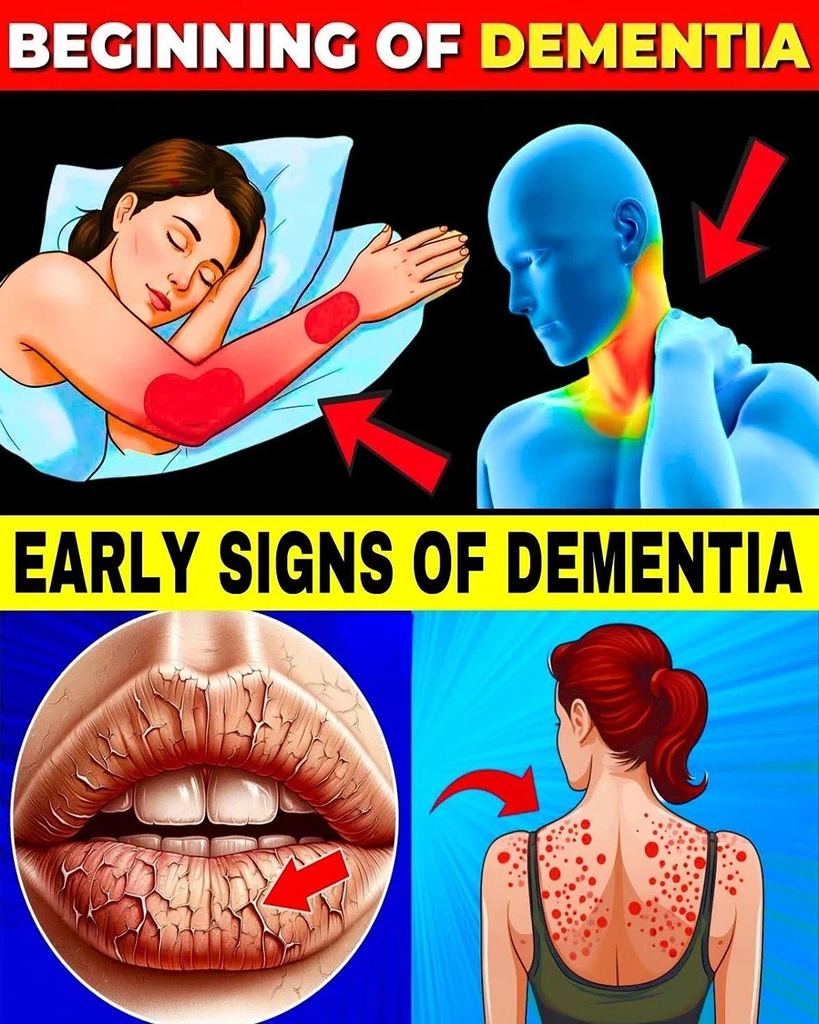
Dementia is a broad term for a group of symptoms caused by brain damage, and it is not a normal part of aging . While occasional forgetfulness happens to everyone, the early signs of dementia are persistent, progressive, and severe enough to interfere with daily life. The images in the graphic—showing arm pain, neck discomfort, cracked lips, and a rash—highlight how easy it is to misattribute symptoms to other causes or dismiss them as minor annoyances. Recognizing the genuine warning signs is critical because an early diagnosis allows for treatment, support, and planning for the future.
Why Early Recognition Matters
The symptoms of dementia usually begin gradually and worsen over time, affecting work, social interactions, and relationships . In the early stages, a person may still function independently, which is why subtle changes are often overlooked or attributed to stress, depression, or normal aging . However, ignoring these signs delays the possibility of an accurate diagnosis, which is essential for ruling out reversible causes (such as vitamin deficiencies or medication side effects) and accessing appropriate care .
The 10 Warning Signs
1. Memory Loss That Disrupts Daily Life
Occasionally forgetting a name or an appointment and remembering it later is normal. A more concerning pattern involves forgetting recently learned information, asking the same questions repeatedly, or relying heavily on memory aids and family members for things that were previously handled independently . Forgetting important dates or events and being unable to recall them later is a hallmark early sign .
2. Challenges in Planning or Solving Problems
Some people may experience changes in their ability to develop and follow a plan or work with numbers. Balancing a checkbook, following a familiar recipe, or keeping track of monthly bills may become difficult. They may have trouble concentrating and take much longer to complete tasks that were once routine .
3. Difficulty Completing Familiar Tasks
People with dementia often find it hard to complete daily tasks they have done many times before. They may have trouble driving to a familiar location, managing a budget at work, or remembering the rules of a favorite game . Preparing a meal or following a simple set of steps may suddenly feel overwhelming.
4. Confusion with Time or Place
Losing track of dates, seasons, and the passage of time is a common sign. A person may forget where they are or how they got there. In familiar surroundings, they might become disoriented about the day of the week or their purpose for being in a particular location .
5. Trouble Understanding Visual Images and Spatial Relationships
Vision problems can be more than just a sign of eye disease. For some people, dementia causes difficulty reading, judging distance, and determining color or contrast. This can create problems with driving and navigating familiar environments . A person may also have trouble recognizing that an object is a pen or a fork when it is placed in front of them.
6. New Problems with Words in Speaking or Writing
Everyone occasionally struggles to find the right word, but a person with dementia may have trouble following or joining a conversation. They may stop in the middle of a sentence and have no idea how to continue, or they may repeatedly use the wrong word (such as calling a “watch” a “hand-clock”) . Vocabulary difficulties can make communication increasingly frustrating.
7. Misplacing Things and Losing the Ability to Retrace Steps
A person with dementia may put things in unusual places—a wallet in the kitchen drawer, a remote control in the refrigerator—and then be unable to find them by retracing their steps . As this happens more frequently, they may accuse others of stealing, particularly as the condition progresses.
8. Decreased or Poor Judgment
Judgment and decision-making abilities may decline noticeably. A person might use poor judgment when dealing with money, giving large amounts to telemarketers or falling for scams. They may also pay less attention to grooming and personal cleanliness, wearing inappropriate clothing for the weather or neglecting basic hygiene.
9. Withdrawal from Work or Social Activities
It is common for people with dementia to withdraw from hobbies, social activities, work projects, or sports. They may avoid social situations because they are struggling to keep up with conversations or feel embarrassed about the changes they are experiencing . This withdrawal can lead to isolation and a further decline in overall well-being.
10. Changes in Mood and Personality
The mood and personality of a person with dementia can change significantly. They may become confused, suspicious, depressed, fearful, or anxious. They may become easily upset at home, at work, with friends, or in places where they are outside their comfort zone . Rapid mood swings for no apparent reason can be distressing for both the individual and their loved ones.
What to Do If You Recognize These Signs
If you or someone you care about is experiencing any of these signs, do not ignore them. Schedule an appointment with a healthcare provider. A doctor can assess symptoms, rule out other conditions that may cause similar problems (such as vitamin deficiencies, thyroid issues, or depression), and determine whether further evaluation by a specialist is needed .
It is also helpful to write down the changes you have observed—specific examples, how often they occur, and when they started—to share with the doctor. Being prepared with concrete information can make the diagnostic process more efficient and accurate.
Conclusion
Dementia is a complex and challenging condition, but recognizing its early signs is a powerful step toward getting the help and support that is needed. The ten warning signs—memory loss that disrupts daily life, challenges with planning, difficulty with familiar tasks, confusion with time or place, visual and spatial problems, language difficulties, misplacing items, poor judgment, social withdrawal, and mood or personality changes—serve as a guide for when to seek professional advice . While there is currently no cure for most forms of dementia, early diagnosis allows for better management of symptoms, access to support services, and the chance to make important decisions while the person is still able to do so. Paying attention to these signs is not about fear; it is about taking action that can improve quality of life for everyone involved.
Frequently Asked Questions
What is the difference between normal aging and dementia? Normal aging involves occasionally forgetting a name or an appointment but remembering it later. Dementia involves memory loss and cognitive decline that are severe enough to interfere with daily life and independence. The symptoms are persistent and typically worsen over time .
Can dementia be cured? Most types of dementia, including Alzheimer’s disease, cannot be cured. However, some treatments can temporarily slow the progression of symptoms, and identifying reversible causes (such as certain vitamin deficiencies or medication side effects) is an important part of the diagnostic process .
At what age do the first signs of dementia typically appear? Dementia can affect people of any age, but the risk increases significantly with age. Most cases occur in people over 65, although early-onset forms can appear in a person’s 30s, 40s, or 50s .
Is forgetting words a sign of dementia? Occasionally struggling to find a word is common at any age. A more concerning sign is when a person frequently forgets simple words, substitutes unusual words (like “hand-clock” for “watch”), or cannot follow a conversation, making communication difficult .
What should I bring to a doctor’s appointment about memory concerns? Bring a list of specific symptoms you have noticed, including when they started and how often they occur. It is also helpful to bring a list of all medications and to have a family member or close friend accompany you, as they can provide valuable observations about changes in behavior and function.