Can You Spot the Problem With This Picture? The Anatomy of a Viral AI Illusion
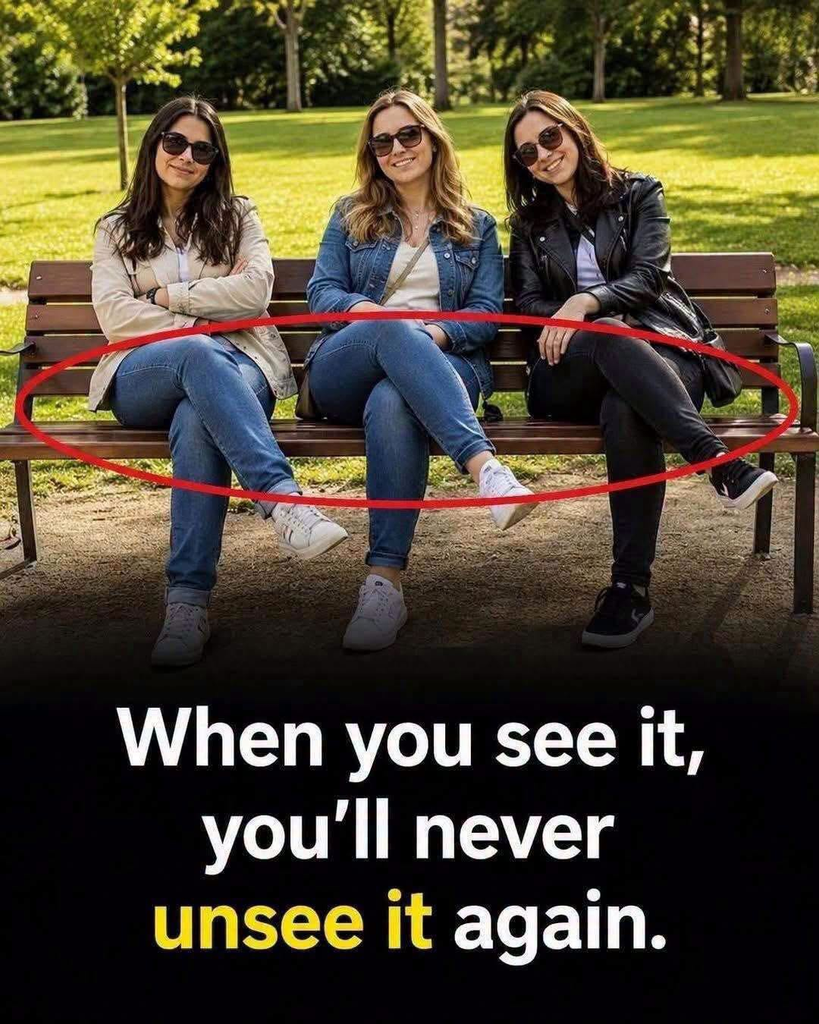
Viral images that challenge viewers to “spot the problem” have become a staple of social media. They are designed to be shared, debated, and scrutinized, often with a caption that promises a hidden flaw or a shocking secret. The image of three women sitting on a park bench, with a red circle highlighting their crossed legs, is a perfect example of this genre. At first glance, it appears to be a normal photograph of friends enjoying a sunny day. But upon closer inspection, the image reveals a series of anatomical impossibilities that betray its true nature: it is not a photograph at all, but an AI-generated image or a heavily manipulated digital creation.
The “problem” with the picture is not a hidden object or a subtle clue. It is the fundamental failure of the image to adhere to the laws of physics and human anatomy. The legs of the three women are tangled in a way that defies logic, creating a visual puzzle that is impossible to solve because the image itself is not real. Understanding why this image looks wrong—and why our brains struggle to make sense of it—offers a fascinating glimpse into the current limitations of artificial intelligence and the way we process visual information.
The Anatomy of the Error: Tracing the Impossible Limbs
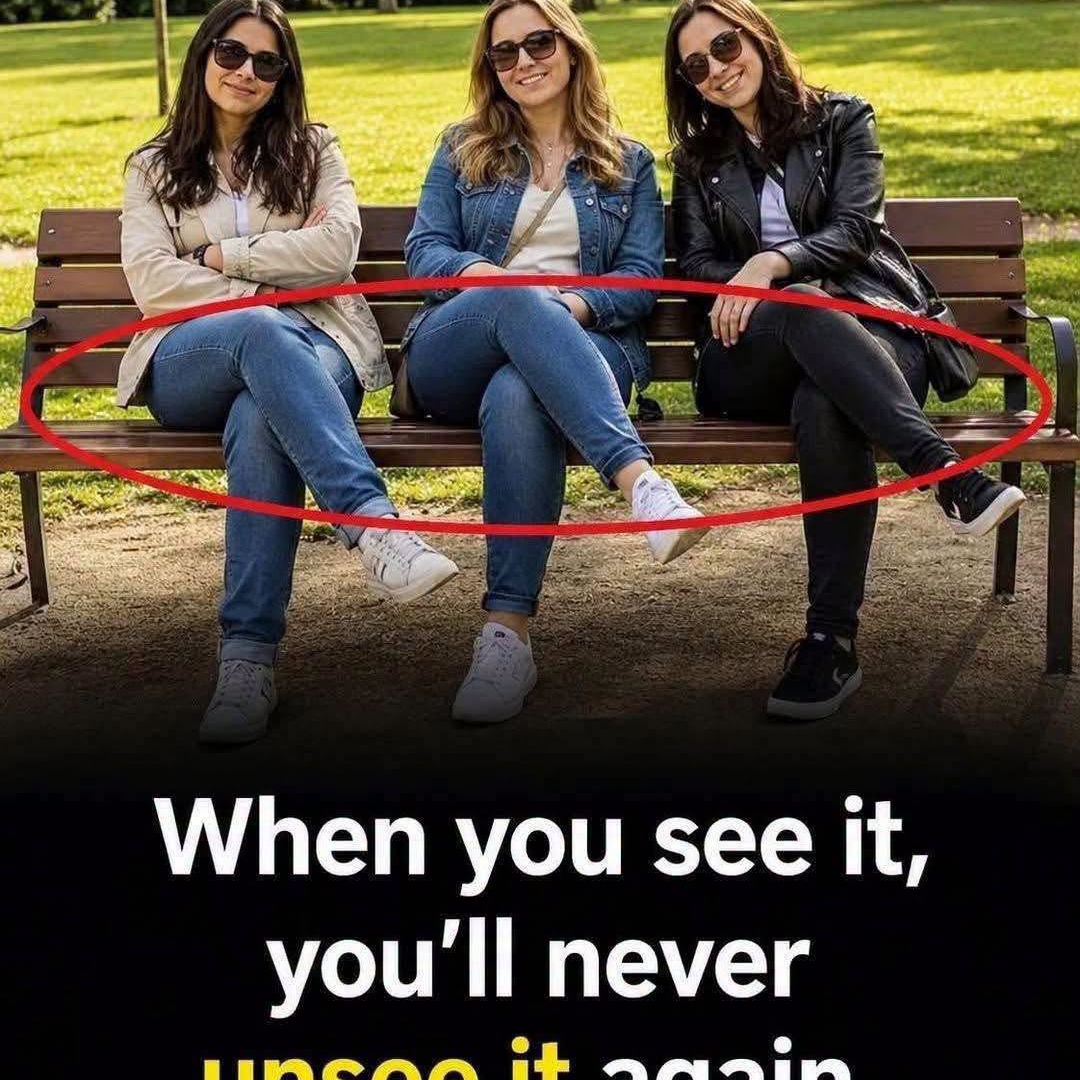
To understand the problem, it is necessary to trace the legs of each woman from left to right. The red circle draws attention to the area where the legs of the leftmost and middle women intersect, but the errors extend beyond that specific zone.
The Leftmost Woman
The woman on the left is sitting with her left leg crossed over her right. Her left foot is visible, resting on the ground, and her right leg is tucked underneath. This part of the image appears relatively normal, but as the eye moves toward the center, the confusion begins.
The Middle Woman
The woman in the middle is also sitting with her legs crossed. However, her left leg appears to merge with the right leg of the woman on the left. The denim fabric of their jeans blends together in a way that makes it impossible to tell where one leg ends and the other begins. The middle woman’s right foot is planted on the ground, but her left foot seems to be tucked behind her right calf, a position that is anatomically awkward but not impossible. The real issue is the lack of clear separation between the two women’s limbs.
The Rightmost Woman
The woman on the right has her legs crossed as well, with her right foot on the ground and her left foot resting on her right knee. This part of the image is more coherent, but the overall composition is still unsettling because the legs of the three women create a continuous, confusing pattern that does not resolve into three distinct bodies.
Why AI Struggles With Anatomy
The errors in this image are classic hallmarks of AI-generated imagery. AI models are trained on vast datasets of images, and they learn to recognize patterns and generate new images based on those patterns. However, they do not have a true understanding of three-dimensional space, physics, or human anatomy. They generate images by predicting what pixels should look like based on statistical probabilities, not by constructing a coherent physical scene.
The Problem of Limb Separation
One of the most common failures of AI image generators is the inability to correctly separate overlapping limbs. When multiple people are in close proximity, the AI may blend their bodies together, creating a “melted” effect where arms, legs, and torsos merge into a single, undefined mass. In this image, the legs of the women are a prime example of this failure. The AI has generated denim-clad legs, but it has not successfully distinguished which leg belongs to which person.
The Illusion of Detail
AI-generated images often look highly detailed and realistic at first glance. The lighting, the textures of the clothing, and the expressions on the women’s faces are all convincing. This is what makes the image so effective as a viral puzzle. The brain is initially fooled by the overall realism, and it takes a conscious effort to look closer and notice the errors. This phenomenon is known as the “uncanny valley” effect, where something that is almost human but not quite can be deeply unsettling.
The Psychology of Viral Puzzles
The popularity of images like this one is not just about the image itself. It is about the social experience of solving a puzzle. When a friend shares an image with the caption “Can you spot the problem?”, they are inviting you to participate in a shared challenge. The comment section becomes a forum for debate, with people pointing out different errors and arguing about the correct answer.
The Thrill of Discovery
There is a genuine thrill in spotting something that others have missed. It provides a sense of accomplishment and validates our observational skills. This is why “spot the difference” puzzles have been popular for generations, and why AI-generated images with subtle errors have become a new form of this classic game.
The Fear of Missing Out
The viral nature of these images also plays on the fear of missing out (FOMO). If everyone else seems to have spotted the problem, you may feel compelled to look closer and find it yourself. This creates a cycle of engagement that drives the image to even greater visibility.
Conclusion: A Window into the Limits of AI
The image of the three women on the bench is more than just a viral puzzle. It is a window into the current limitations of artificial intelligence. While AI can generate images that are visually stunning and highly realistic, it still struggles with the complex, three-dimensional logic of the physical world. The impossible anatomy of the legs is a reminder that AI is a tool that mimics human creativity, but it does not yet understand the rules that govern reality. The next time you see an image like this, take a moment to appreciate the cleverness of the illusion and the fascinating glimpse it offers into the evolving relationship between humans and machines.
Frequently Asked Questions
What is the problem with the image?
The problem is the anatomically impossible arrangement of the women’s legs. The legs of the leftmost and middle women merge together, making it impossible to tell which leg belongs to which person. This is a common error in AI-generated images.
Is the image real or fake?
The image is almost certainly AI-generated or heavily manipulated. The anatomical errors are a hallmark of AI image generation, which often struggles with overlapping limbs and complex physical scenes.
Why do AI generators make these mistakes?
AI models generate images based on statistical patterns, not a true understanding of physics or anatomy. They predict pixel values but do not construct a coherent three-dimensional scene, which leads to errors like merged limbs.
Why is the image so popular?
The image is popular because it is a viral puzzle. It challenges viewers to spot the error, creating a shared social experience that encourages comments, shares, and debate.
Can AI images be trusted?
AI images are becoming increasingly realistic, but they can still contain subtle errors. It is important to approach viral images with a critical eye and to look for inconsistencies, especially in areas with complex anatomy or overlapping objects.