Don’t Let Your Air Conditioner Blow Directly on You While Sleeping
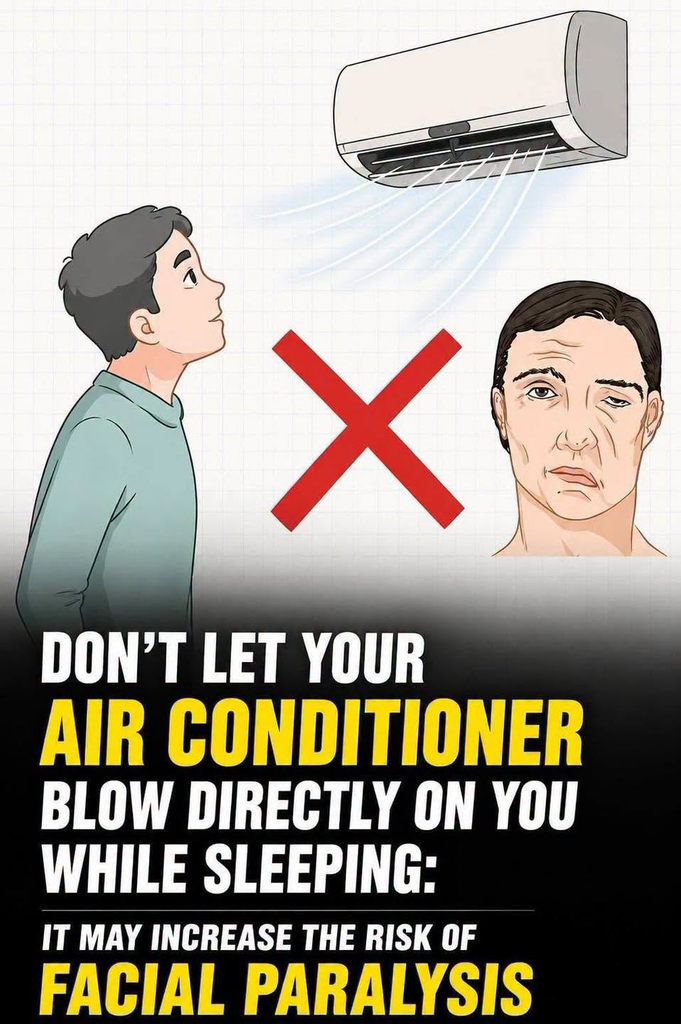
The image above shows a person sleeping under an air conditioner with a red X over the scene. The text warns that letting cold air blow directly on your face while you sleep may increase the risk of facial paralysis. This is a common concern, especially during hot summer months when air conditioning is essential for comfort. Let us explore what experts say about this risk and how to sleep safely.
What Is Facial Paralysis?
Facial paralysis, often referred to as facial nerve palsy, occurs when the nerve that controls the muscles of the face becomes inflamed or damaged. The most common type is Bell’s palsy, which causes sudden weakness or paralysis on one side of the face. Symptoms include drooping of the mouth, difficulty closing one eye, and a loss of facial expression. While the exact cause is not fully understood, viral infections and inflammation are believed to play a role.
Why Cold Air May Be a Trigger
Many doctors and health experts advise against letting cold air blow directly on your face for extended periods. The cold can cause blood vessels in the face to constrict, reducing blood flow to the facial nerve. For most healthy people, this is not a problem. However, for those with weakened immunity or underlying health conditions, this reduced blood flow may trigger inflammation or spasms in the facial nerve, potentially leading to facial paralysis .
Who Is Most at Risk?
While anyone can develop facial paralysis, certain groups are more vulnerable. This includes older adults, children, and people with weakened immune systems. Individuals with conditions that affect blood vessels, such as diabetes or high cholesterol, are also at higher risk. For these groups, it is especially important to avoid direct cold air exposure while sleeping .
Other Causes of Facial Paralysis
It is important to understand that facial paralysis has many potential causes. Viral infections, such as herpes simplex or shingles, can trigger it. Tumors, trauma, and certain autoimmune conditions can also be factors. Therefore, while cold air may be a contributing factor, it is rarely the sole cause. If you experience sudden facial weakness, seek medical attention immediately .
How to Use Air Conditioning Safely
You do not need to avoid air conditioning entirely. Here are some practical tips for safe use.
Avoid direct airflow. Adjust the vents or louvers so that cold air does not blow directly on your face or head. Use a timer or sleep mode. This prevents the AC from running all night at full blast. Keep the temperature moderate. A setting between 24 and 26 degrees Celsius is comfortable and safe for most people. Use a fan for circulation. A ceiling fan or oscillating fan can help distribute cool air evenly without directing it at your face.
When to See a Doctor
If you notice any signs of facial weakness, such as drooping on one side of your face, difficulty closing an eye, or slurred speech, see a doctor immediately. Early treatment can improve outcomes. Facial paralysis is often temporary, but it requires proper medical evaluation to rule out other serious conditions like stroke.
The Bottom Line
While the link between air conditioning and facial paralysis is not absolute, it is a risk worth taking seriously, especially for vulnerable individuals. By avoiding direct cold air on your face while sleeping, you can enjoy the comfort of air conditioning without unnecessary worry. Your health and safety should always come first.
Do you sleep with the AC blowing directly on you? Consider adjusting your setup tonight.