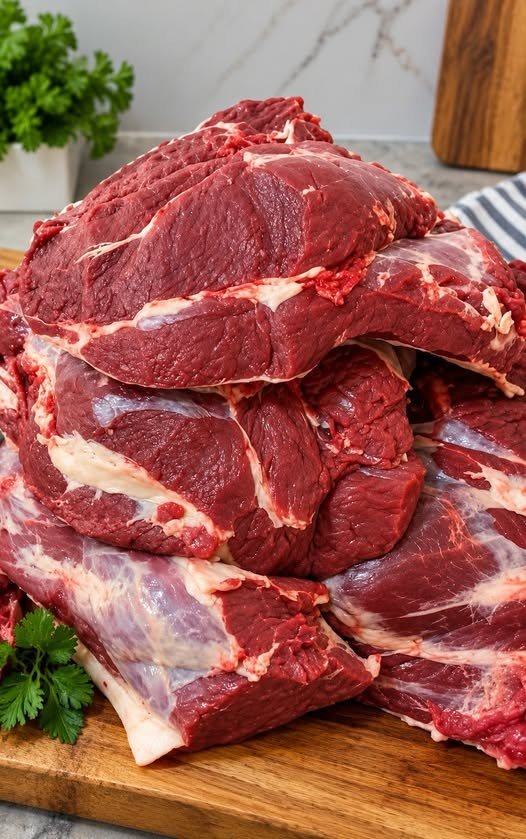
Buying meat can be confusing, especially when there are so many different labels, cuts, and price points. The image above shows a large cut of fresh red meat on a wooden board. It looks rich in color with visible marbling and a thick layer of fat. While it looks appealing, it is important to understand what you are actually buying when you shop for meat. Supermarkets often use clever labeling and packaging to make products look better than they are. Knowing how to read the signs can help you make better choices.
Understanding Meat Labels
Labels like “natural,” “farm-fresh,” and “premium” are often used loosely. They do not always mean the meat is organic or grass-fed. In many countries, “natural” simply means the meat contains no artificial ingredients and is minimally processed. It does not guarantee how the animal was raised. If you want to know more, look for specific certifications like “USDA Organic” or “Certified Grass-Fed.”
The Importance of Color and Texture
Fresh red meat should have a bright, vibrant color. The meat in the image has a deep red tone, which is a good sign of freshness. If the meat looks brown or gray, it may be older or exposed to too much air. The texture should be firm but slightly springy to the touch. If it feels slimy or sticky, it is best to avoid it.
Marbling and Fat Content
Marbling refers to the small white flecks of fat throughout the meat. It adds flavor and tenderness. The meat in the image shows some marbling, along with a thick outer layer of fat. While fat adds flavor, a very thick layer of fat can mean you are paying for something you will trim off. Look for a balance that suits your cooking needs.
Watch Out for Added Solutions
Many supermarkets sell meat that has been injected with a saline solution to add moisture and weight. This is often labeled as “enhanced” or “basted.” This means you are paying for water and salt, not just meat. Check the label carefully to see if any solutions have been added.
The Truth About “Fresh” Meat
Some meat is labeled as “fresh” but has actually been frozen and thawed. While this is not necessarily bad, it can affect the texture and taste. If you are buying meat to freeze at home, it is often better to buy it frozen and thaw it yourself. If you are cooking it right away, fresh is best.
Tips for Buying Meat
Shop at a trusted butcher or a store with a good reputation. Ask questions about where the meat comes from. Look for meat that is well-trimmed and has a good color. Avoid meat that is sitting in a pool of liquid, as this can be a sign of poor quality. Finally, always check the sell-by date and use the meat within a safe time frame.
The Bottom Line
Not all meat is created equal. By paying attention to labels, color, texture, and added solutions, you can make better choices at the supermarket. Do not be fooled by fancy packaging or vague claims. Trust your eyes and your nose, and buy from sources you trust.
Your next meal deserves the best quality meat you can find.