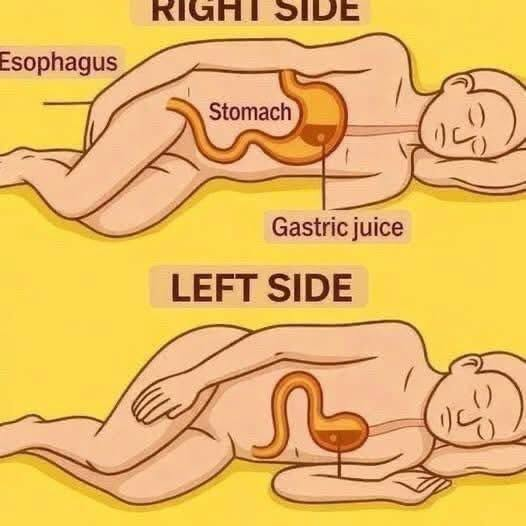
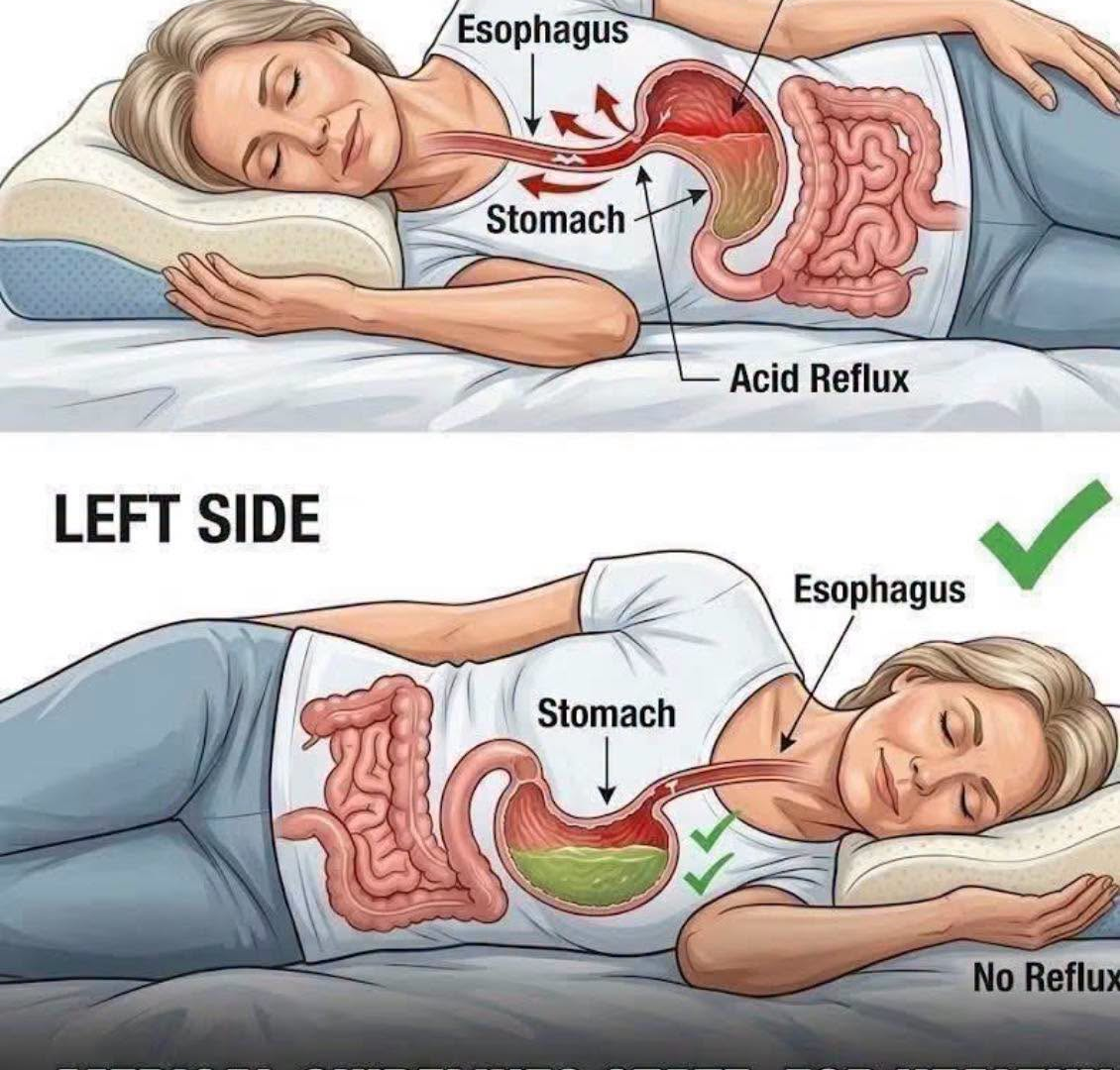
Sleeping on Your Right Side: The Hidden Digestive Risks and Why Left Is Often Better
If you are a lifelong right-side sleeper, trying to force yourself onto your left side can feel unnatural at first. Here are a few practical tips to help make the transition easier:
1. Use Pillows as Barriers If you tend to roll onto your right side in your sleep, place a body pillow or a few extra pillows behind your back. This creates a physical barrier that makes it uncomfortable to roll over, gently training your body to stay on the left.
2. Hug a Pillow Sleeping on your left side can sometimes put pressure on your left shoulder or hip. Hugging a pillow against your chest can help align your spine and reduce this pressure, making the position more comfortable.
3. Elevate Your Head Regardless of your side, elevating the head of your bed by about six to eight inches can help gravity keep acid down. You can do this by placing blocks under the bedposts or using a wedge pillow. Just propping your head up with extra pillows isn’t as effective, as it can create a kink in your neck.
4. Give It Time It takes time to break a lifelong habit. Don’t get discouraged if you wake up on your right side occasionally. With practice, your body will adapt, and you may find that you wake up feeling significantly less bloated and more refreshed.
When to See a Doctor
While changing your sleep position is a highly effective, drug-free way to manage mild to moderate acid reflux, it is not a cure-all. You should consult a healthcare provider if:
You experience severe heartburn multiple times a week.
Over-the-counter antacids are no longer providing relief.
You have difficulty swallowing or feel like food is getting stuck.
You experience unexplained weight loss or chest pain.
A doctor can help determine if you have GERD and recommend appropriate treatments, which may include dietary changes, prescription medications, or further testing.
Conclusion
The image serves as a valuable reminder that the small, unconscious choices we make can have a big impact on our health. For anyone who suffers from the burning discomfort of nighttime acid reflux, the solution might be as simple as turning over. By choosing to sleep on your left side, you harness the power of gravity and your own anatomy to keep stomach acid where it belongs. It is a small shift in habit that can lead to a massive improvement in sleep quality and digestive comfort.
Frequently Asked Questions
Is sleeping on the left side the absolute cure for acid reflux? No, it is not a cure, but it is a highly effective management strategy. It works best when combined with other lifestyle changes, such as avoiding large meals before bed, reducing alcohol and caffeine intake, and maintaining a healthy weight.
Why does my acid reflux get worse at night? When you lie flat, gravity no longer helps keep stomach acid down. Additionally, saliva production decreases during sleep, and swallowing is less frequent, meaning acid that does reflux stays in the esophagus longer.
Can sleeping on the left side help with other digestive issues? Yes. Besides reducing acid reflux, sleeping on the left side can help with digestion and alleviate bloating. It also takes pressure off the liver and gallbladder.
What if I am a stomach sleeper? Sleeping on the stomach puts pressure on the stomach and can make reflux worse. If you cannot sleep on your left side, sleeping on your back with your head elevated is generally better than sleeping on your stomach.
Does sleeping on the right side have any benefits? Sleeping on the right side is generally fine for people who do not suffer from acid reflux. In fact, it can be beneficial for people with certain heart conditions, as it can reduce pressure on the heart. However, for reflux sufferers, it is best avoided.