Small White Spots on Arms and Legs: What They Likely Are and Why They Appear
The exact cause of IGH remains unknown, but researchers believe it results from a combination of factors that lead to a decrease in melanin production in small, localized areas of skin .
Sun Exposure and Photoaging
Cumulative sun exposure is widely considered a significant contributor. The spots appear predominantly on areas that receive the most sun over a lifetime, and many dermatologists view IGH as a marker of sun damage . The ultraviolet radiation in sunlight may damage melanocytes, the cells responsible for producing pigment, leading to the small areas of depigmentation.
The Aging Process
IGH becomes increasingly common with age, typically affecting individuals over 40, and the likelihood of developing it increases as people get older . The skin’s ability to maintain even pigmentation declines with age, and the cumulative effects of sun exposure over decades become more apparent.
Genetics and Other Factors
There is evidence of a genetic component, as IGH has been observed to run in families . Other proposed contributing factors include microtrauma to the skin, such as from harsh body scrubs, and local inhibition of melanin production .
How IGH Differs from Other Causes of White Spots
Not all white spots are the same, and distinguishing IGH from other conditions helps clarify why it is generally not a cause for concern.
Vitiligo
Vitiligo is an autoimmune condition in which the immune system attacks and destroys melanocytes, causing larger, well-defined patches of milky-white skin . Unlike the small, scattered spots of IGH, vitiligo patches often appear symmetrically on both sides of the body and can spread or change over time . Vitiligo is a chronic condition that requires medical management, while IGH is stable and benign.
Tinea Versicolor
Tinea versicolor is a common fungal infection caused by an overgrowth of yeast that naturally lives on the skin. It produces white, pink, or brown patches that may be scaly and are often located on the trunk, chest, and back rather than primarily on the arms and legs . Unlike IGH, tinea versicolor is treatable with antifungal medications and may cause mild itching.
Pityriasis Alba
Pityriasis alba is a mild form of eczema that causes dry, pale patches, most often on the faces of children and young adults. It is different from the small, drop-like spots of IGH and is associated with dry skin and inflammation rather than sun exposure .
What Can Be Done About IGH?
IGH does not require treatment for health reasons, but some people choose to pursue treatment for cosmetic reasons. It is important to have realistic expectations, as no treatment is consistently effective, and the spots may persist or recur .
Sun Protection
The most important step is daily sun protection. Because IGH is associated with cumulative sun exposure, using broad-spectrum sunscreen on the arms and legs, wearing protective clothing, and avoiding tanning beds can help prevent new spots from forming and protect the skin from further damage .
Medical and Procedural Options
For those who wish to reduce the appearance of existing spots, dermatologists may offer several options. Topical creams containing steroids, retinoids, or calcineurin inhibitors may help increase melanin production in the affected areas . Procedural options include cryotherapy (freezing), chemical peels, dermabrasion, laser treatment, and microneedling, all of which aim to remove the uppermost layers of skin and allow new, normally pigmented skin to heal in its place . The effectiveness of these treatments varies, and results are not guaranteed.
What to Avoid
There is no scientific evidence that home remedies such as apple cider vinegar, aloe vera, or ginger are effective for IGH, and these should not be used without consulting a healthcare provider .
When to See a Doctor
While IGH is benign, any new or changing skin spots should be evaluated by a healthcare professional to rule out other conditions. A doctor can typically diagnose IGH by visual inspection, sometimes using a handheld magnifying device called a dermatoscope . A medical evaluation is warranted if the spots are growing rapidly, changing color, becoming raised or textured, bleeding, or causing symptoms such as itching or pain. These features are not characteristic of IGH and may indicate a different skin condition that requires attention.
Conclusion
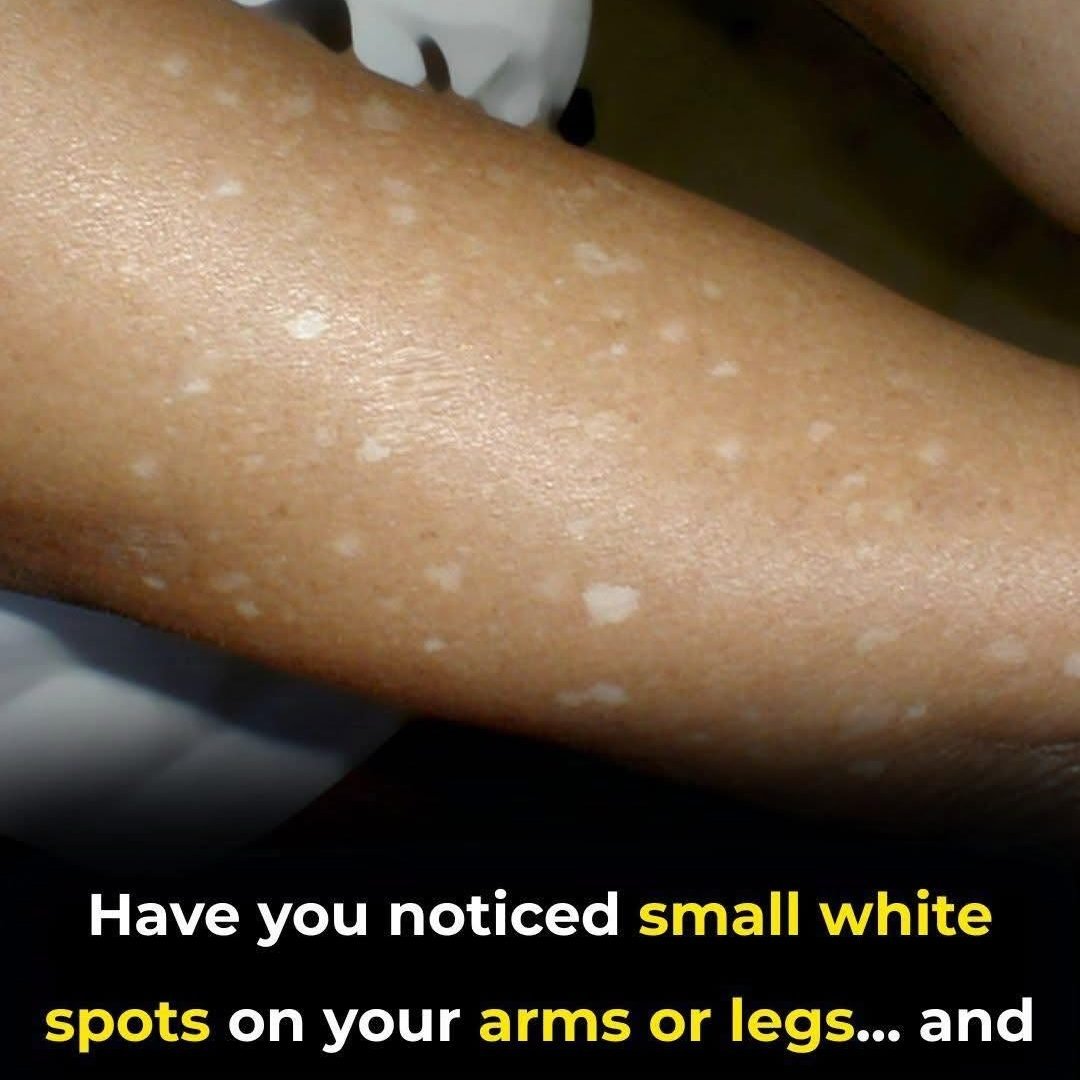
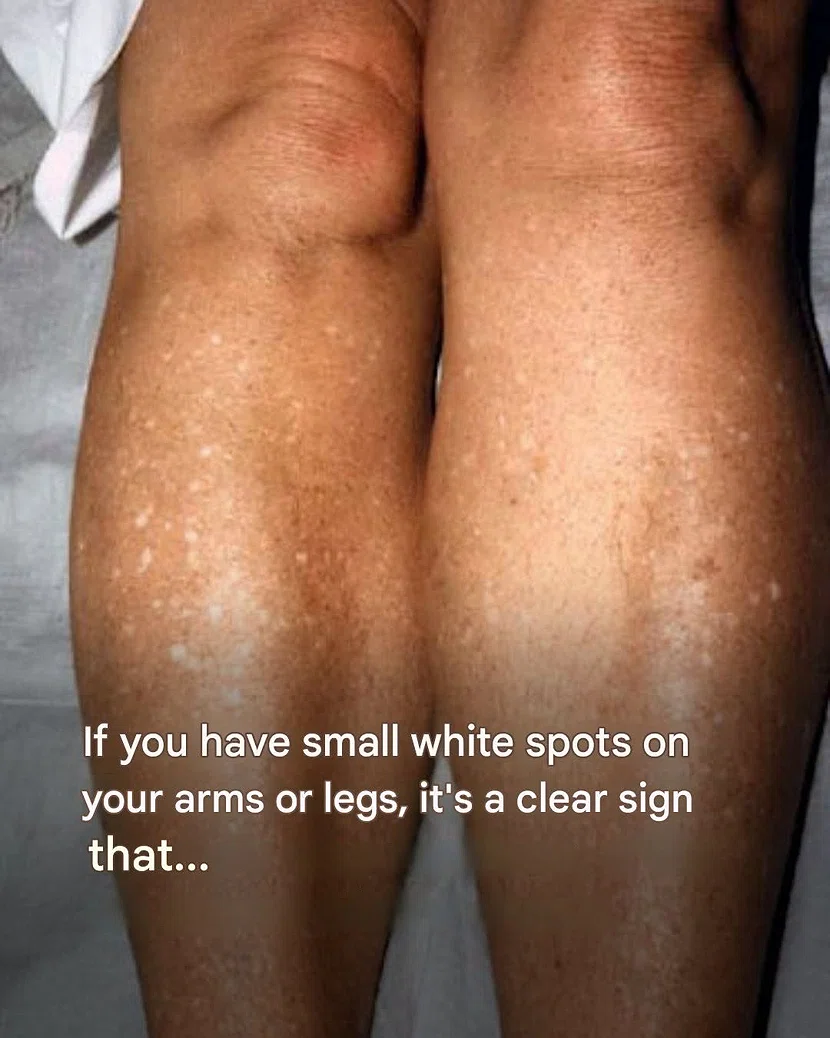
The small white spots visible on the arms and legs in the image are most consistent with idiopathic guttate hypomelanosis, a common, harmless condition related to sun exposure and aging. It is not a sign of a serious underlying disease, and it does not require medical treatment. While the spots can be a cosmetic concern, daily sun protection is the most reliable way to prevent new ones from appearing. For anyone concerned about changes in their skin, a visit to a dermatologist provides clarity and peace of mind.
Frequently Asked Questions
Are small white spots on arms and legs dangerous?
In most cases, no. Idiopathic guttate hypomelanosis, the most likely cause of this pattern, is a benign condition that does not affect health or increase the risk of skin cancer . However, any new or changing skin lesion should be evaluated by a doctor to rule out other conditions.
Do white spots on the legs mean a vitamin deficiency?
Not usually. While certain nutritional deficiencies can affect skin pigmentation, the small, scattered white spots characteristic of IGH are primarily related to sun exposure and aging rather than vitamin levels . A doctor can assess for other symptoms if a deficiency is suspected.
Can white spots from IGH be reversed?
The spots are generally permanent, and no treatment is consistently effective at restoring pigment. Some dermatological procedures may improve the appearance, but results vary . Sun protection is the most important step to prevent new spots.
Is IGH contagious?
No. IGH is not an infection and cannot be spread to other people .
What is the difference between IGH and vitiligo?
IGH causes small, scattered, drop-like white spots, usually on sun-exposed areas like the arms and legs, and is benign. Vitiligo is an autoimmune condition that causes larger, well-defined patches of pigment loss that can spread and affect any part of the body . A dermatologist can distinguish between the two through a physical examination.