The Hard, Red Line on Your Husband’s Leg: What It Likely Is and What to Do
It is important to distinguish this from other conditions that can cause red lines on the leg.
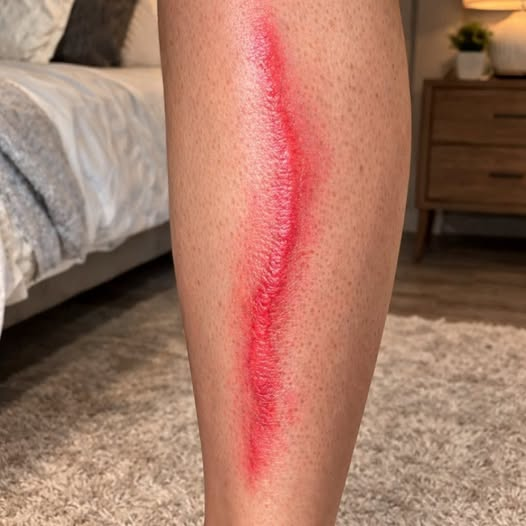
A red, warm, painful line could, in some contexts, suggest a blood clot (superficial thrombophlebitis) or an infection (cellulitis). However, the specific appearance in the image—a superficial, linear, raised lesion with a distinct border and a texture that suggests a chemical burn—is more consistent with contact dermatitis than with a vascular or infectious process.
Cellulitis typically presents as a spreading area of redness and warmth, not a sharply defined line. Superficial thrombophlebitis usually follows the path of a vein and may feel like a hard cord under the skin, but it is less likely to appear overnight as a raised, red line with the texture shown.
Immediate Steps to Take
While waiting for medical care, there are several steps that can help.
Wash the Area
The first and most important step is to wash the affected area gently with soap and water. This helps remove any remaining toxin from the skin surface. It is important to wash thoroughly but gently, without scrubbing, to avoid spreading the toxin to other areas.
Avoid Touching or Spreading
The toxin can be spread by the hands. If you touch the affected area and then touch your eyes, face, or other parts of your body, you can cause a chemical burn in those areas. Wash your hands thoroughly after any contact with the lesion.
Cool Compresses
Applying a cool, damp cloth to the area can help soothe the burning sensation and reduce inflammation. Avoid applying ice directly to the skin.
Do Not Squeeze or Pick
The lesion may develop blisters or pus-filled bumps over the next 12 to 24 hours. Do not squeeze, pick, or scratch the area. This can worsen the burn and increase the risk of secondary infection.
When to Seek Emergency Care
While many cases of Paederus dermatitis can be managed with topical treatments, certain situations warrant prompt medical attention. You should proceed to the ER or seek urgent care if:
The pain becomes severe and unmanageable.
The area becomes significantly swollen, hot, or shows signs of spreading infection.
The blisters become large and weepy.
The lesion is near the eyes, genitals, or other sensitive areas, which require special care.
The person develops a fever or feels unwell.
Given the eight-hour ER wait, it is reasonable to start home care immediately and monitor for these warning signs. If the condition worsens or if there are concerns, seeking care sooner is appropriate.
Conclusion
The hard, red, warm line on the leg is most likely Paederus dermatitis, a chemical burn caused by the toxin of a rove beetle. It is not a blood clot or a systemic infection, and it is not life-threatening. However, it is painful and requires proper care to prevent complications and scarring. Washing the area thoroughly, avoiding spreading the toxin, and using cool compresses are appropriate first steps. If the lesion is near the eyes or shows signs of infection, or if the pain is severe, medical attention should not be delayed.
Frequently Asked Questions
What causes a hard red line on the leg overnight?
The most likely cause, given the appearance and the overnight onset, is Paederus dermatitis, a chemical burn from the toxin of a rove beetle. The beetle releases the toxin when brushed or crushed against the skin, creating a linear lesion.
Is Paederus dermatitis dangerous?
It is painful and can cause blistering, but it is not life-threatening. The main risks are secondary infection and scarring if the lesion is not properly cared for. Lesions near the eyes require special attention.
Should I go to the ER for this?
If the pain is severe, the area is swelling, or there are signs of infection, seek medical care. If the lesion is near the eyes or genitals, prompt evaluation is important. For a typical lesion on the leg, home care with washing and cool compresses can be started while waiting for an appointment.
Can Paederus dermatitis spread?
The toxin can be spread by the hands. If you touch the lesion and then touch another part of your body, you can cause a burn there. Wash your hands thoroughly after contact.
How long does Paederus dermatitis take to heal?
With proper care, the lesion typically heals over one to three weeks. It may leave a temporary dark mark that fades over time. Avoiding scratching and picking helps reduce the risk of scarring.