The Terrifying Bug That Pinched Your Daughter: What an Earwig Really Is and Why You Shouldn’t Panic
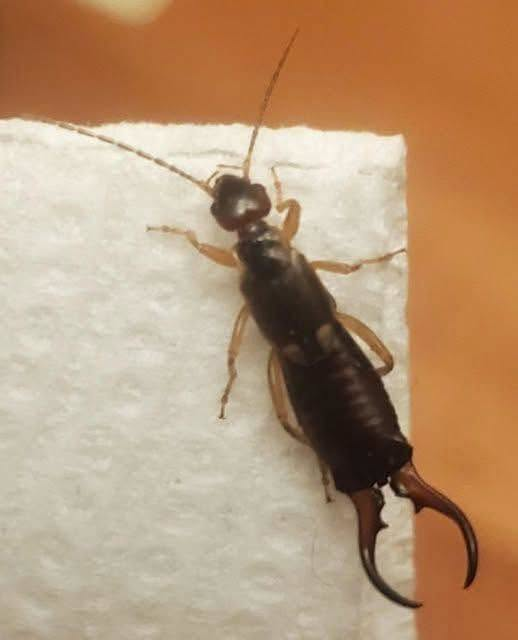
Finding a strange, intimidating insect on your child is a frightening experience for any parent. The image shows a dark, elongated bug with prominent curved pincers at its rear end, and the caption reveals that a six-year-old was “bitten” by it and that similar bugs have been found in a nearby relative’s house. The natural reaction is alarm, but the good news is that this creature—an earwig—is far less dangerous than its menacing appearance suggests.
Understanding what earwigs are, why they pinch, and how to manage them in your home can turn a scary moment into a manageable, even educational, experience. The insect is not venomous, it does not sting, and it is not a disease carrier. It is a common household nuisance that occasionally gives a defensive pinch when it feels threatened.
What Is an Earwig?
Earwigs are insects belonging to the order Dermaptera. They are easily recognized by the pair of forceps-like pincers (called cerci) at the rear of their abdomen. These pincers are used for defense, for capturing prey, and for mating. Despite their fearsome look, earwigs are generally harmless to humans.
The Myth of the Earwig
The name “earwig” comes from an old European superstition that these insects crawl into people’s ears at night to lay eggs. This is entirely false. Earwigs have no interest in human ears and do not lay eggs inside them. The myth likely arose because earwigs seek out dark, narrow crevices, and the human ear canal fits that description, but there is no evidence that this is a common behavior.
Why They Look So Scary
The pincers are the earwig’s primary defense mechanism. When threatened, the insect will curve its abdomen upward and open its pincers to look as intimidating as possible. If handled roughly, it may use them to pinch. However, the pinch is usually mild, and earwigs are not capable of injecting venom or causing serious injury.
The “Bite”: What Actually Happened
Earwigs do not bite or sting. They do not have mouthparts designed for piercing human skin. What likely happened to the child is a defensive pinch from the insect’s rear pincers.
The Mechanism of the Pinch
When an earwig is trapped against the skin—perhaps in clothing, bedding, or when a child picks it up—it will use its pincers to try to free itself. The pinch can be startling and may leave a small red mark, but it rarely breaks the skin. In the vast majority of cases, the injury is minor and heals on its own.
What to Do for the Child
If the skin is intact, washing the area with soap and water is sufficient. If the skin is broken, clean it gently, apply an antibiotic ointment, and cover it with a bandage. Watch for signs of infection, such as increasing redness, swelling, or pus, and consult a doctor if these occur. The pincers are not venomous, so there is no need for antivenom or specialized treatment.
Why Are They in the House?
The fact that the child’s aunt has also found earwigs suggests that the insects are coming from a shared outdoor environment. Earwigs are outdoor insects that thrive in damp, dark, and cool places. They are commonly found in gardens, under mulch, in leaf piles, and in cracks in the soil.
The Attraction to Homes
Earwigs enter homes for a few reasons:
Seeking Shelter: They are attracted to the cool, damp environment of a house, especially during hot, dry weather or heavy rain.
Attracted to Light: Earwigs are nocturnal and are drawn to lights left on at night.
Hiding in Debris: They may be brought indoors on firewood, potted plants, or laundry left outside.
How to Manage Earwigs in Your Home
Since earwigs are not dangerous, the goal is simply to reduce their presence and prevent them from entering the living space.
Reduce Moisture
The most effective long-term strategy is to eliminate damp conditions. Fix leaky pipes, ensure proper drainage, and use a dehumidifier in basements or crawl spaces. Keep the area around the foundation of your home dry.
Seal Entry Points
Check for gaps under doors, around windows, and where pipes and cables enter the house. Seal these openings with caulk or weatherstripping. This will help keep not just earwigs but other pests out as well.
Clear Outdoor Debris
Remove piles of leaves, mulch, and wood from the immediate vicinity of your home’s foundation. These are ideal hiding spots for earwigs. Keep gutters clean and ensure downspouts direct water away from the house.
Use Traps if Necessary
If you are seeing a large number of earwigs indoors, you can set simple traps. A rolled-up newspaper, dampened and placed in a corner, can attract them overnight. In the morning, you can dispose of the newspaper. Sticky traps can also be used, but they should be placed out of reach of children and pets.
Conclusion
The insect that pinched the child is an earwig, a common and harmless creature whose fearsome appearance is mostly a bluff. The pinch is a defensive response, not an attack, and it rarely causes more than minor discomfort. By taking simple steps to reduce moisture and seal entry points, the family can minimize the presence of these insects in the home. There is no need for alarm or for harsh pesticides. A little understanding and some basic home maintenance will resolve the issue and put everyone’s mind at ease.
Frequently Asked Questions
Are earwigs poisonous?
No. Earwigs do not produce venom, and they are not poisonous to humans or pets. Their pinch is a mechanical defense, not a toxic one.
Do earwigs bite humans?
No. Earwigs do not bite. They may pinch with their rear pincers if they feel threatened, but they do not have the ability to bite or sting in the way that other insects do.
Do earwigs crawl into ears?
No. This is a common myth with no basis in fact. Earwigs are not interested in human ears and do not lay eggs there.
What should I do if an earwig pinches me?
Wash the area with soap and water. If the skin is broken, apply an antibiotic ointment and a bandage. Watch for signs of infection and consult a doctor if they appear.
How do I get rid of earwigs in my house?
Reduce moisture, seal entry points, clear outdoor debris, and use traps if necessary. Earwigs are a nuisance pest, not a health threat, so the focus should be on prevention and control rather than panic.