The Truth About the “Snake in Your House” Viral Post: What It Really Means
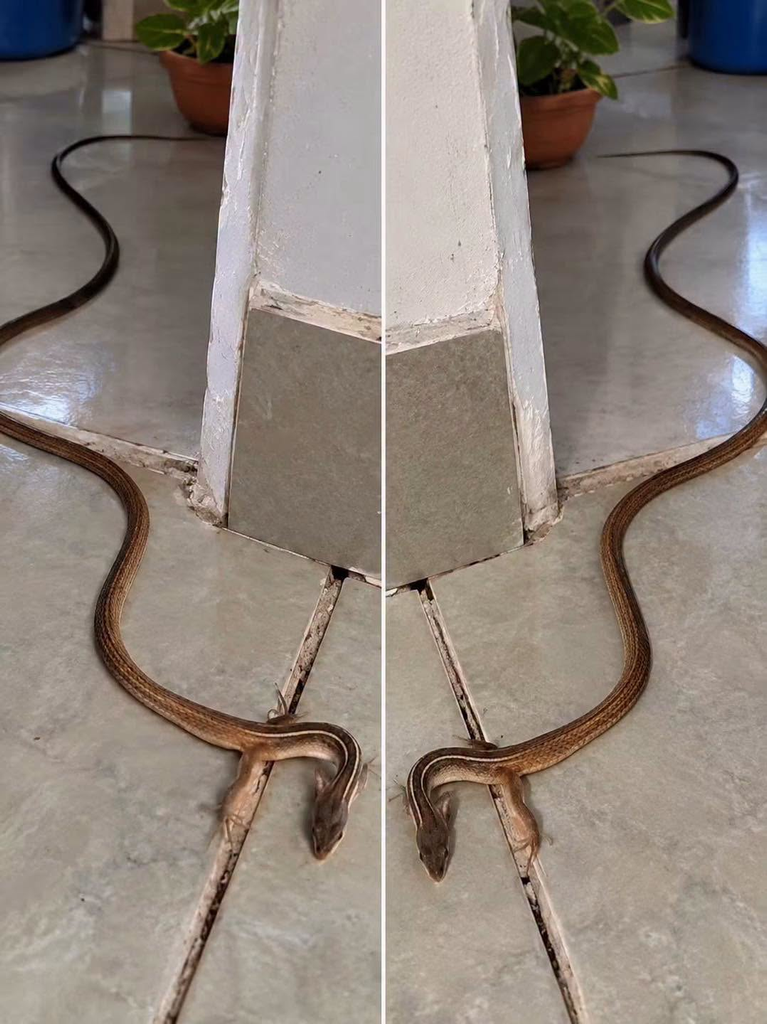
Viral social media posts often use dramatic headlines to capture attention, and a recent image showing a long, slender snake near a doorway is a perfect example. The post asks what it means if this snake enters your home, implying a hidden message or warning. While these captions are designed to spark curiosity, the reality is far less mysterious and much more practical. Understanding the actual behavior of snakes and the reasons they might enter a home can help you respond calmly and safely, rather than relying on superstition or fear.
The image in question shows a snake with a distinctive brownish body and lighter stripes, often identified in online forums as a harmless species like a garter snake or a type of skink . The caption suggests that the snake’s presence signals something significant about your household, but wildlife experts and common sense point to a much simpler explanation: the snake is likely looking for food, shelter, or a way to escape the elements. Recognizing this helps demystify the encounter and shifts the focus from fear to practical prevention.
Debunking the Viral Caption and Superstition
The specific phrasing “if this snake enters your home, it means you have…” is a classic clickbait tactic. It plays on the natural human tendency to look for meaning in unexpected events. Some online comments jokingly suggest that a snake entering your home simply means “you have a hole in your house,” which is a surprisingly accurate assessment of the situation . The reality is that snakes do not possess the cognitive ability to deliver symbolic messages or omens.
While various cultures have folklore surrounding snakes—often associating them with fertility, transformation, or hidden enemies—these are symbolic interpretations rather than factual biological behaviors . For a homeowner, the most important takeaway is that a snake inside the house is a wildlife issue, not a supernatural one. The presence of a snake is an indicator of the environment, not a reflection of the homeowner’s character or future.
Why Snakes Actually Enter Homes
Snakes are opportunistic creatures driven by basic survival needs. When a snake finds its way indoors, it is typically in search of one of three things: food, shelter, or moisture. Understanding these motivations is the first step toward addressing the problem effectively.
The Search for Food
The most common reason snakes enter homes is to hunt. If you have a snake in your house, it is highly likely that there is a food source present. Snakes feed on rodents, insects, frogs, and other small creatures. A house with a mouse or rat problem can become an attractive hunting ground for snakes. Therefore, seeing a snake can sometimes be a sign of a secondary pest issue that needs to be addressed.
Shelter and Temperature Regulation
Snakes are cold-blooded reptiles, meaning they rely on external sources of heat to regulate their body temperature. During extreme weather—whether it is the intense heat of summer or the cold of winter—snakes seek out environments that offer stable temperatures. Basements, crawl spaces, attics, and gaps under doors or siding provide the perfect sheltered microclimates for a snake to rest or brumate (the reptilian equivalent of hibernation).
Accidental Entry
Many snakes enter homes accidentally. They may be following a scent trail, navigating through tall grass, or simply exploring. A snake that finds an open door, a gap in the foundation, or a loose window screen may wander inside without any intention of staying. Once inside, they often become trapped and disoriented, seeking a dark corner to hide.
Identifying the Snake in the Image
While it is difficult to definitively identify a snake from a single photograph, the snake in the viral image shares characteristics with several common, non-venomous species. Commenters on similar posts have identified similar-looking snakes as “harmless gardener snakes” or “Dekay’s brown snakes” . These species are typically small, secretive, and completely harmless to humans. They feed primarily on earthworms, slugs, and insects.
The snake’s slender body and striped pattern are common adaptations for species that live in grassy or wooded areas. It is important to remember that the vast majority of snakes encountered in residential settings are non-venomous and pose no threat. However, for safety, it is always best to treat any unknown snake with caution and avoid handling it directly.
What to Do When You Find a Snake Indoors
If you discover a snake in your home, the most important thing is to remain calm. Snakes are generally more afraid of you than you are of them, and they will usually try to escape if given the opportunity. Here are the recommended steps to take.
Keep Your Distance: Do not attempt to catch or kill the snake. This is when most bites occur. Give the snake plenty of space and keep pets and children away from the area.
Isolate the Area: Close the doors to the room where the snake is located. This prevents the snake from moving to other parts of the house and makes it easier to remove.
Contact a Professional: The safest and most effective solution is to call a professional snake catcher or wildlife removal service. They have the expertise and equipment to safely identify and remove the snake without harm to themselves or the animal.
Create an Exit Route: If the snake is near a doorway, you can open the door and use a broom to gently guide it outside from a safe distance. Do not try to sweep it or pick it up.
Preventing Future Encounters
The best way to deal with snakes in the home is to prevent them from getting inside in the first place. This involves making your home less attractive to snakes and the pests they hunt.
Seal Entry Points: Inspect your home’s exterior for gaps, cracks, and holes. Seal any openings around pipes, vents, and foundation walls. Install door sweeps and ensure window screens are intact.
Remove Food and Shelter: Keep grass and vegetation trimmed short near the foundation. Remove piles of debris, wood, and rocks that could provide hiding spots for snakes and their prey. Store firewood away from the house.
Control Rodents: Since snakes follow their food, eliminating rodents is a key preventive measure. Keep food stored in sealed containers and fix any leaky pipes that might attract rodents seeking water.
Conclusion
The viral post about the snake entering your home is a reminder of how quickly misinformation can spread online. The reality is that a snake indoors is simply a wild animal looking for food or shelter, not a bearer of omens or hidden messages. By understanding the practical reasons behind the encounter and taking steps to secure your home, you can handle the situation safely and effectively. The most responsible action is to respect the animal, avoid confrontation, and rely on professional help when needed.