Understanding Mouth Piercings: Types, Meanings, and Aftercare
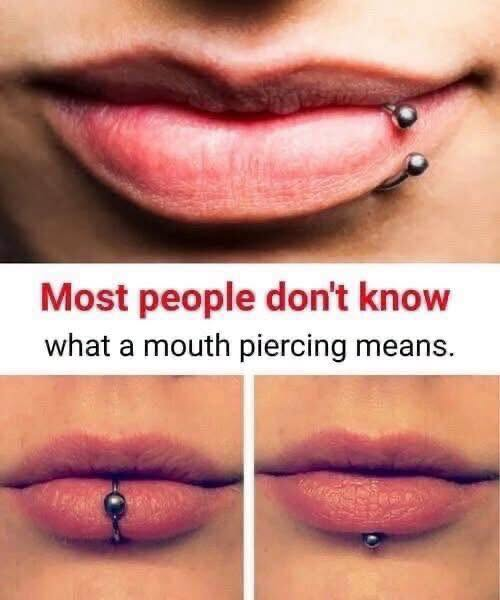
The image above shows a collage of different mouth piercings. The text says that most people do not know what a mouth piercing means. This type of post often circulates on social media and can carry misleading claims about hidden meanings. It is important to look at the facts. Mouth piercings are a form of body modification. They do not have a single, universal meaning. People choose to get them for many personal reasons.
Types of Mouth Piercings
There are several types of mouth piercings. The image shows a lip piercing on the side, a vertical labret piercing through the center of the bottom lip, and a labret piercing just below the bottom lip. Other common types include the tongue piercing, the smiley (a piercing of the frenulum under the upper lip), and the web (a piercing of the frenulum under the tongue). Each type requires specific jewelry and aftercare.
Why People Get Mouth Piercings
People get mouth piercings for a variety of reasons. Some do it for self-expression or to feel unique. Others see it as a form of fashion or a way to express their individuality. For some, it is a symbol of rebellion or a rite of passage. Many people simply find the aesthetic appealing. There is no single personality trait or hidden message associated with having one.
The Procedure and Aftercare
Getting a mouth piercing is a medical procedure that should be done by a professional piercer in a sterile environment. The mouth is a sensitive area with a rich blood supply, so the piercing can bleed and swell. Aftercare is crucial. It involves rinsing with a saline solution or an alcohol-free mouthwash several times a day. It is also important to avoid spicy foods, alcohol, and smoking during the healing process. The healing time can take several weeks.
Risks and Considerations
Like any body piercing, a mouth piercing comes with risks. These include infection, allergic reactions to the metal, and damage to the teeth or gums. The jewelry can chip teeth or cause gum recession. In rare cases, the piercing can cause nerve damage or interfere with speech or swallowing. It is important to weigh these risks before getting a piercing.
The Bottom Line
A mouth piercing is a personal choice. It does not have a hidden meaning. It is a form of body art that requires careful consideration and proper aftercare. If you are thinking about getting one, do your research. Choose a reputable piercer. And follow all aftercare instructions to ensure a safe healing process.
Have you ever considered a mouth piercing? Share your thoughts in the comments below.