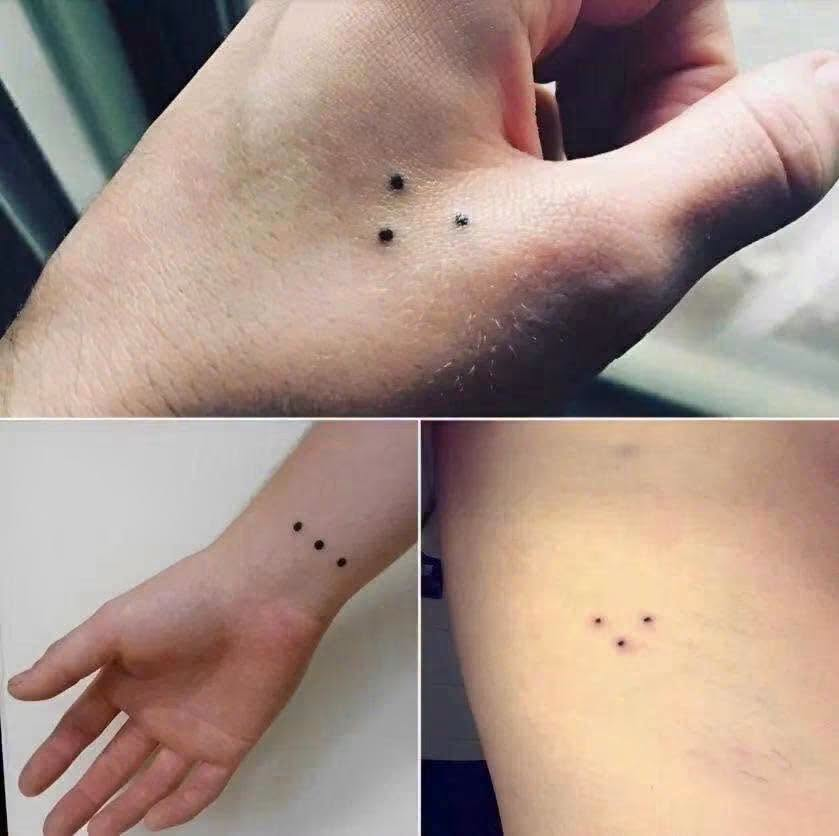
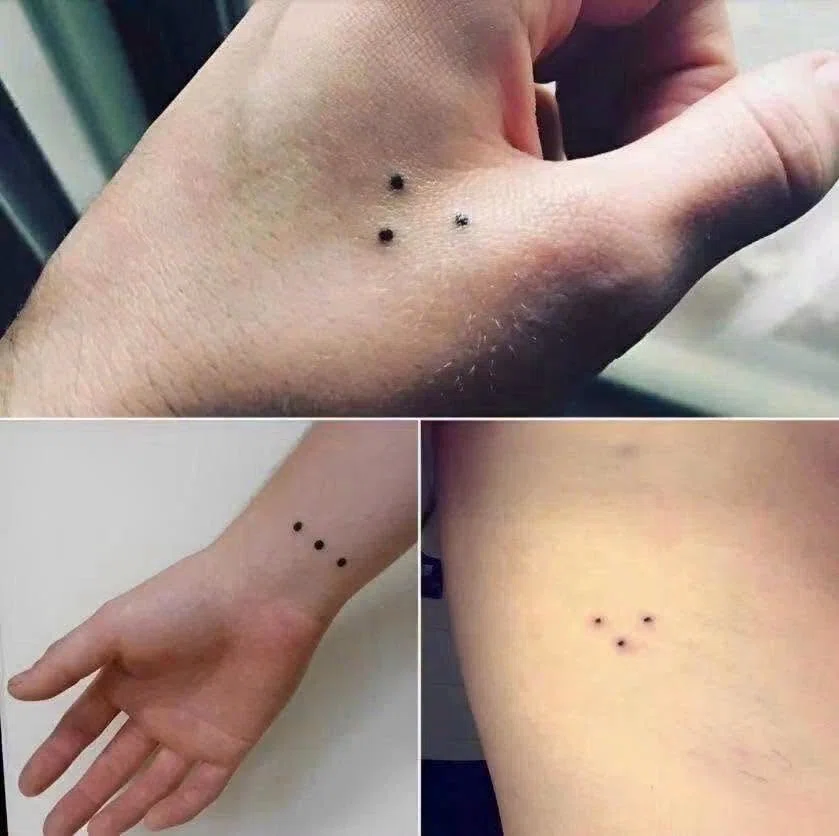
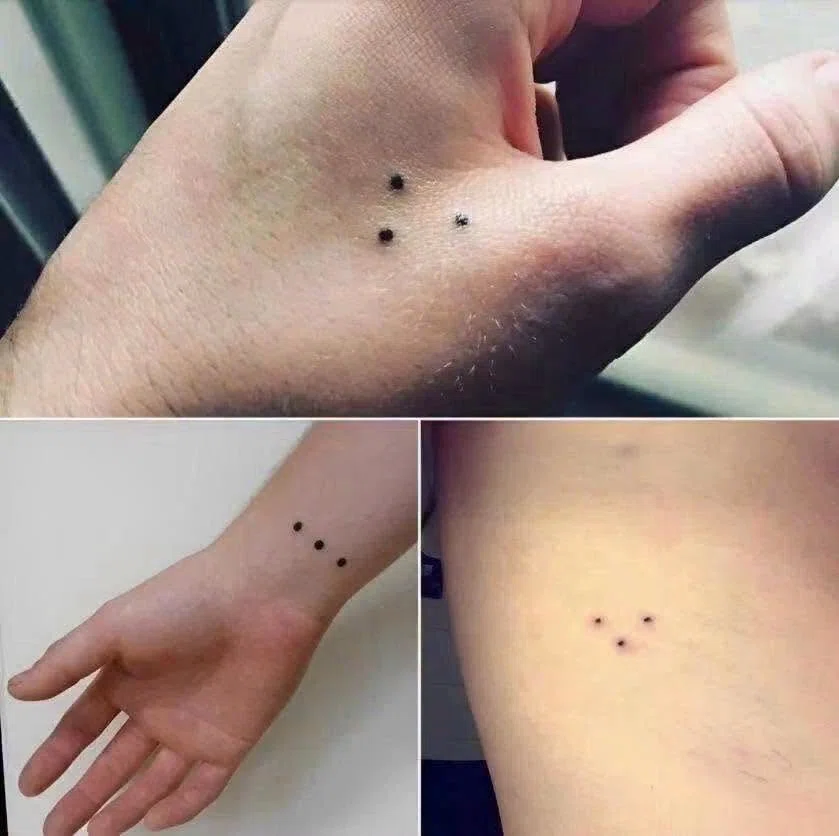
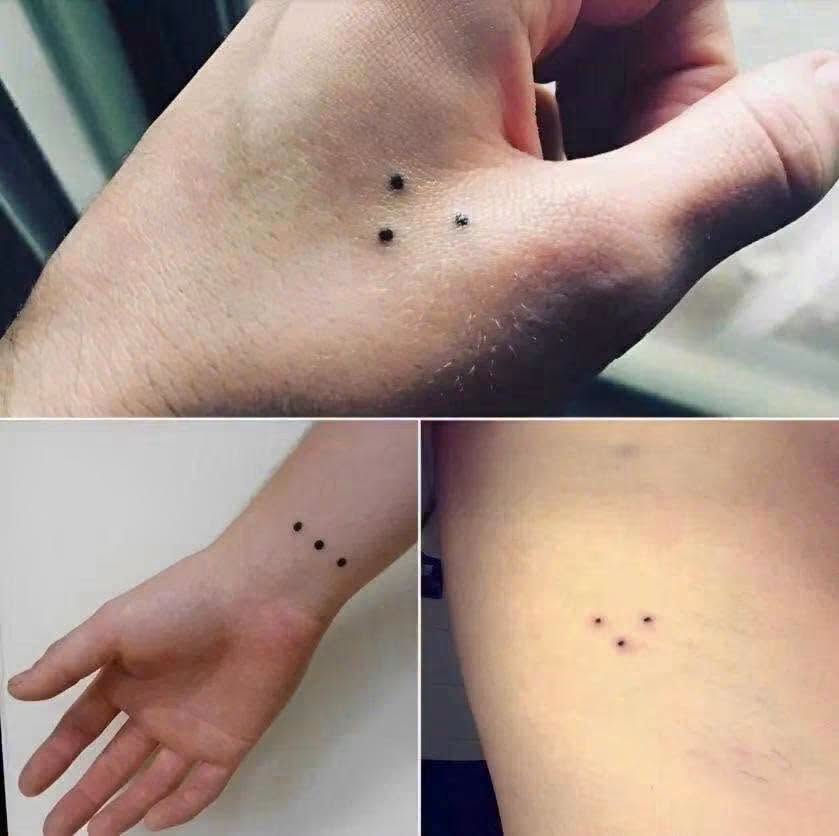
What Does the Three-Dot Tattoo Really Mean? Separating Fact from Internet Fiction
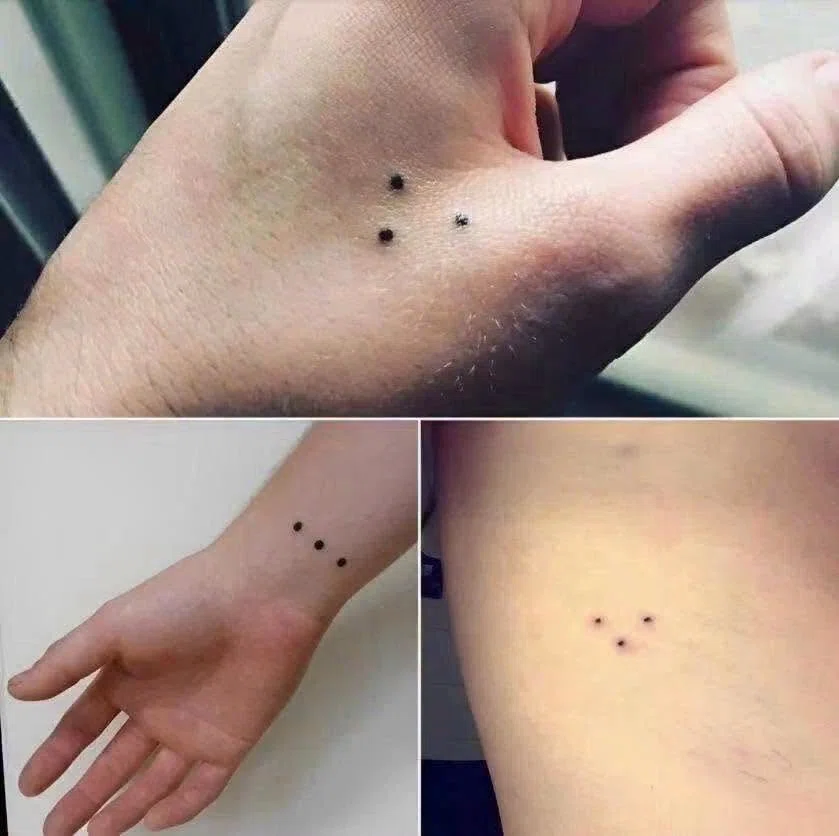
A small cluster of three dots tattooed on the hand, wrist, or near the eye has become the subject of countless viral warnings online. The imagery often comes with a dramatic caption urging people to “run as far as you can” if they encounter someone bearing this mark, implying a hidden and dangerous meaning. This kind of sensationalized content spreads quickly because it plays on fear and curiosity, but the reality behind the three-dot tattoo is far more complex than a simple warning label.
While the symbol does carry a historical association with certain subcultures, it has also been adopted by various communities for entirely different, often positive or spiritual, reasons. Understanding the true meaning requires looking beyond the clickbait and examining the context, placement, and individual intent behind the design. Without knowing the person’s background, it is impossible to determine what the tattoo means to them.
The Historical Context: “Mi Vida Loca”
The most widely cited origin for the three-dot tattoo is its association with Hispanic gang culture, particularly in the United States. The symbol is often linked to the phrase “mi vida loca,” which translates to “my crazy life” . In this context, the three dots represent a connection to a lifestyle of street involvement, and they are sometimes placed on the hand or near the eye. For individuals involved in gang affiliations, the tattoo can serve as a marker of identity and loyalty to a specific group.
However, the viral escalation of this meaning to suggest it is a definitive sign of a violent criminal, specifically a murderer, is a significant oversimplification. Criminal organizations do use tattoos as codes, but the meanings are often local, specific to a particular set or clique, and not universally recognized. The idea that one tattoo automatically designates someone as a killer is a dangerous generalization that ignores the diversity of people who may wear it.
Spiritual and Religious Interpretations
Beyond the gang-related association, the three-dot tattoo has been adopted by various spiritual and religious groups, where it carries a completely different, often positive, meaning.
The Holy Trinity
For many Christians, the three dots arranged in a triangle represent the Holy Trinity: the Father, the Son, and the Holy Spirit . This is a common motif in religious art and is sometimes used as a personal expression of faith. In this context, the tattoo is a symbol of devotion and spiritual belief, not a sign of danger.
Hindu and Buddhist Symbolism
In Eastern traditions, the number three holds significant meaning. In Hinduism, the three dots can represent the three aspects of the divine (Brahma, Vishnu, and Shiva) or the three stages of life. In Buddhism, the three dots can symbolize the Three Jewels: the Buddha, the Dharma (teachings), and the Sangha (community). For individuals who follow these traditions, the tattoo is a meaningful spiritual marker.
Modern and Personal Meanings
In contemporary society, many people choose the three-dot tattoo for purely aesthetic or personal reasons, completely detached from any gang or religious association. The minimalist design is popular in modern tattoo culture because it is subtle, elegant, and easy to place on small areas like the wrist or hand.
Minimalist Aesthetic and Personal Milestones
For some, the three dots represent a personal milestone, such as a significant date, the number of children they have, or a reminder of a personal mantra. The simplicity of the design allows for a wide range of personal interpretations. A person might get three dots to symbolize a “past, present, and future” philosophy or to represent a specific memory. Without asking the individual, it is impossible to know the personal significance.
Continuance and Resilience
Another modern interpretation is that the three dots, similar to an ellipsis, represent that a person’s story is still continuing—signifying an unfinished journey or a life that is moving forward . It can also symbolize resilience and the ability to survive challenging circumstances, often seen in communities that have faced hardship .
Why the “Run Away” Warning Is Misleading
The viral warning to “run as far as you can” is a prime example of how fear-based content spreads online. It takes a complex symbol with multiple meanings and reduces it to a single, alarming stereotype. This approach is not only misleading but can also be harmful, as it encourages people to make snap judgments about others based on a small piece of ink.
The Importance of Context
Judging a person’s character based on a single tattoo is unreliable. The same three-dot design can be found on a devout Christian, a Buddhist practitioner, a minimalist art enthusiast, or, historically, an individual involved in gang culture. The only way to understand the meaning of a tattoo is to consider the person’s overall demeanor, their other tattoos, and, most importantly, their own explanation. Assuming the worst based on a viral post is a form of prejudice that ignores the individuality of the person wearing the mark.
Conclusion: A Symbol of Many Meanings
The three-dot tattoo is a perfect example of a symbol that defies a single definition. While it has a historical association with gang culture and the “mi vida loca” lifestyle, it has also been embraced by religious groups, spiritual seekers, and individuals seeking a simple, meaningful design. The viral claim that it is a sign to “run away” is an oversimplification that ignores the rich and varied interpretations of the symbol. In a world where information spreads quickly, it is essential to approach such claims with critical thinking. Instead of running away, the better approach is to engage with curiosity and respect, recognizing that a small tattoo cannot define a person’s entire story.
Frequently Asked Questions
Is the three-dot tattoo always associated with gangs?
No. While it has a historical association with gang culture, it is also used by Christians to represent the Holy Trinity, by individuals as a minimalist design, and by others to symbolize personal milestones or continuance.
What does “mi vida loca” mean?
“Mi vida loca” translates to “my crazy life” in Spanish. It is a phrase associated with a lifestyle of street involvement and is one of the historical meanings behind the three-dot tattoo.
Should I be afraid of someone with a three-dot tattoo?
No. Judging a person based on a single tattoo is unreliable. The meaning of the tattoo depends entirely on the individual’s background and intent, and it is not a universal sign of danger.
Can the three-dot tattoo have a religious meaning?
Yes. For many Christians, the three dots arranged in a triangle represent the Holy Trinity. In Hinduism and Buddhism, the number three also carries significant spiritual symbolism.
What if I see someone with a three-dot tattoo?
There is no reason to react with fear. The most respectful approach is to treat the person as an individual and not make assumptions based on a small tattoo.