What Is That Weird Toothed Part on Kitchen Scissors For? (And 4 Brilliant Hacks You’ve Been Missing)
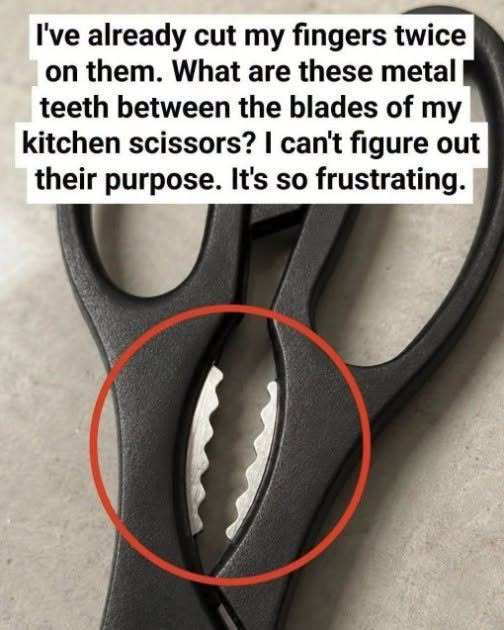
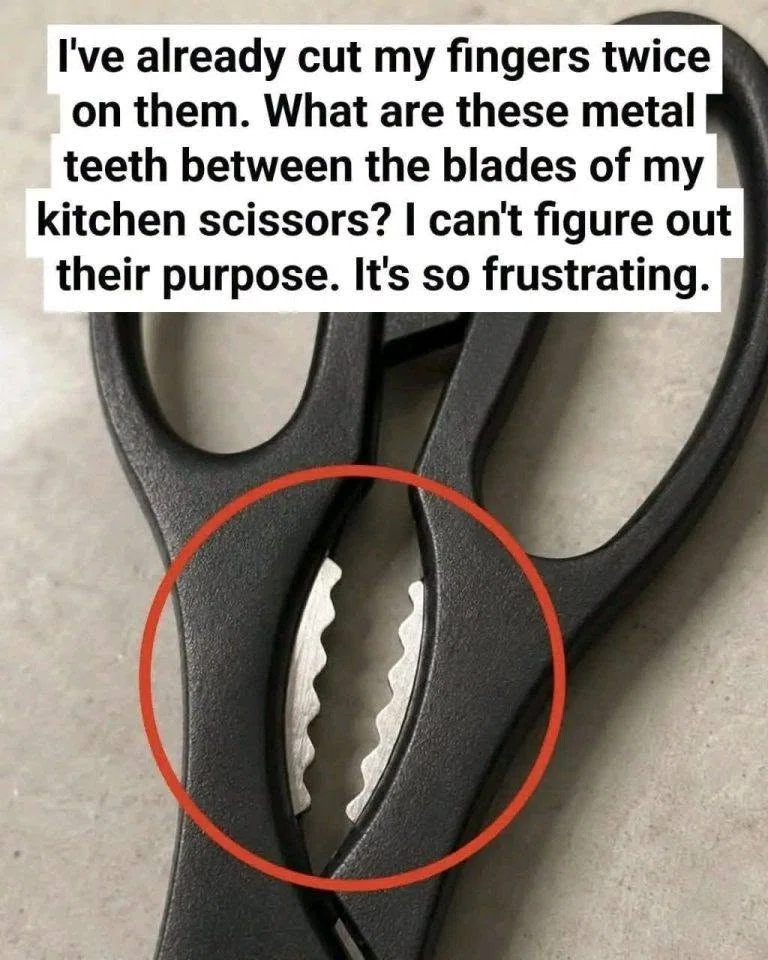
Kitchen scissors are a workhorse tool in any home, used for everything from snipping herbs to opening stubborn packaging. But if you look closely at the inner edge of the blades, just below the pivot point, you will often find a small, jagged section with a distinct row of metal teeth. For many people, this feature is a source of confusion and even frustration—a sharp, serrated ridge that seems to serve no obvious purpose and has a tendency to catch the skin. A viral post from a frustrated user who had cut their fingers twice on this very feature perfectly captures the common sentiment: what on earth is this toothed part actually for?
The answer is surprisingly practical, and once you understand it, the design of your kitchen scissors will suddenly make a lot more sense. That toothed section is not a manufacturing flaw or an accidental hazard. It is a highly specialized, multi-functional feature known as a bone notch, a crimper, or a screw-top gripper. Its primary purpose is to grip and hold slippery, hard-to-hold objects, allowing you to perform tasks that would be difficult or dangerous with a regular blade. Understanding its function can not only prevent accidental cuts but also unlock a range of clever kitchen hacks you never knew you were missing.
The Primary Purpose: Gripping Slippery Items
The toothed section is designed to act as a set of miniature pliers. When you close the scissors, the serrated teeth interlock, providing a secure grip on smooth, round, or slippery objects that would otherwise slide away from a smooth blade.
Opening Screw-Top Bottles
One of the most common and useful applications for this feature is opening tightly sealed screw-top bottles. Whether it is a bottle of wine, a jar of pasta sauce, or a new bottle of cooking oil, the rubberized or toothed grip of the scissors can provide the extra traction needed to break the seal. You simply clamp the teeth around the cap and twist. The serrations bite into the plastic or metal cap, allowing you to apply torque without your hand slipping. This is a particularly valuable hack for individuals with limited hand strength or arthritis, for whom opening jars can be a daily struggle.
Pulling Stubborn Corks
For those who enjoy a glass of wine, the toothed section can serve as an emergency corkscrew. If you find yourself without a proper corkscrew, you can use the teeth of the scissors to grip the cork firmly. By twisting and pulling simultaneously, you can often extract the cork without breaking it. It is not as elegant as a dedicated corkscrew, but it is a practical solution in a pinch.
Gripping Small Nails and Screws
Beyond the kitchen, this feature is useful for DIY and household repairs. The toothed section can grip small nails, screws, or hooks, allowing you to hold them steady while you hammer or screw them into place. This is especially helpful when working in tight spaces where your fingers cannot fit.
The Bone Notch: A Poultry and Fish Essential
Another common use for this feature, particularly in scissors designed specifically for kitchen use, is the bone notch. This is a small, curved indentation, often located near the base of the blades, that is designed to catch and hold bones. The serrated teeth are sometimes part of this notch or are located adjacent to it.
Cutting Through Poultry
When preparing a whole chicken or a game bird, the bone notch allows you to position the bone securely in the notch and apply pressure. This prevents the bone from slipping and allows you to cut through the joint or the bone itself with greater control and safety. It is a common feature in high-quality poultry shears and is designed to make the daunting task of spatchcocking or jointing a chicken much easier.
Scaling and Preparing Fish
For fish, the toothed section can be used to grip the tail or the fins, which are notoriously slippery. This allows you to hold the fish steady while you scale it or fillet it. Some kitchen scissors also have a dedicated fish scaler on the outer edge of the blade, but the inner teeth can be used for gripping as well.
The Crimper: A Tool for Sealing Bags
In some multi-purpose kitchen scissors, the toothed section functions as a crimper. This is a feature designed to seal the edges of plastic bags, such as those used for freezing food or storing snacks.
How It Works
To use it, you simply fold the open edge of the plastic bag and clamp the toothed section over it. When you press the handles together, the teeth create a series of small, interlocking indentations in the plastic, effectively sealing the bag. This is a fantastic alternative to a dedicated bag sealer or a twist tie, and it helps to keep food fresh and prevent freezer burn.
Safety First: Avoiding the “Finger Trap”
The frustration expressed in the viral post is entirely valid. The toothed section is sharp, and if you are not paying attention, it is easy to catch your finger or thumb in it while closing the scissors. This is particularly common when you are using the scissors for a quick task and are not focused on the inner edge of the blades.
How to Stay Safe
To avoid injury, it is important to be mindful of the toothed section when handling the scissors. Always hold the scissors by the handles and keep your fingers clear of the blades, especially the inner edge. When using the toothed section for gripping, be deliberate and careful. Do not force the handles closed if you feel resistance, as this could indicate that your skin or another object is caught in the teeth.
Conclusion: A Feature with Many Uses
The toothed section on your kitchen scissors is not a design error. It is a versatile, multi-functional feature that can make a wide range of tasks easier and safer. From opening stubborn jars to gripping slippery fish, from sealing bags to holding small nails, this small serrated area is a testament to the thoughtful engineering that goes into everyday tools. The next time you pick up your kitchen scissors, take a moment to appreciate this clever feature—and remember to keep your fingers clear of those teeth.
Frequently Asked Questions
What is the toothed part on kitchen scissors called?
It is often called a bone notch, a crimper, or a screw-top gripper, depending on its specific design and intended use.
Is it safe to use the toothed part to open jars?
Yes, it is a common and effective way to open screw-top bottles and jars. The teeth provide extra grip, reducing the risk of slipping. However, be careful not to catch your fingers in the teeth.
Can the toothed part be used to cut bones?
Yes, in many kitchen scissors, the toothed area or the notch is designed to grip and hold bones, making it easier to cut through joints and small bones.
How do I use the toothed part to seal a plastic bag?
Fold the edge of the bag and clamp the toothed section over it. Press the handles together firmly to create a series of interlocking indentations that seal the bag.
Why do some people cut their fingers on the toothed part?
The teeth are sharp and can easily catch the skin if you are not paying attention. It is important to be mindful of the inner edge of the blades and to keep your fingers clear when closing the scissors.