What Is This Metal Object? The Truth About the Vintage Sugar Tongs Behind the Viral Confusion
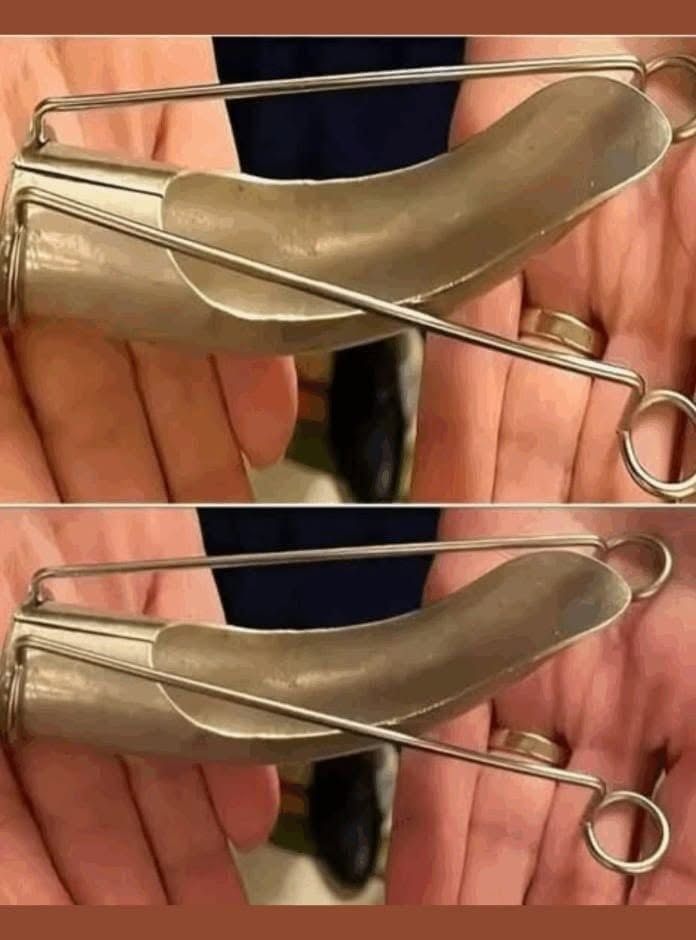
Finding an unfamiliar object tucked away in a drawer can spark immediate curiosity, and sometimes a flash of alarm. The image in question shows a metal tool held in a person’s hand, featuring two long arms connected by a spring mechanism, with curved, spoon-like bowls at the ends. The caption—”My Mom Found This in My Dad’s Drawer… Is It What I’ve Always Feared?”—plays on the anxiety of discovering something mysterious and seemingly out of place.
The reality is far more ordinary, and far more interesting, than the caption suggests. The object is a pair of vintage sugar tongs, a common household utensil that was once a standard part of dining sets and tea services. These tools were used to serve sugar cubes or break pieces from a hard sugar loaf. Understanding their history and design offers a fascinating glimpse into the evolution of everyday dining habits and puts to rest any unfounded fears.
Identifying the Object: A Classic Pair of Sugar Tongs
The item in the photo has all the distinguishing features of antique sugar tongs. The design is elegant in its simplicity: a U-shaped spring connects two arms, each ending in a shallow, curved bowl or grip. The spring mechanism allows the tongs to open and close with a gentle squeeze, while the bowls are shaped to hold a sugar cube securely.
Sugar tongs were typically made from silver, silver plate, or other metals, and they were considered an essential piece of tableware in the 18th and 19th centuries. They were often ornately decorated, with engraved patterns or monograms, and they were passed down through families as heirlooms. The pair in the image appears to be made of a silver-colored metal, with a simple, functional design that suggests it may be an older piece or a reproduction.
The confusion in the viral post likely stems from the object’s shape. When viewed without context, the curved arms and spring mechanism can resemble a medical instrument or something more sinister. However, the presence of the shallow bowls at the ends is the key giveaway: these are designed for gripping and serving food, not for any other purpose.
The History of Sugar Tongs: From Luxury to Everyday Use
To understand why sugar tongs exist, it helps to know a little about the history of sugar itself. In the 17th and 18th centuries, sugar was an expensive luxury imported from the Caribbean and other tropical regions. It was sold in large, hard cones called sugar loaves, which had to be broken into smaller pieces for use.
Because sugar was costly, it was handled with care and presented with ceremony. Sugar tongs became a symbol of refinement and hospitality. Hosts would use them to break off pieces of sugar from the loaf and place them in teacups or serving dishes. The tongs were often displayed alongside fine china and silverware as a mark of the household’s status.
As sugar became cheaper and more widely available in the 19th century, it was increasingly sold in granulated form and later in cubes. Sugar tongs evolved to serve these new forms, becoming smaller and more delicate. By the 20th century, they were less common as a daily utensil, but they remained a feature of formal tea services and traditional dining sets.
Today, vintage sugar tongs are collected as antiques and often appear in estate sales, antique shops, and online marketplaces. They are appreciated for their craftsmanship and their connection to a bygone era of dining etiquette.
Why the Viral Confusion Is Understandable
It is easy to see why someone unfamiliar with sugar tongs might misinterpret the object. The long arms, the spring mechanism, and the curved ends can look clinical or even alarming when seen out of context. The caption’s suggestion that the object might be “what I’ve always feared” taps into a natural human tendency to imagine the worst when confronted with something unfamiliar.
This kind of confusion is common with vintage objects. Many household tools from the past—such as buttonhooks, glove stretchers, and candle snuffers—have shapes that seem strange to modern eyes. Without context, they can be mistaken for something else entirely. The viral nature of the post reflects how quickly a simple misunderstanding can spread when it is framed in a dramatic way.
The best response to this kind of confusion is curiosity rather than fear. Showing the object to an older family member, consulting an antique dealer, or doing a quick search based on its features can quickly reveal its true identity.
How to Tell If Your Sugar Tongs Are Antique
If you have found a pair of sugar tongs and are curious about their age and value, there are several clues to look for. Antique sugar tongs often bear a maker’s mark or a silver hallmark stamped into the metal. These marks can indicate the country of origin, the manufacturer, and the year of production.
The style of the tongs can also provide clues. Earlier examples tend to be larger and more ornate, while later ones are smaller and simpler. The condition of the metal, the presence of wear and patina, and the quality of the craftsmanship are all factors that collectors consider.
For anyone who wants to know more, a professional appraisal or consultation with an antique silver specialist can provide accurate information. Many antique dealers are happy to help identify family heirlooms.
Other Vintage Objects That Often Cause Confusion
Sugar tongs are not the only vintage object that can cause confusion. Several other household items from the past have shapes that are unfamiliar to modern eyes. For example:
Buttonhooks were used to fasten the small buttons on boots and gloves. They have a long handle and a small hook at the end.
Glove stretchers were used to stretch leather gloves back into shape. They have a scissor-like mechanism with rounded ends.
Candle snuffers were used to trim the wicks of candles. They look like a pair of scissors with a small box attached to one blade.
Each of these objects served a practical purpose in its time, and each can look strange or even alarming when encountered without context. The key to understanding them is to appreciate the historical and social context in which they were used.
Conclusion
The metal object in the image is a pair of vintage sugar tongs, a household utensil that was once a common sight on dining tables and tea trays. Its purpose was simple and elegant: to serve sugar cubes or break pieces from a sugar loaf. The viral confusion surrounding the object is understandable, given its unfamiliar shape, but it is ultimately a reminder of how everyday objects from the past can become mysterious to modern eyes. Rather than fearing the unknown, a little curiosity and research can reveal the fascinating history behind even the most ordinary household items.
Frequently Asked Questions
What is the metal object in the image?
It is a pair of vintage sugar tongs, a utensil used to serve sugar cubes or break pieces from a hard sugar loaf. The curved bowls at the ends are designed to grip sugar securely.
Why do sugar tongs look so strange?
Their U-shaped spring mechanism and curved ends can resemble other tools when seen out of context. However, the shallow bowls at the ends are designed for handling food, not for any medical or sinister purpose.
Are sugar tongs still used today?
Sugar tongs are less common today, as granulated sugar and sugar cubes are easy to handle without special tools. However, they are still used in some formal tea services and are collected as antiques.
How can I tell if my sugar tongs are valuable?
Antique sugar tongs may bear maker’s marks or silver hallmarks that indicate their origin and age. The style, condition, and craftsmanship also affect value. A professional appraisal can provide accurate information.
What other vintage objects are often mistaken for something else?
Buttonhooks, glove stretchers, and candle snuffers are examples of vintage household tools that can look strange to modern eyes. Each served a practical purpose in its time and can be understood with a little historical context.