What You Should Never Connect to a Power Strip: Fire Experts Explain the Hidden Risks
Power strips are a ubiquitous convenience in modern homes. They turn a single wall outlet into a hub for our laptops, phone chargers, televisions, and lamps. However, this humble device is also a frequent culprit in residential fires, often because it is used in ways it was never designed to handle. Fire safety experts and electrical engineers consistently warn that a power strip is not a substitute for a permanent wall outlet, and plugging the wrong device into one can turn a convenient tool into a serious hazard.
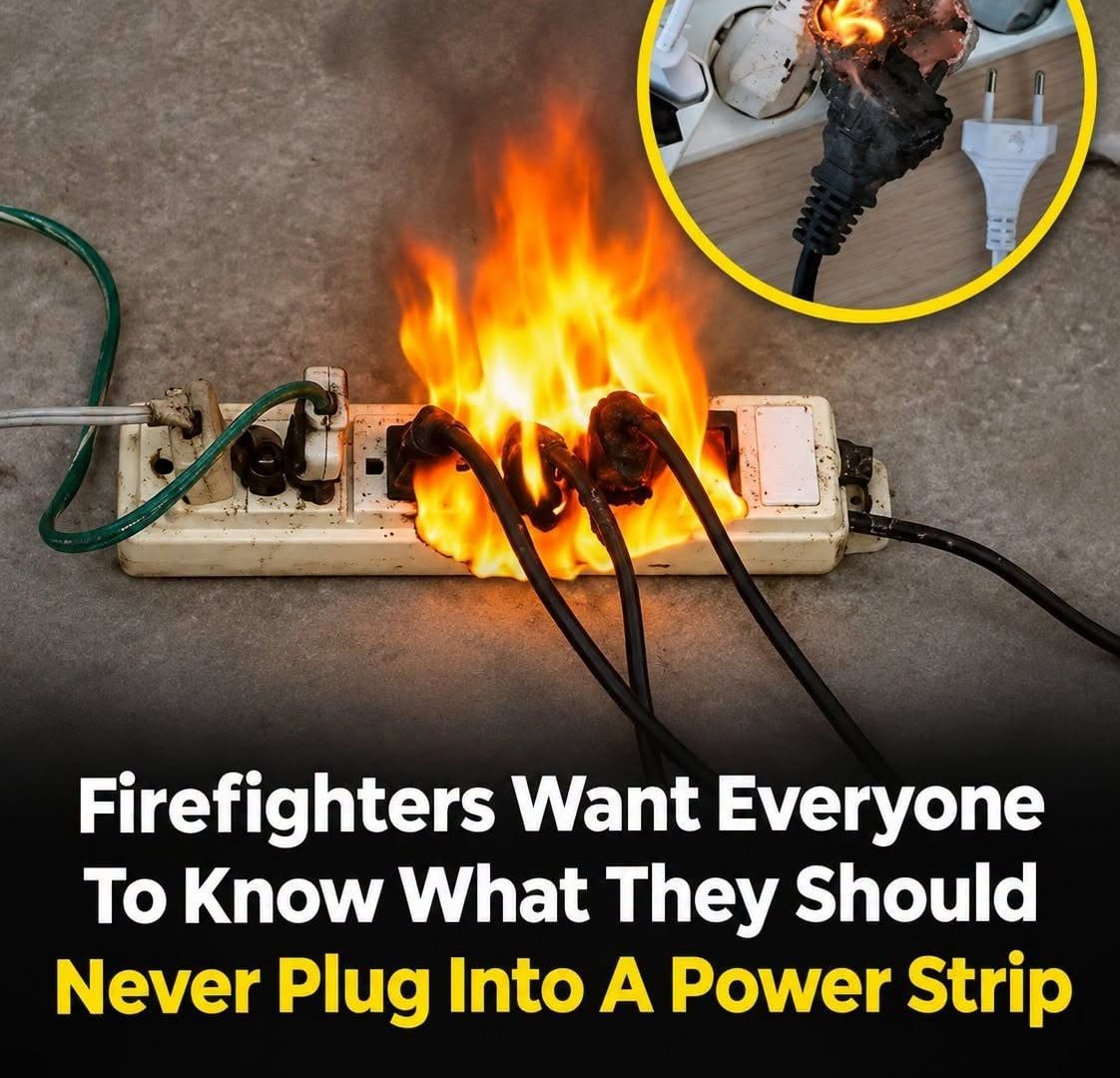
The image of a charred, flaming power strip is not an exaggeration; it is a reality that firefighters respond to regularly. Understanding which appliances are too power-hungry for a standard strip—and the dangerous habits that lead to overheating—is critical for keeping your home safe.
The Core Rule: High-Wattage Appliances Belong in the Wall
The most critical piece of advice from fire safety organizations is simple: major appliances and heat-generating devices should never be plugged into a power strip. A standard power strip is designed to handle the electrical load of smaller electronics, like a computer or a lamp. It is not built to withstand the high current required by appliances that generate heat or run heavy motors.
Space Heaters and Portable Heaters
Space heaters are one of the most dangerous devices to plug into a power strip. They draw a massive amount of electricity to generate heat, far exceeding the capacity of a standard strip. Fire departments across the country have issued warnings after responding to fires caused by space heaters plugged into strips that melted or ignited under the load . The Umatilla County Fire District, for example, shared a photo of a melted power strip to remind the public that these devices “are not designed to handle the high current flow needed for a space heater and can overheat or even catch fire” . These heaters should always be plugged directly into a wall outlet, and ideally, they should be the only thing plugged into that outlet.
Air Conditioners and Large Appliances
Similarly, air conditioners, refrigerators, washing machines, and dryers should never be connected to a power strip. These appliances require dedicated circuits and a steady, high flow of electricity. In 2022, a fire in Palmer, Massachusetts, was caused when an air conditioner was plugged into an extension cord and a power strip; the investigation found the point of origin to be the connection between the appliance cord and the extension cord . State Fire Marshal Peter Ostroskey explicitly stated that extension cords and power strips “can’t safely handle the high current that air conditioners, space heaters, and other heavy appliances use” . The National Fire Protection Association (NFPA) reinforces this, stating that major appliances like refrigerators, dryers, washers, and stoves should be plugged directly into a wall receptacle .
Coffee Makers, Toasters, and Other Kitchen Heaters
The NFPA also advises that only one heat-producing appliance (such as a coffee maker, toaster, or space heater) should be plugged into a receptacle outlet at a time . Plugging a toaster and a coffee maker into the same power strip and running them simultaneously can overload the circuit, creating a significant fire risk. The kitchen is already the most common room for home electrical fires to start (15% of the total), so being cautious with these devices is essential .
The Dangerous Habit of “Daisy Chaining”
Another widespread and dangerous practice is “daisy chaining,” which involves plugging one power strip or extension cord into another to extend reach or add more outlets. This is a violation of both OSHA regulations and the National Electrical Code (NEC) .
Why Daisy Chaining Is a Fire Hazard
When you connect multiple strips together, the strip that is directly plugged into the wall is forced to supply power to a far greater number of devices than it was ever approved to handle. Most power strips are approved for a maximum of four to six individual items . Daisy chaining significantly increases the risk of overloading the circuit, which can lead to overheating, melting, and fire. The Office of Compliance notes that interconnecting these devices “can cause them to become overloaded, which can lead to power failure and possible fire” .
A tragic example of this occurred in Marstons Mills, Massachusetts, where an overnight fire claimed the lives of two pets. Investigators found that the fire was caused by an overloaded power strip that was powering numerous devices, including another power strip, and that one strip’s cord was pinched between two pieces of a metal bedframe . This case highlights how both overloading and physical damage to the cord contribute to fatal fires.
The Hidden Dangers of Cord Placement and Damage
Even if you are only plugging safe, low-wattage devices into your power strip, how you treat the cord can determine whether it becomes a fire hazard.
Cords Under Rugs and Furniture
Running a power strip cord under a rug or carpet is a major safety violation. The heat generated by the electrical current flowing through the cord cannot dissipate when it is trapped under a rug, leading to a buildup of heat that can ignite the carpet or the cord’s insulation . Additionally, furniture legs can pinch or crush the cord, damaging the insulation and exposing live wires, which can cause a short circuit or a shock. The NFPA explicitly states that extension cords and power strip cords should not be run under doors or floor coverings .
Damaged Cords and Plugs
Using a power strip with a damaged cord—one that is frayed, has exposed wires, or has a bent or missing ground pin—is extremely dangerous. The Electrical Safety Foundation International (ESFI) warns that damaged cords should never be used as they can cause electric shock or burns . If a power strip shows any signs of wear, it should be discarded immediately. Additionally, you should never force a three-prong (grounded) plug into a two-slot outlet using an adapter, as this eliminates the safety feature of the grounding conductor .
How to Use a Power Strip Safely
If you must use a power strip, follow these guidelines to reduce the risk of fire:
Choose a Quality Product: Use a name-brand product from a reputable retailer. Low-quality or counterfeit power strips may contain wiring that is inadequate to carry the load .
Check the Rating: Ensure the power strip has a recognized testing laboratory label (such as UL) and internal overload protection .
Calculate the Load: Add up the wattage of the devices you plan to plug in and stay well under the circuit’s limit. Remember that a power strip adds outlets but does not add electrical capacity .
Ensure Ventilation: Place power strips in areas with plenty of air circulation to disperse heat. Do not enclose them in tight spaces .
Keep It Temporary: Extension cords and power strips are intended for temporary use, not as permanent wiring solutions .
Conclusion
The convenience of a power strip should never come at the cost of safety. The next time you reach to plug in a space heater, an air conditioner, or a second power strip, pause and reconsider. These devices are not designed to handle the electrical demand of heavy appliances or the compounded load of daisy-chained strips. By plugging high-wattage appliances directly into wall outlets and treating power strips as temporary, low-load solutions, you can significantly reduce the risk of a devastating electrical fire in your home.
Frequently Asked Questions
Q: Can I plug a refrigerator into a power strip? A: No. Refrigerators draw a substantial amount of power, especially when the compressor kicks on, and should be plugged directly into a dedicated wall outlet. Power strips are not designed to handle that load .
Q: Is it safe to plug a microwave into a power strip? A: It is not recommended. Microwaves are high-wattage appliances that can draw more current than a standard power strip can safely handle, particularly if other devices are also plugged into the strip. A dedicated wall outlet is the safest option.
Q: What does “daisy chaining” mean, and why is it dangerous? A: Daisy chaining is plugging one power strip or extension cord into another. It is dangerous because it can overload the first strip in the chain, causing it to overheat and potentially catch fire. It is a violation of electrical codes .
Q: Can a power strip cause a fire even if it’s not overloaded? A: Yes. A power strip can cause a fire if its cord is damaged (e.g., frayed or pinched under furniture), if it is covered by a rug (trapping heat), or if it is a low-quality product with inadequate internal wiring .
Q: What should I do if my power strip feels warm to the touch? A: A power strip that feels warm or hot is a warning sign of overloading or a faulty connection. Unplug it immediately and stop using it. If it smells like burning plastic, evacuate the area and call the fire department .