Why Cabin Crew Keep Their Hands Under Their Thighs During Takeoff: The Safety Secret Behind the Brace Position
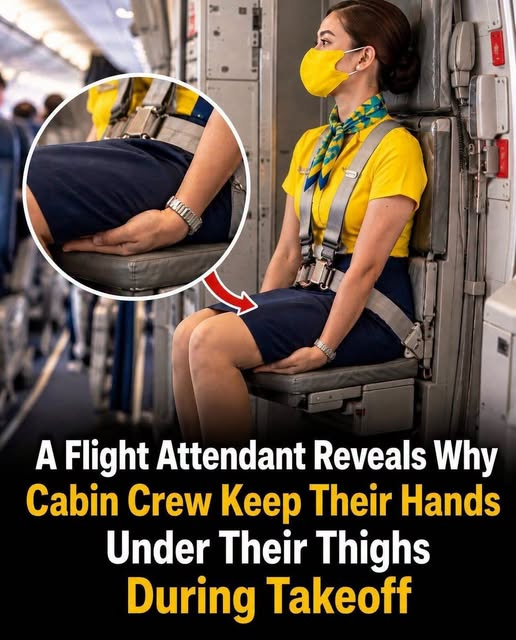
If you have ever watched a flight attendant during takeoff or landing, you may have noticed a peculiar posture: they sit upright, strapped tightly into their jump seats, with their hands tucked firmly underneath their thighs. To the casual observer, it looks uncomfortable or perhaps like a strange habit. But this specific pose is not a quirk of the job—it is a deliberate, safety-critical procedure known as the brace position, and it is designed to protect the crew so they can protect you.
Understanding why flight attendants adopt this posture reveals a great deal about the rigorous safety protocols that govern commercial aviation. It is a practice born from hard lessons learned about the physics of impact, the importance of protecting the body’s most vital tools, and the mental preparation required for an emergency. This article explores the reasons behind the “hands under thighs” position, the science of the brace, and what flight attendants are actually doing while they sit in that rigid pose.
The Brace Position: A Critical Safety Protocol
The posture adopted by flight attendants during takeoff and landing is a variation of the brace position recommended for passengers. The goal is to minimize injury in the event of a sudden deceleration, impact, or severe turbulence. Takeoff and landing are statistically the most dangerous phases of flight, accounting for the majority of aviation accidents. During these critical moments, the crew must be prepared for an emergency at a moment’s notice.
Why the Hands Must Be Tucked
The most distinctive element of the flight attendant’s brace position is the placement of the hands under the thighs. This is not a random choice. When an aircraft experiences a sudden stop, the body is thrown forward. If the arms are free, they will flail instinctively. This can lead to several serious injuries:
Facial and Head Trauma: Flailing arms can strike the face, causing injury to the eyes, nose, and mouth.
Fractures and Dislocations: The force of a sudden impact can break wrists, dislocate shoulders, or fracture the arms if they are not secured.
Injury to Others: An unrestrained arm can strike a nearby passenger or crew member.
By tucking their hands under their thighs, flight attendants effectively pin their arms in place, preventing them from flailing and reducing the risk of these injuries.
Protecting the Tools of the Trade
The primary reason for this posture, however, is not just about personal safety. A flight attendant’s hands are their most important tools. In an emergency evacuation, they must be able to:
Open emergency exit doors, which can be heavy and require significant force.
Operate safety equipment, such as fire extinguishers, oxygen bottles, and life rafts.
Unfasten seatbelts, assist passengers, and guide them to safety.
If a flight attendant’s arms are injured during a hard landing or impact, they cannot perform these critical tasks. By protecting their hands, they ensure that they remain physically capable of fulfilling their duty to evacuate the aircraft and save lives. The posture is a sacrifice of comfort for the sake of operational readiness.
The Silent Review: What Flight Attendants Are Doing in the Brace Position
While they are seated in this rigid position, flight attendants are not simply resting. They are conducting what is known in the industry as a “silent review.” This is a mental rehearsal of emergency procedures. During this time, they are mentally preparing for the worst-case scenario.
The Mental Checklist
A silent review involves a systematic mental checklist:
Locating Exits: Mentally confirming the location of the nearest emergency exits and the equipment needed to operate them.
Reviewing Commands: Recalling the specific verbal commands they must shout to direct passengers during an evacuation (e.g., “Brace! Brace! Heads down! Stay down!”).
Assessing the Cabin: Scanning the cabin for potential hazards, such as blocked aisles or passengers who may need extra assistance.
Planning the Evacuation: Mentally simulating the steps they would take to open the door, assess the outside environment, and usher passengers out.
This mental preparation is crucial because it reduces reaction time in a crisis. When an emergency occurs, the flight attendant is already mentally primed to act.
Variations in Airline Procedures
It is important to note that the specific “hands under thighs” variation is not universal across all airlines. While it is a standard procedure for many international carriers, some major airlines (including several in the United States) train their crews to place their hands on their laps or hold the seat instead. The core principle, however, remains the same: the body must be stabilized, and the hands must be kept free and protected.
The Evolution of Safety
The brace position has evolved over decades of aviation research. Early aircraft had different seating arrangements and safety protocols. Today’s procedures are the result of extensive testing and analysis of crash dynamics. The “hands under thighs” position is a refined technique that has been shown to be effective in protecting crew members during impact.
Conclusion: A Small Posture with a Big Purpose
The next time you see a flight attendant sitting with their hands tucked under their thighs during takeoff, you will know that it is not a sign of boredom or discomfort. It is a carefully practiced safety posture designed to protect their bodies, preserve their ability to act in an emergency, and prepare their minds for the critical tasks ahead. It is a silent, visible reminder of the professionalism and dedication that cabin crew bring to every flight. The posture is a small detail, but it speaks volumes about the commitment to safety that underpins the entire aviation industry.
Frequently Asked Questions
Why do flight attendants sit on their hands during takeoff?
They tuck their hands under their thighs to secure their arms. This prevents them from flailing and sustaining injuries in the event of a sudden impact, ensuring they remain physically capable of opening exits and assisting passengers in an emergency.
Is this position required for passengers too?
Passengers are instructed to adopt a brace position in an emergency, but the specific posture may differ. The crew’s position is designed for their specific duties and seating.
Do all airlines require this specific posture?
No. While the principle of bracing is universal, the exact hand placement can vary by airline. Some crews place their hands on their laps or hold the seat instead of tucking them under their thighs.
What are flight attendants thinking about during takeoff?
They are conducting a “silent review,” mentally rehearsing emergency procedures. They are locating exits, reviewing commands, and preparing to act in case of an emergency.
Is takeoff really the most dangerous part of a flight?
Statistically, takeoff and landing are the phases of flight with the highest risk of accidents. This is why crew members are required to be seated and braced during these times.