Snake or Elephant? Your Answer Might Surprise You and What This Visual Test Really Reveals
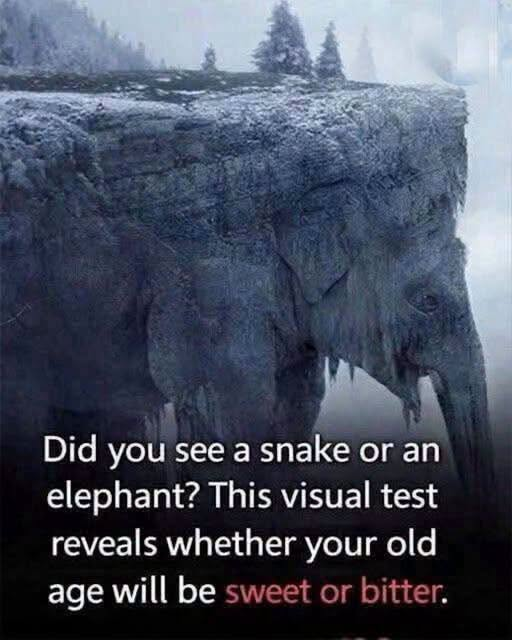
A frost-covered cliff face in a misty, mountainous landscape seems like an unlikely place to find a hidden animal. Yet the viral image claims that what you see first—a snake or an elephant—can reveal whether your old age will be “sweet or bitter.” The premise is engaging, the imagery is striking, and the promise of a glimpse into your future is irresistible. But what is actually happening when your brain resolves this ambiguous shape into one animal or the other? The answer lies not in fortune-telling, but in the fascinating psychology of visual perception.
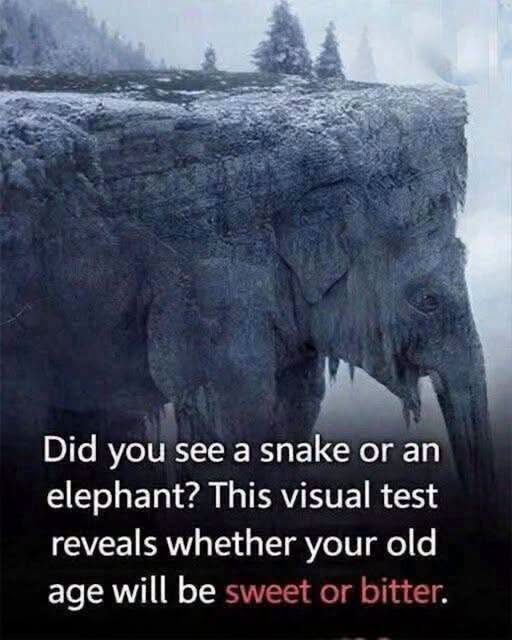
The image is a classic example of an ambiguous figure, a type of optical illusion designed to be interpreted in more than one way. The rocky outcrop, with its jagged edges and dripping icicles, can be seen as the head of an elephant on the right side, with its trunk hanging down, or as a coiled snake on the left. The reality is that the image is a photograph of a natural rock formation that happens to resemble both, and your brain is doing the work of finding familiar patterns in random shapes. Understanding why you see what you see—and why the “sweet or bitter” claim is entertainment rather than science—can help you enjoy the puzzle without taking its predictions too seriously.
The Psychology of Ambiguous Images
The snake-or-elephant image is a textbook ambiguous figure. Like the famous duck-rabbit illusion or the Rubin vase, it presents visual information that can be organized into two distinct, coherent interpretations. Your brain cannot easily hold both interpretations at the same time, so it “flips” between them.
Pareidolia: Finding Faces and Animals in Random Patterns
The phenomenon at work here is called pareidolia, the human tendency to perceive meaningful images—especially faces, animals, or familiar objects—in random or ambiguous visual patterns. This is why we see shapes in clouds, faces in toast, or animals in rock formations. Our brains are wired to recognize patterns, and this ability is so strong that it can override the actual visual information in front of us.
The Role of Priming and Attention
What you see first is influenced by several factors. Priming is one of them: if someone tells you to look for an elephant, you are more likely to see the elephant. Your attention also matters. If your eyes are drawn to the right side of the image, where the elephant’s trunk is formed by the icicles, you may see the elephant first. If you focus on the coiled shape on the left, the snake may emerge. There is no single “correct” answer, because the image is genuinely ambiguous.
The “Sweet or Bitter” Claim: Entertainment, Not Science
The viral caption suggests that your answer reveals whether your old age will be sweet or bitter. This is a form of Barnum effect framing, where a vague, universally applicable statement is presented as a personalized insight. The claim is not based on any scientific evidence. There is no research linking the perception of an ambiguous image to the quality of your future life.
Why These Tests Go Viral
These quizzes are popular because they are quick, visually engaging, and offer a moment of self-reflection. They create a shared experience that people can discuss and compare. The “sweet or bitter” framing adds an emotional hook, inviting viewers to consider their own future and their outlook on life. It is a clever piece of engagement-driven content, not a psychological assessment.
What the Snake and Elephant Might Symbolize
While the test itself is not scientific, the animals it features carry rich cultural and psychological symbolism that can be a fun starting point for reflection.
The Elephant: Wisdom, Memory, and Strength
In many cultures, the elephant is a symbol of wisdom, longevity, memory, and strength. It is a creature of deep family bonds and gentle power. Seeing the elephant first might be interpreted by some as a sign of a grounded, patient, and resilient nature—qualities that could contribute to a “sweet” old age.
The Snake: Transformation, Renewal, and Mystery
The snake is a complex symbol. In some traditions, it represents transformation, healing, and renewal (as in the shedding of its skin). In others, it is associated with danger, deceit, or hidden knowledge. Seeing the snake first might be interpreted as a sign of adaptability, intuition, or a life marked by change and transformation.
Neither interpretation is inherently “sweet” or “bitter.” They are simply different lenses through which to view the same image.
Conclusion
The snake-or-elephant image is a beautiful example of how our brains construct meaning from ambiguous visual information. What you see first is a product of pareidolia, priming, and attention—not a prophecy about your future. The claim that your answer reveals whether your old age will be sweet or bitter is a piece of viral entertainment, not a scientific finding. Enjoy the puzzle for what it is: a fascinating glimpse into the workings of human perception and a lighthearted conversation starter. The next time you see a similar test, you can appreciate the psychology behind it without worrying about what it “says” about your destiny.
Frequently Asked Questions
What does it mean if I see the snake first?
It does not mean anything definitive about your future. In the context of the viral quiz, seeing the snake first is simply one of two possible interpretations of an ambiguous image. The “sweet or bitter” claim is not scientifically validated.
What does it mean if I see the elephant first?
Like seeing the snake, seeing the elephant first is a result of how your brain processes the ambiguous visual information. It is influenced by priming, attention, and individual differences, not by a prediction of your old age.
Is this image photoshopped?
The image appears to be a photograph of a natural rock formation that resembles an animal. It may have been selected or slightly enhanced to emphasize the resemblance, but the ambiguity is inherent in the shape of the rock and ice.
Why do people see different things?
People see different things because the image is genuinely ambiguous. The brain’s interpretation is influenced by factors such as where you look first, what you have been primed to see, and your personal associations with the shapes.
Is this a real psychological test?
No. It is a form of viral entertainment, not a validated psychological assessment. It should not be used to make decisions about your life or your future.