This Is What Happens After Sleeping With… The Truth About Eyelash Mites and the Viral Image
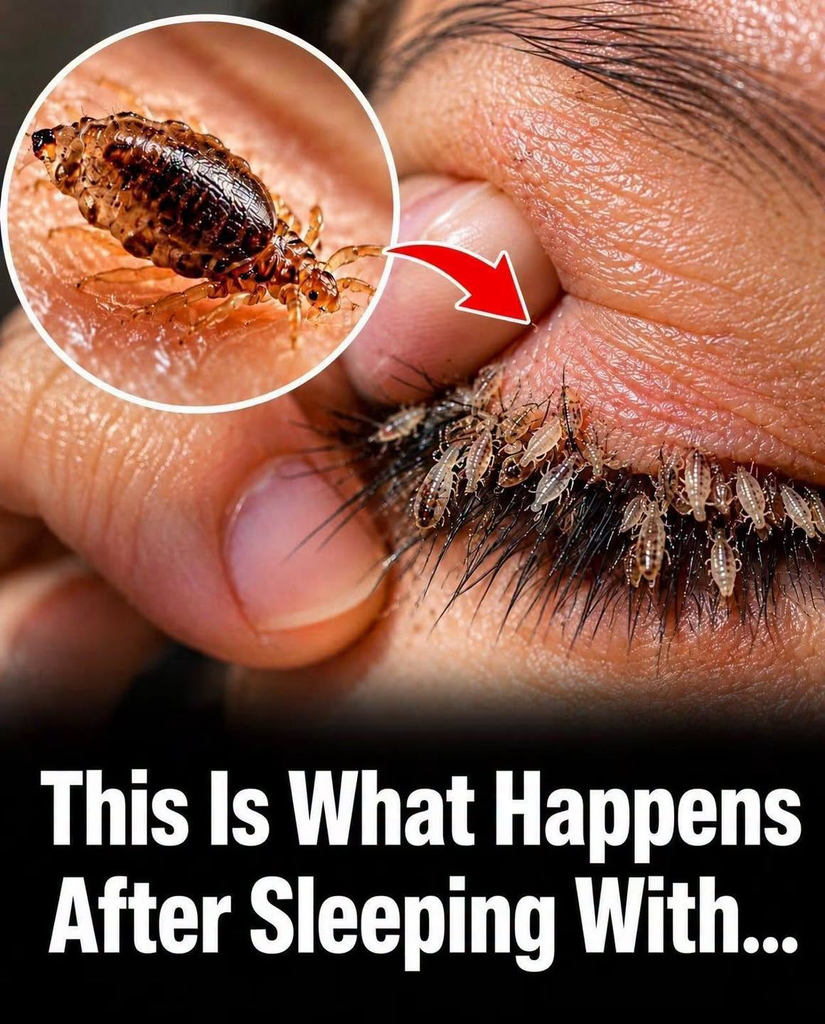
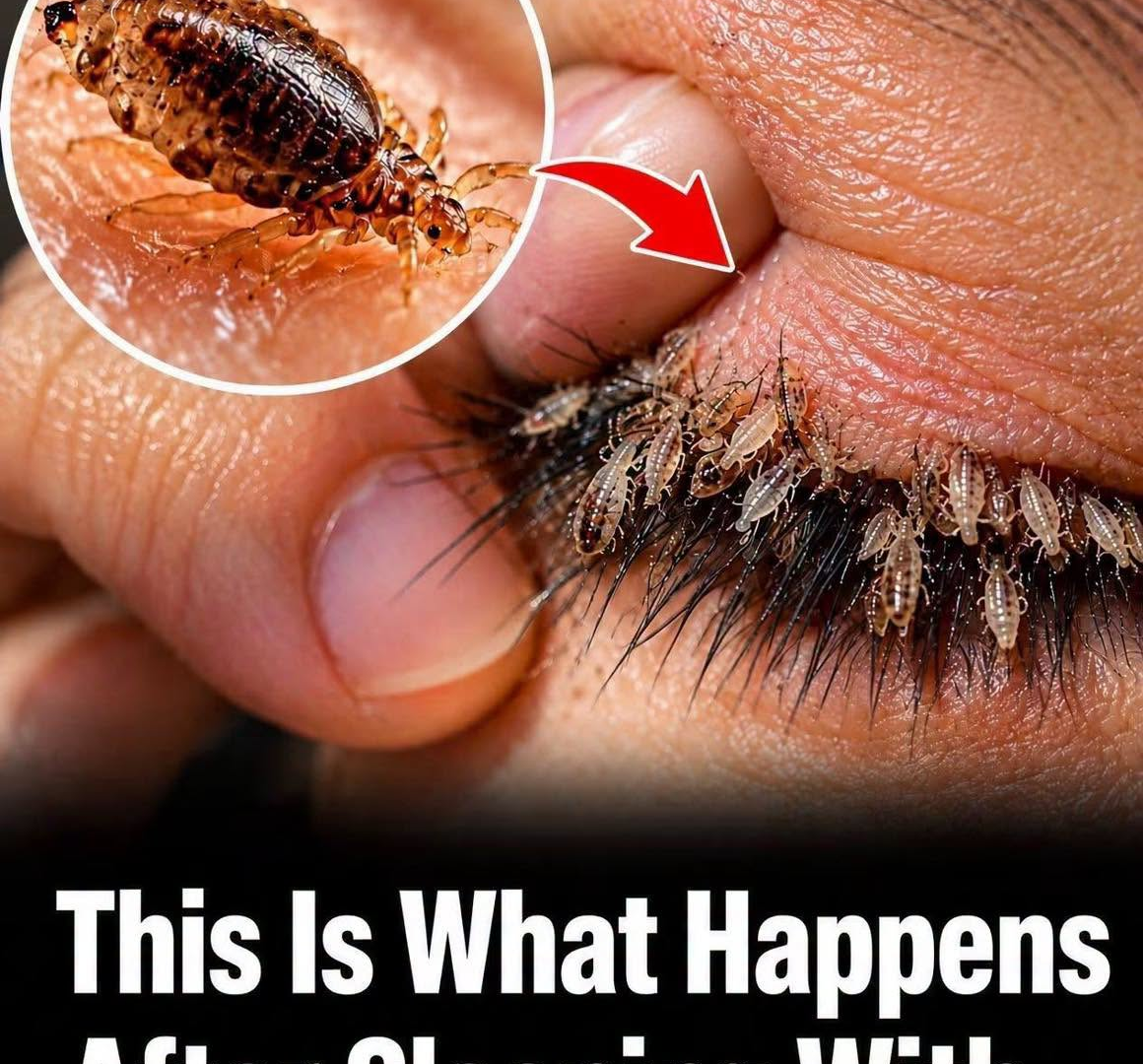
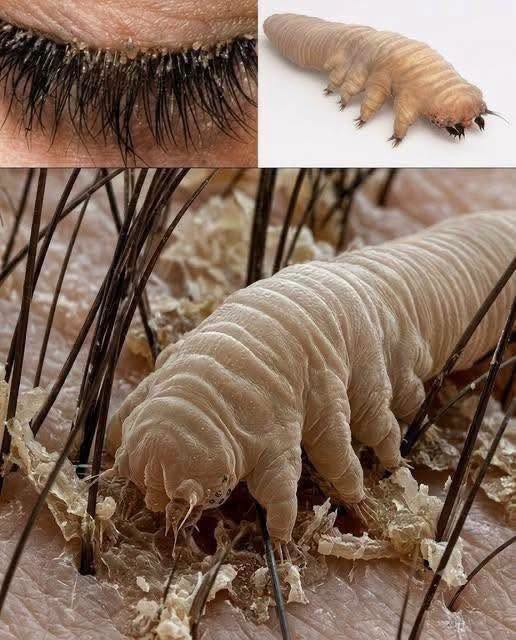
The image is designed to shock: a close-up of an eye with what appears to be a swarm of tiny, translucent insects clinging to the eyelashes, alongside a magnified view of a larger, crab-like creature. The caption warns of what happens “after sleeping with…” something, implying that a common bedtime habit leads to a horrifying infestation. The reality is far less dramatic, but no less fascinating. The creatures shown are Demodex mites, and they are not a consequence of a single night’s poor hygiene. They are microscopic organisms that live on the skin of the vast majority of adult humans, and for most people, they are completely harmless.
What Are Demodex Mites?
Demodex mites are tiny, eight-legged arachnids that live in or near hair follicles on mammals. Two species are commonly found on humans: Demodex folliculorum, which lives in hair follicles, and Demodex brevis, which lives in the sebaceous (oil) glands. They are most commonly found on the face, particularly on the eyelids, eyebrows, and around the nose.
They Are Normal Skin Flora
It is important to understand that Demodex mites are not a sign of filth or a rare tropical disease. They are a normal part of the human skin microbiome. Studies have shown that they are present in the majority of adults, and their prevalence increases with age. They feed on dead skin cells and the oils produced by the skin, and in return, they cause no harm in most cases.
The Myth of the “Sleeping With” Caption
The viral caption is intentionally vague and misleading. It suggests that sleeping with something—perhaps makeup, a pet, or a dirty pillowcase—is the cause of a sudden infestation. While poor hygiene can contribute to an overgrowth of mites, the mites themselves are likely already present on your skin. The image is a magnification that makes them look terrifying, but at their actual size (about 0.3 millimeters), they are invisible to the naked eye.
When Do Demodex Mites Become a Problem?
For most people, Demodex mites are harmless commensals. However, in certain circumstances, they can multiply excessively and cause a condition called demodicosis.
The Causes of Overgrowth
An overgrowth of mites can occur when the skin’s natural balance is disrupted. This can happen due to:
A weakened immune system: People with compromised immune systems may be more susceptible.
Hormonal changes: Fluctuations in hormones can affect oil production, creating a more favorable environment for mites.
Skin conditions: Rosacea, blepharitis, and seborrheic dermatitis are often associated with Demodex overgrowth.
Poor eyelid hygiene: Not removing makeup or not cleaning the eyelids can allow oils and dead skin to accumulate, providing more food for the mites.
Symptoms of Demodicosis
When mites overpopulate, they can cause inflammation and irritation. Symptoms may include:
Itchy, red, or irritated eyes: This is common when mites affect the eyelids.
Crusting or scaling along the lash line: This can look similar to the crusting seen in blepharitis.
Burning or stinging sensation: The skin around the eyes may feel uncomfortable.
A gritty feeling in the eyes: This can be accompanied by excessive tearing or dryness.
Visible “collarettes”: These are cylindrical, dandruff-like scales around the base of the eyelashes, which are a classic sign of Demodex infestation.
The Image’s Exaggeration
The image uses a technique called macro photography or digital compositing to create a dramatic effect. The mites are real, but the image is not a realistic representation of what a person would see in the mirror. The magnified creature in the circle is a Demodex mite, and the ones on the lashes are likely a composite or a very heavy infestation that has been enhanced for visual impact. The caption’s use of “sleeping with…” is a clickbait tactic designed to link a normal skin organism to a common habit, creating a false narrative.
What Should You Do?
If you are concerned about Demodex mites or are experiencing symptoms like itchy, crusty eyelids, there are steps you can take.
Gentle Eyelid Hygiene
The most effective way to manage Demodex mites is to practice good eyelid hygiene. This includes:
Daily cleansing: Use a gentle eyelid cleanser or diluted baby shampoo to clean the base of the eyelashes.
Tea tree oil: Some studies suggest that tea tree oil (diluted appropriately) can be effective in reducing Demodex populations, but it should be used with caution and under medical guidance.
Avoid heavy makeup: If you use eye makeup, remove it thoroughly every night. Do not share eye makeup, and replace it regularly.
When to See a Doctor
If you experience persistent eye irritation, crusting, or redness, you should see an eye care professional. They can diagnose the issue and prescribe treatments, such as medicated eyelid wipes or topical medications, if necessary.
Conclusion
The viral image is a shocking but misleading representation of Demodex mites. These microscopic creatures are a normal part of the human skin microbiome, and for most people, they cause no problems. While poor hygiene can contribute to an overgrowth, a single night of sleeping with makeup or a dirty pillowcase will not cause a sudden infestation. The image’s caption is designed to create fear and engagement, not to provide accurate medical information. By understanding the reality of Demodex mites and practicing good eyelid hygiene, you can keep your eyes healthy and put the fear of this “sleeping with…” myth to rest.
Frequently Asked Questions
What are the bugs on the eyelashes in the image?
They are Demodex mites, tiny organisms that live in hair follicles and oil glands. They are a normal part of the skin’s microbiome and are present on most adults.
Can you get Demodex mites from sleeping with someone?
No. Demodex mites are not a sexually transmitted infection or a sign of infidelity. They are acquired naturally through close contact with the skin, and most people have them without ever knowing it. They are not a sign of poor hygiene.
Are Demodex mites dangerous?
For most people, no. They are harmless commensals. However, in some cases, an overgrowth can cause a condition called demodicosis, which can lead to eyelid inflammation (blepharitis) and eye irritation.
How do you get rid of Demodex mites?
You cannot completely eradicate them, but you can manage their population with good eyelid hygiene. This includes daily cleansing of the eyelid margins with a gentle cleanser or diluted tea tree oil. For persistent issues, see a doctor.
Is the image real?
The image is a composite or a highly magnified view. It shows a severe infestation that is unlikely to occur in a healthy person without underlying risk factors. The caption is designed to be sensational and is not an accurate representation of what the mites look like at their actual size.