The Consequences of Sleeping with Unwashed Eyelashes: Understanding Demodex Mites and Eye Health
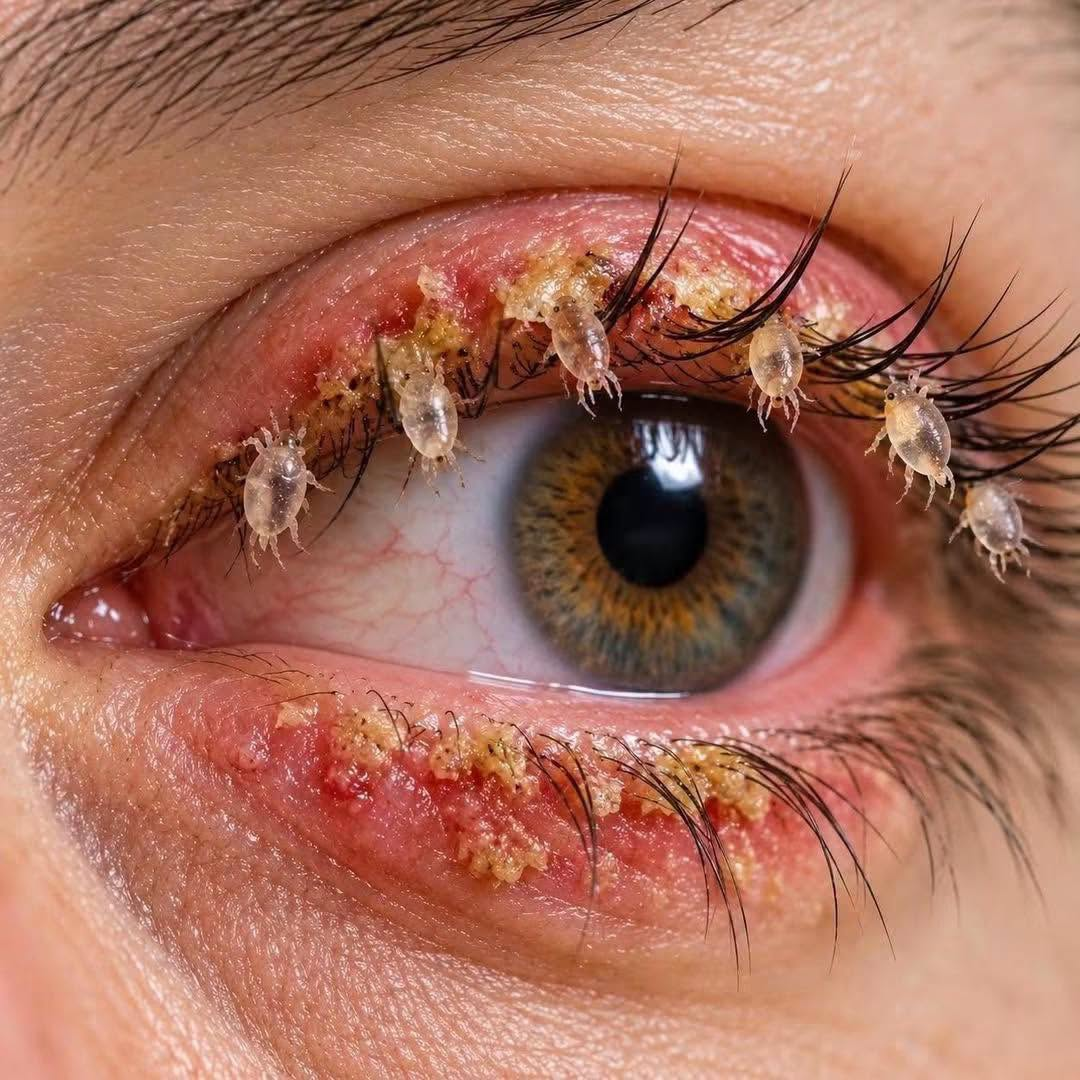
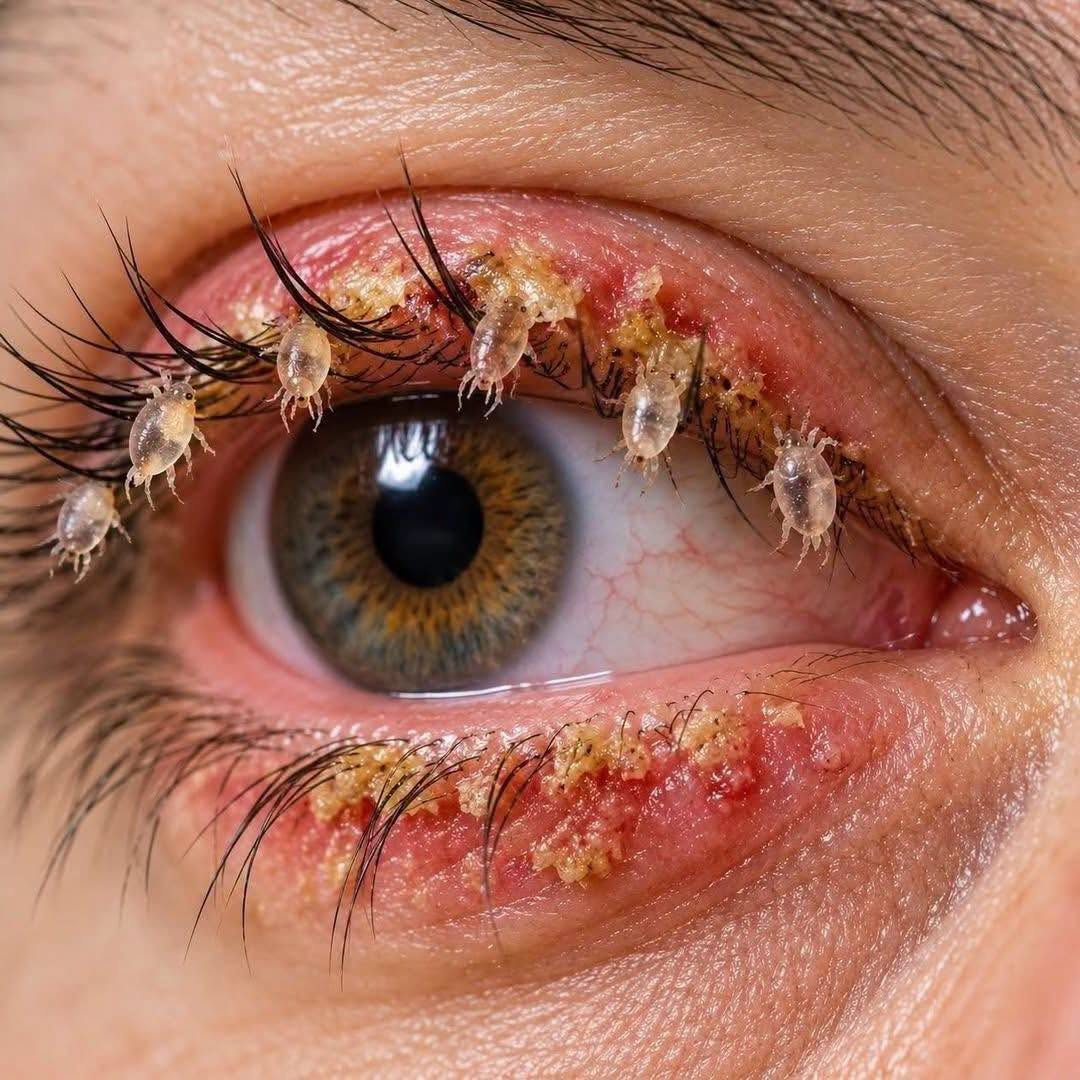
The image is designed to shock: a close-up of an eye where the eyelashes appear to be crawling with tiny, translucent organisms, surrounded by crusted, inflamed skin. The caption warns of the “consequences of sleeping with a…” leaving the reader to fill in the blank. While the specific image may be a highly exaggerated or digitally created representation, it points to a real and often overlooked medical condition: an infestation of Demodex mites on the eyelids, known as Demodicosis.
For many people, the idea of microscopic mites living on their face is the stuff of nightmares. However, the reality is that these tiny arachnids are incredibly common. They are part of the normal skin microbiome for most adults. The problem arises not from their presence, but from their overpopulation, which can lead to inflammation, discomfort, and a range of eye issues. Understanding how these mites live, how they can become a problem, and the crucial role of sleep habits—particularly the failure to remove eye makeup—can help demystify this condition and encourage better eyelid hygiene.
What Are Demodex Mites?
Demodex mites are microscopic, eight-legged organisms that belong to the arachnid family, making them distant relatives of spiders and ticks. Two species are commonly found on humans: Demodex folliculorum, which lives in the hair follicles, and Demodex brevis, which lives in the sebaceous (oil) glands .
These mites are obligate ectoparasites, meaning they spend their entire lives on the human body. They feed on dead skin cells and sebum (oil), and they are most commonly found on the face, particularly in the eyebrows, eyelashes, and the folds of the nose and cheeks. They are typically transmitted through direct contact, and their presence is not a sign of poor hygiene; even the cleanest individuals can harbor them .
The Role of Sleep and Makeup in Mite Overpopulation
The “consequences of sleeping with” a full face of makeup or unwashed eyelashes is the key to understanding how a normal, harmless population of mites can turn into a problematic infestation.
The Allure of the Eyelash Follicle
The eyelash follicle is an ideal environment for Demodex folliculorum. It provides a warm, dark, and protected space with a steady supply of oil and dead skin cells. When you sleep without removing mascara, eyeliner, or other eye makeup, you are creating an even more inviting environment for these mites.
Makeup can trap debris, oil, and dead skin against the eyelid margin, creating a buildup that serves as a feast for the mites. The sticky residue of mascara can also physically trap the mites near the base of the lashes, preventing them from being naturally cleansed away during the day. Over time, this can lead to a rapid increase in their population.
The Nighttime Activity of Mites
Demodex mites are nocturnal. They are most active at night, when they emerge from the hair follicles to mate and move across the skin. If you are sleeping with unwashed eyelids, you are providing them with a perfect opportunity to feed and reproduce undisturbed. The combination of a warm environment, a food source (sebum and trapped skin cells), and the absence of cleansing during the night creates a cycle that allows the mite population to explode.
Symptoms and Consequences of Demodicosis
When the mite population becomes too large, it can trigger an inflammatory response, leading to a condition called Demodicosis. This is not an infection in the traditional sense, but an inflammatory reaction to the mites and the bacteria they carry.
Common Symptoms
Itching and Irritation: The eyelids may feel itchy, burning, or irritated, particularly at the base of the lashes.
Crusting and Debris: A key sign is the presence of cylindrical dandruff or “sleeves” around the base of the eyelashes. This is a buildup of mite excrement and skin cells.
Redness and Inflammation: The eyelid margins may become red and swollen, a condition known as blepharitis.
Eyelash Loss: In severe cases, the mites can damage the hair follicles, leading to eyelash thinning or loss (madarosis).
Blurred Vision: The inflammation and debris can affect the tear film, leading to dry eye and blurred vision.
These symptoms can be uncomfortable and, if left untreated, can lead to more serious conditions such as conjunctivitis or keratitis.
Prevention and Treatment: The Importance of Eyelid Hygiene
The good news is that Demodicosis is both preventable and treatable. The most important step is establishing a consistent and thorough eyelid hygiene routine.
Never Sleep in Eye Makeup
The single most effective way to prevent an overgrowth of Demodex mites is to remove all eye makeup before going to sleep. This is not just a matter of vanity; it is a matter of eye health. Use a gentle, oil-free eye makeup remover and a soft cotton pad to gently wipe away all traces of makeup from the lashes and eyelids.
Daily Eyelid Cleansing
Incorporate a daily eyelid cleansing routine into your skincare regimen. There are specialized eyelid cleansers available that are designed to remove debris, oil, and bacteria from the eyelid margin without irritating the eyes. These can be used with a gentle massaging motion to help dislodge any debris at the base of the lashes.
Tea Tree Oil
Tea tree oil has been shown to be effective in reducing Demodex mite populations. However, it must be used with extreme caution around the eyes, as it can be irritating. Specialized eyelid wipes or foams containing low concentrations of tea tree oil are available and are a safer alternative to applying pure essential oil.
Warm Compresses
Applying a warm compress to the closed eyes for a few minutes can help to soften the debris and oil at the base of the lashes, making it easier to clean. It can also provide relief from the itching and irritation.
When to See a Doctor
If you are experiencing persistent symptoms such as itching, redness, crusting, or eyelash loss, it is important to see an eye doctor (ophthalmologist or optometrist). They can diagnose Demodicosis through a simple examination, sometimes using a microscope to look at an eyelash sample. They can then prescribe appropriate treatments, which may include prescription eyelid cleansers, topical medications, or, in severe cases, oral medications.
Conclusion: A Simple Habit for Healthy Eyes
The image of mites on the eyelashes is a powerful reminder of the unseen world that shares our bodies. While the idea of Demodex mites can be unsettling, they are a normal part of the human microbiome. The key to keeping them in check is not fear, but good hygiene. The simple act of removing your eye makeup before bed and cleaning your eyelids daily can prevent a normal population of mites from becoming a painful and problematic infestation. Your eyes will thank you for it.
Frequently Asked Questions
Are Demodex mites on my eyelashes normal?
Yes, Demodex mites are extremely common and are part of the normal skin microbiome for most adults. They only become a problem when they overpopulate and cause inflammation .
Does sleeping with makeup cause mites?
Sleeping with makeup does not cause the mites, but it creates an environment that allows them to multiply. The trapped oil, debris, and dead skin cells provide a food source and a breeding ground for the mites .
What are the symptoms of a mite infestation on the eyes?
Symptoms include itching, burning, crusting around the eyelashes (cylindrical dandruff), redness of the eyelids, and in severe cases, eyelash loss .
How is Demodicosis treated?
Treatment involves thorough eyelid hygiene, including daily cleansing and the use of tea tree oil products designed for the eyes. In persistent cases, a doctor may prescribe topical or oral medications .
Can I prevent a mite infestation?
Yes. The most important preventive measure is to never sleep in eye makeup and to maintain a consistent daily eyelid cleansing routine.