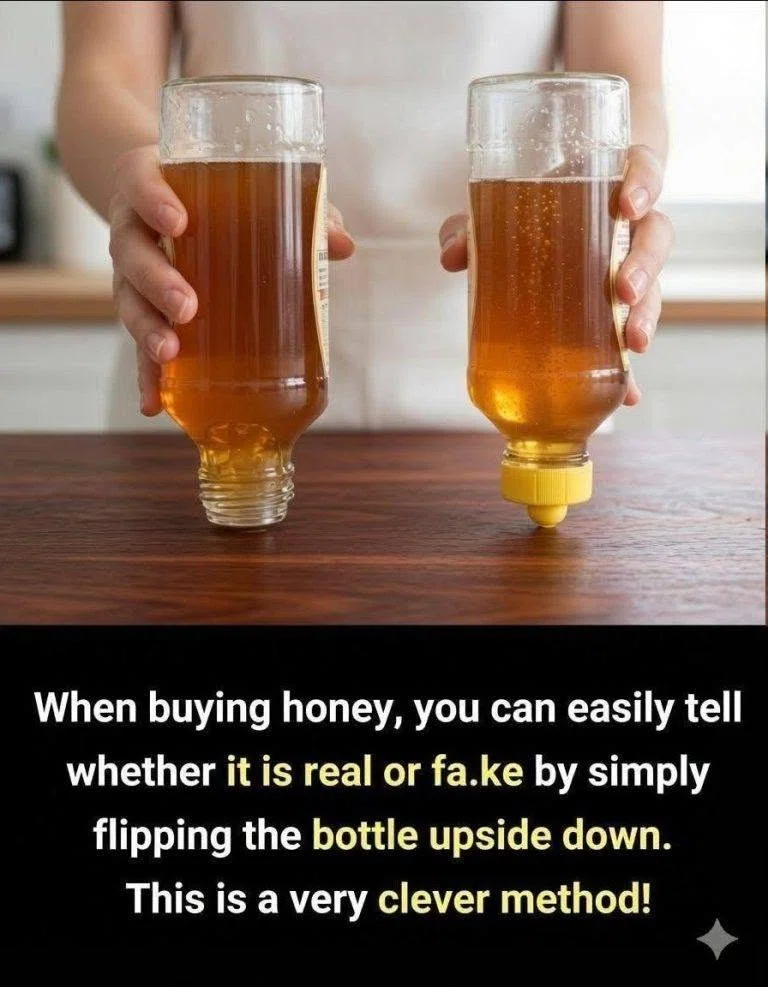
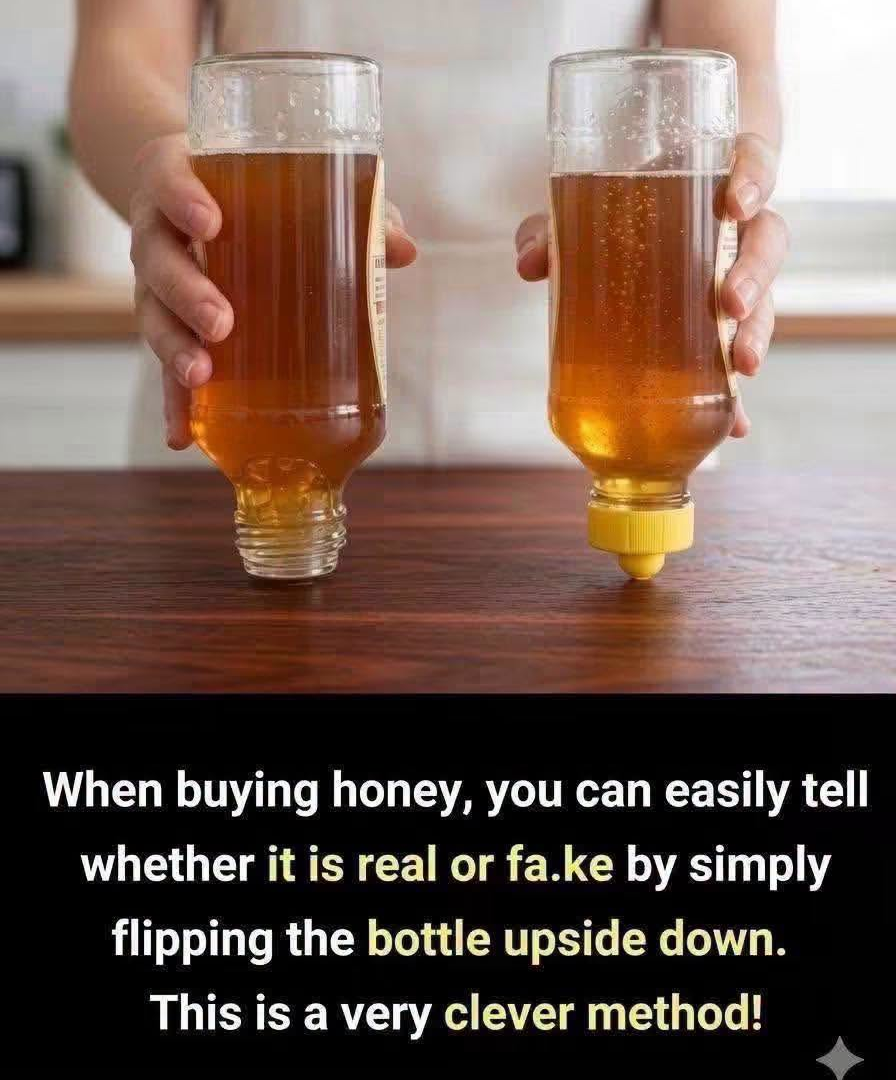
A Simple Trick to Tell Real Honey From Fake: Just Flip the Bottle Upside Down
The more fundamental problem with the bubble test is that it cannot detect the most common forms of honey adulteration. Honey fraud typically involves extending a small amount of real honey with cheap syrups—glucose, high-fructose corn syrup, or rice syrup—that mimic honey’s sweetness and texture. These syrups can be formulated to have a viscosity similar to honey, meaning a bubble might rise at a convincingly slow pace through an adulterated product .
The test also conflates two different concepts: purity and quality. A honey that has been finely filtered to remove pollen and wax particles will be clearer and may flow differently than an unfiltered, raw honey. Neither is “fake,” but they may behave differently in the bubble test . The viral framing often treats any deviation from slow-bubble behavior as evidence of fraud, when the reality is that natural variation is enormous and filtering is a legal, common practice.
Food scientists and consumer organizations have repeatedly cautioned against treating home tests as definitive. The only reliable way to confirm honey authenticity is through laboratory analysis, such as nuclear magnetic resonance spectroscopy, which can examine the molecular composition of the product . Counterfeiters have become sophisticated enough to fool even some of these methods, adding pollen from specific regions to mask the true origin of a syrup-based product . If laboratory equipment can be deceived, a bubble in a jar stands little chance of providing certainty.
The Honest Value of the Upside-Down Trick
None of this means the trick is entirely worthless. It is a quick, cost-free way to get a rough sense of whether a honey is thin and watery or thick and dense. A honey that flows like water and releases a bubble almost instantly is likely high in moisture, which can affect its shelf life and flavor regardless of its authenticity . For a shopper comparing two bottles on a shelf, the bubble test offers a crude but not meaningless data point about texture and density.
What it should not do is provide false confidence. A slow bubble does not guarantee that a honey is pure, and a fast bubble does not prove that it is fake. The test measures a physical property, not a legal or chemical one.
Better Ways to Approach Honey Buying
If the goal is to avoid adulterated honey, the most effective strategies have little to do with flipping bottles. The first is to buy from sources where accountability exists. Local beekeepers at farmers markets, regional beekeeping associations, and producers who can speak directly about where and how their honey was made are generally less likely to sell a compromised product, because their reputation is tied to the community they serve .
The second is to read labels carefully. In jurisdictions with strict labeling laws, a product labeled simply as “honey” is legally required to contain only honey. If a product contains added syrups, it must be labeled as a blend or a honey-flavored product, not as honey . Imported honey can be more vulnerable to adulteration, so origin information and a clear producer address are worth checking.
The third is to accept that price is a signal. Genuine honey production is labor-intensive and subject to the unpredictability of weather, flowering seasons, and bee health. Honey sold at a price that seems too good to be true is often exactly that .
Conclusion
The upside-down bubble test is a clever piece of internet folklore, and it contains a grain of physical truth. But it is not a reliable method for distinguishing real honey from fake. The speed of a bubble tells you something about moisture content and viscosity, not about whether the jar contains pure honey or a carefully formulated blend of syrup and honey. For shoppers who want genuine honey, the more trustworthy path is to buy from transparent sources, read labels with attention, and recognize that no single kitchen trick can replace the molecular analysis that actual authentication requires. The bubble test is a starting point for curiosity, not a final answer.
Frequently Asked Questions
Does the upside-down bubble test really work?
It provides a rough indication of honey’s moisture content and density, but it cannot reliably determine authenticity. Honey with low moisture produces a slow bubble, while higher-moisture honey produces a faster one. However, moisture varies naturally by floral source and climate, and adulterated honey can be formulated to mimic honey’s viscosity .
What does it mean if the bubble rises quickly?
A fast-rising bubble generally suggests higher moisture content and lower viscosity. This could indicate a naturally thinner honey variety, a honey that has absorbed moisture, or a product that has been diluted. It is not, on its own, proof that the honey is fake .
Can fake honey pass the bubble test?
Yes. Adulterated honey that has been extended with syrups can be designed to have a viscosity similar to genuine honey, allowing it to produce a slow bubble. The test measures a physical property that can be imitated, not a chemical signature of authenticity .
What is the most reliable way to check if honey is real?
Laboratory testing, such as nuclear magnetic resonance spectroscopy, is the only reliable method for detecting adulteration. At the consumer level, buying from trusted local beekeepers, checking labels for added ingredients, and being wary of unusually low prices are more practical safeguards than any home test .
Does crystallized honey mean it is fake?
No. Crystallization is a natural process for many genuine honeys, particularly those with higher glucose content. It is not a sign of adulteration. In fact, the absence of crystallization in a honey that should normally crystallize could be a more suspicious sign than its presence.