A Woman’s Legs Can Tell You a Lot—But Not What Viral Posts Claim About Her Health
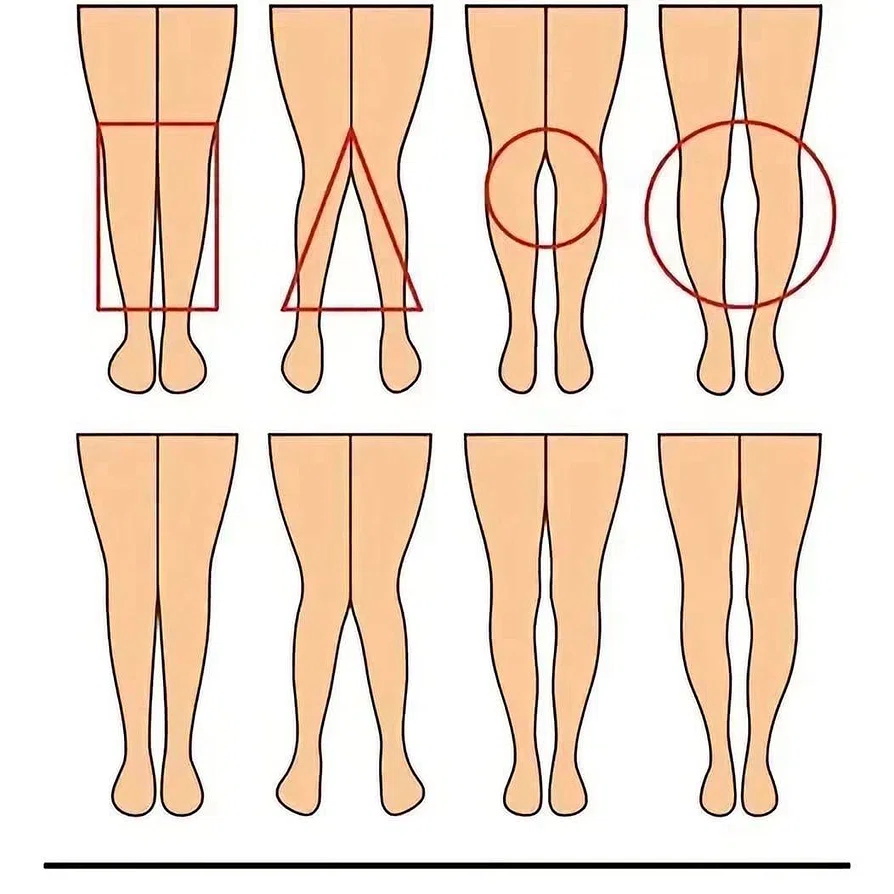
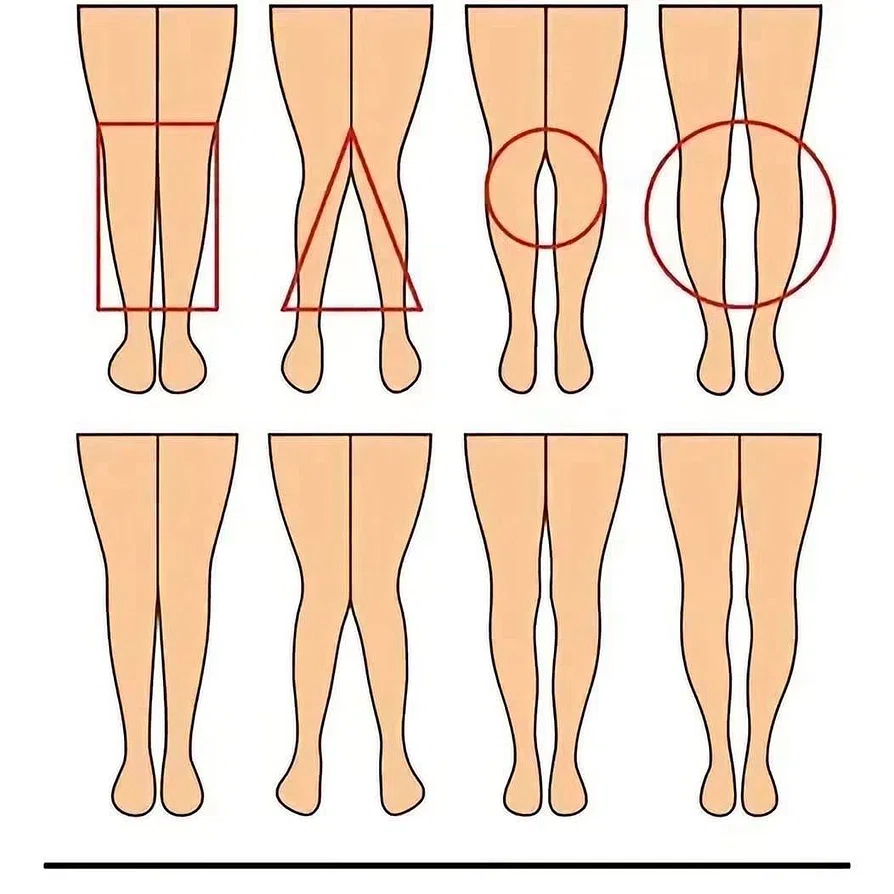
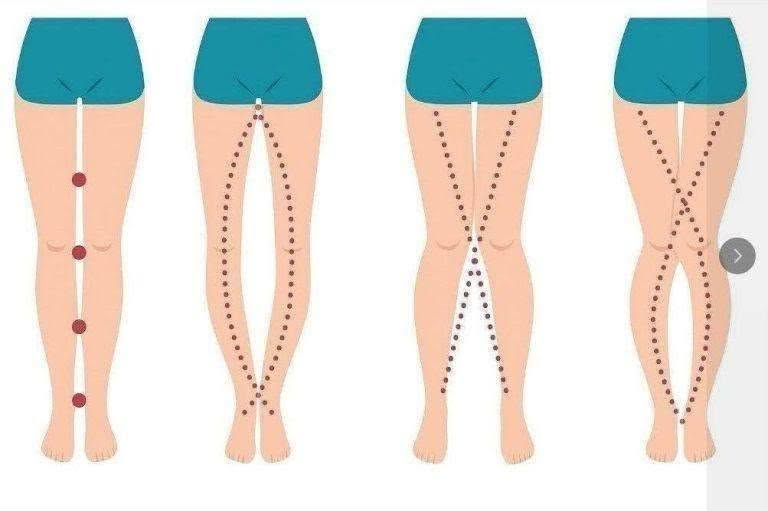
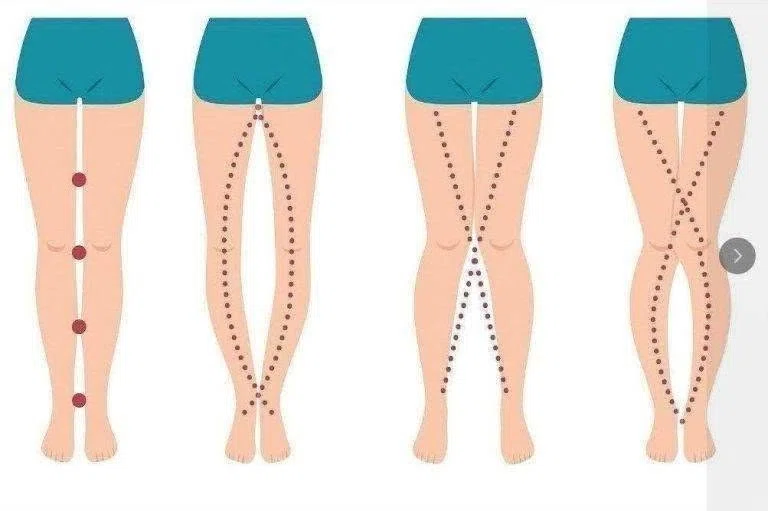
The illustration in the image depicts four common standing postures, which are often categorized in biomechanics and physical therapy. From left to right, the upper row shows variations that are typically associated with different alignment patterns.
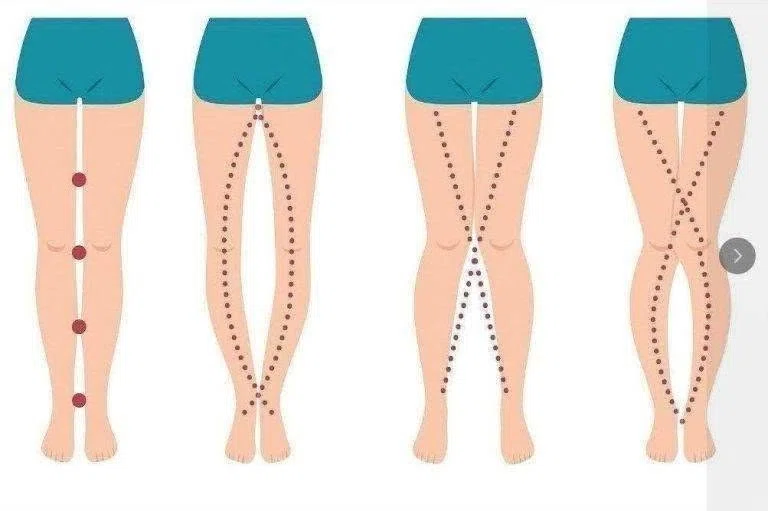
The first figure shows legs that are relatively straight, with a narrow gap running down the center from the thighs to the ankles. The second figure shows a wider space between the knees, with the ankles closer together, a pattern often described as “bow-legged” or varus alignment. The third figure shows knees that touch while the ankles are apart, a pattern commonly called “knock-kneed” or valgus alignment. The fourth figure shows a wider, more evenly curved gap between the calves and knees.
The lower row shows variations of these shapes without the red geometric overlays, emphasizing that these are simply natural variations in human anatomy.
These patterns are studied in orthopedics and physical therapy because extreme versions of either bow-legs or knock-knees can sometimes be associated with underlying conditions. However, the vast majority of people have a leg alignment somewhere on a broad spectrum between these extremes, and a mild variation in either direction is entirely normal and does not indicate disease.