Anatomy of the Sciatic Nerve: Understanding the Body’s Longest Nerve
The sciatic nerve is one of the most important and well-known nerves in the human body. It is the longest and thickest nerve, running from the lower back all the way down to the feet. Understanding its anatomy can help you better understand conditions like sciatica and why certain movements or postures can cause discomfort.
What Is the Sciatic Nerve?
The sciatic nerve is a major nerve that originates in the lower back. It is formed by the merging of several nerve roots that exit the lumbar and sacral regions of the spine. These nerve roots combine to create a single, large nerve that travels through the buttocks, down the back of the thigh, and eventually branches out to supply the lower leg and foot.
The Path of the Sciatic Nerve
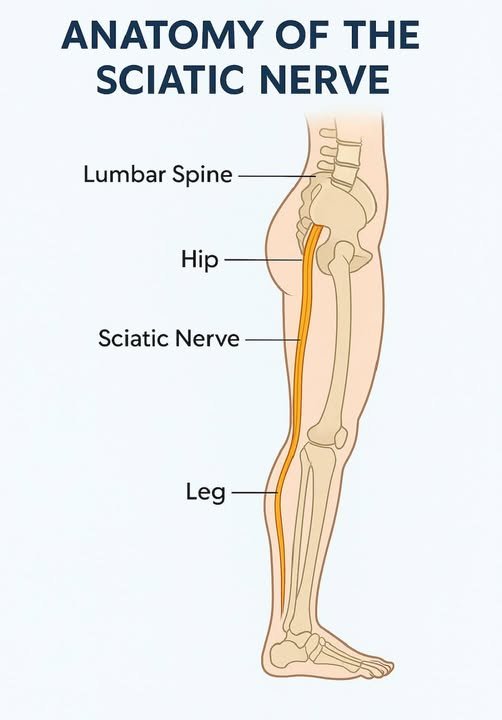
As shown in the diagram, the sciatic nerve begins near the lumbar spine. It passes through the hip area and then runs down the back of the leg. Along the way, it provides sensation and motor function to various muscles in the leg and foot. This long pathway is why problems with the sciatic nerve can cause symptoms in different parts of the lower body.
What Does the Sciatic Nerve Do?
The sciatic nerve plays a crucial role in the body. It controls several muscles in the thigh, lower leg, and foot, allowing you to walk, run, and flex your feet. It also carries sensory information from the skin of the leg and foot back to the brain. When the sciatic nerve is compressed or irritated, it can cause pain, numbness, tingling, or weakness in the areas it supplies.
Common Conditions Affecting the Sciatic Nerve
The most common condition associated with this nerve is sciatica. Sciatica is not a disease itself but a symptom of an underlying issue, such as a herniated disc, spinal stenosis, or a muscle spasm in the buttocks. These conditions can put pressure on the sciatic nerve, leading to a sharp, burning pain that radiates from the lower back down the leg. Some people also experience numbness or a “pins and needles” sensation.
Why Understanding the Anatomy Matters
Knowing the anatomy of the sciatic nerve can help you understand why certain activities might trigger symptoms. For example, sitting for long periods can increase pressure on the nerve. Similarly, activities that involve bending or twisting the lower back can aggravate it. By understanding its path, you can also work with healthcare professionals to identify the source of your pain and find appropriate treatments.
Tips for Keeping Your Sciatic Nerve Healthy
Maintaining a healthy lifestyle can help protect your sciatic nerve. Regular exercise, especially core strengthening and stretching, can support your lower back and reduce the risk of nerve compression. Practicing good posture and avoiding prolonged sitting can also make a difference. If you experience persistent pain, it is always best to consult a medical professional for an accurate diagnosis and treatment plan.
The sciatic nerve is a remarkable part of the human body. Its length and complexity make it essential for movement and sensation. By taking care of your spine and overall health, you can help keep this important nerve functioning properly.