Doctor Uncovers A Telltale Sign In Your Fingernails That May Predict Your Life Expectancy
While vertical ridges are generally benign, the viral claims about nails predicting life expectancy are not entirely baseless—they are just focused on the wrong type of mark. Medical research has identified specific nail abnormalities that can be associated with serious health conditions and mortality, but these are different from the common vertical lines.
The Significance of White Nails
A study published in the journal Healthcare examined older patients and found that the presence of “white nails” was associated with a significantly higher risk of in-hospital mortality . In this study, white nails were characterized by a white appearance of the proximal nail without a visible lunula, the small half-moon shape at the base of the nail. The study found that patients with white nails had a significantly higher risk, suggesting a strong link between this specific nail finding and overall health vulnerability in older adults .
These findings indicate that while vertical ridges are not predictive of lifespan, other nail changes—particularly those involving color and opacity—can be meaningful indicators of systemic health.
Horizontal Ridges (Beau’s Lines)
If you notice horizontal lines or grooves running across your nails, this is a different story. These are often called Beau’s lines and can indicate that nail growth was temporarily interrupted by a severe illness, stress, or a nutritional deficiency . According to the Mayo Clinic, Beau’s lines can be caused by infections, uncontrolled diabetes, peripheral artery disease, high fevers, zinc deficiency, or certain medications including retinoids and chemotherapy . Unlike vertical ridges, horizontal ridges are a change that should prompt a conversation with a healthcare provider.
Separating Fact from Fiction
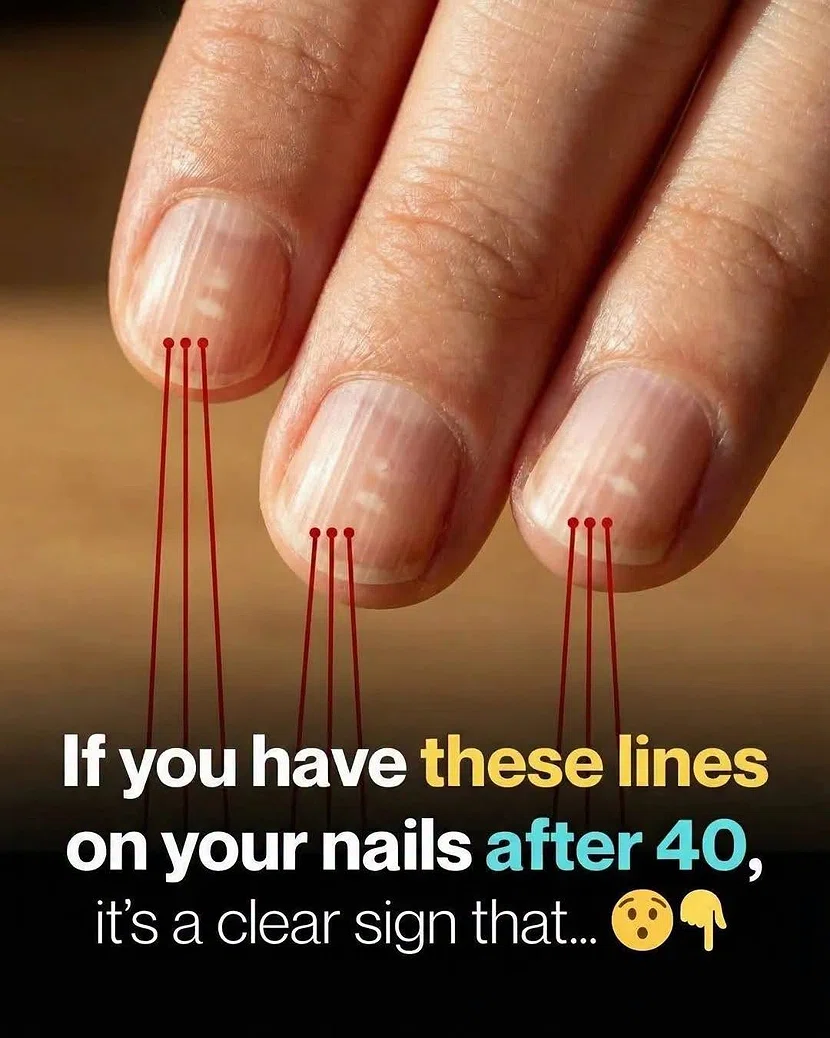
The viral image showing red lines over a fingernail is designed to provoke anxiety by suggesting a direct link between a common cosmetic feature and a shortened life. The reality is far more nuanced. Your fingernails can provide clues about your health, but they are not a crystal ball.
For the average person, the presence of vertical ridges is a normal finding that requires no treatment. If your nails are brittle or the ridges are accompanied by other symptoms like discoloration, changes in nail shape, or separation of the nail from the nail bed, then it is wise to consult a dermatologist or healthcare provider.
Caring for Your Nails
If the appearance of vertical ridges bothers you, there are simple steps you can take to improve the look and health of your nails. Keeping your hands and nails moisturized can help reduce the appearance of dryness-related ridges. Using a nail buffer can temporarily smooth the surface, and ensuring you have a balanced diet with adequate vitamins and minerals supports overall nail health.
Conclusion
The claim that vertical lines on your nails are a definitive sign of a shortened life expectancy is a misleading exaggeration. For most people, these ridges are a normal, harmless consequence of getting older. They are the nail equivalent of a laugh line or a gray hair.
However, the body is a complex system, and nails can sometimes reflect underlying health issues. While vertical ridges are not a cause for alarm, other nail changes—such as white nails, horizontal grooves, or sudden changes in color and shape—are worth discussing with a doctor. The key is to look at the whole picture of your health rather than fixating on a single, common feature. If you are ever concerned about changes in your body, including your nails, seeking professional medical advice is always the most reliable path forward.
Frequently Asked Questions
Do vertical ridges on nails mean I have a disease?
No. In the vast majority of cases, vertical ridges are a normal sign of aging and are not indicative of any disease . They are common and generally harmless.
Can fingernails predict how long I will live?
Fingernails alone cannot predict life expectancy. However, certain specific nail abnormalities, such as completely white nails, have been statistically associated with higher mortality rates in specific patient populations, such as older hospitalized adults . This does not mean that common vertical ridges have any predictive value for lifespan.
What causes vertical lines on fingernails?
The most common cause is natural aging, which changes cell turnover in the nail . Other factors can include dry skin, eczema, or occasionally nutrient deficiencies or thyroid conditions.
When should I see a doctor about my nails?
You should see a doctor if you notice horizontal ridges, changes in nail color, thickening, or if the nail separates from the nail bed . These can sometimes indicate an underlying health condition that requires treatment.