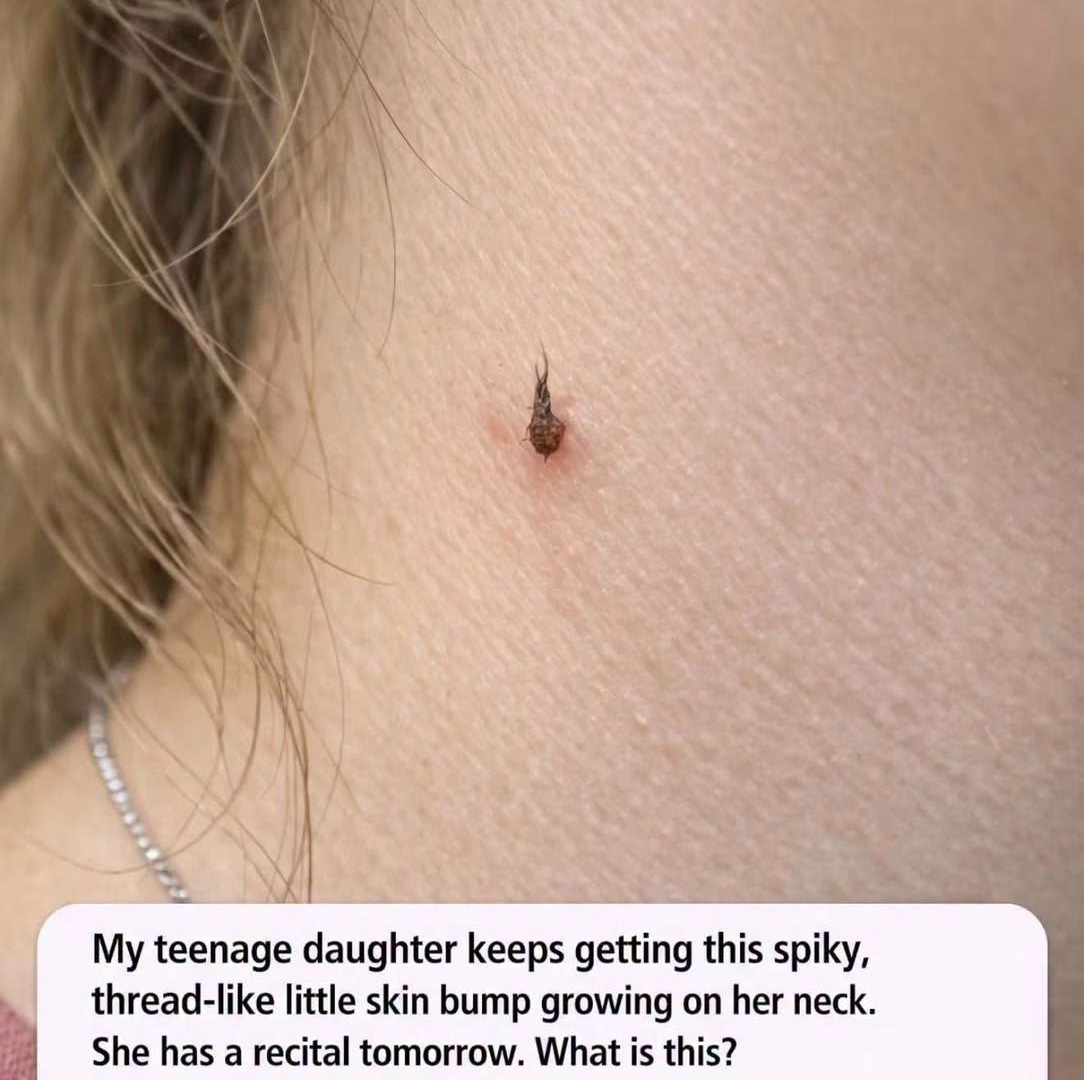
Filiform Warts: What Parents Should Know About the Spiky, Thread-Like Bump on Their Teen’s Neck
The HPV virus that causes filiform warts enters the skin through tiny breaks or micro-abrasions. Once inside, it infects the skin cells and causes them to grow rapidly, forming the visible wart. The virus can be spread through direct skin-to-skin contact or by touching contaminated surfaces, such as shared towels or razors.
Certain factors can increase the likelihood of developing warts. People with a weakened immune system are more susceptible. Those with dry or cracked skin may also be more vulnerable, as the virus can enter through these small openings. For teenagers, hormonal changes and close contact with others in school or sports settings can contribute to the spread of the virus.
Important Warning: Do Not Pick or Cut the Wart
One of the most critical pieces of advice for anyone dealing with a filiform wart is to resist the urge to pick, pull, or cut it off at home. This is particularly important in the situation described, where a recital is imminent and the desire to remove the bump quickly is understandable.
The Risk of Spreading the Virus
The virus that causes filiform warts lives in and around the base of the growth. If the wart is pulled or cut off, the virus can be released onto nearby skin, leading to the development of new warts. This is why warts often seem to multiply after being picked at. The virus can also spread to other people through shared items or direct contact.
The Risk of Infection and Scarring
Attempting to remove a wart at home with unsterilized tools or by tearing it off can cause bleeding, pain, and a risk of bacterial infection. The neck is a sensitive area with many small blood vessels and nerves, and a wound in this area can be uncomfortable and slow to heal. There is also a risk of scarring, which may be more noticeable than the original wart.
Why Home Remedies Are Not Recommended
Some people turn to home remedies such as apple cider vinegar, garlic, or duct tape. While these methods have their advocates, they are not reliably effective and can cause skin irritation or chemical burns, particularly on sensitive areas like the neck. For a teenager preparing for a public event, the risk of irritation or a visible reaction is not worth taking.
What to Do Before the Recital
For the immediate concern of the recital, the safest approach is to leave the wart alone and, if desired, cover it discreetly. A small bandage or a piece of medical tape can help conceal the bump and prevent the teenager from touching or picking at it. This is a temporary measure, not a treatment.
It is also helpful to remind the teenager not to scratch or rub the area, as this can irritate the wart and increase the risk of spreading the virus.
Safe and Effective Treatment Options
After the recital, the appropriate step is to consult a healthcare provider, such as a dermatologist or a primary care physician. A doctor can confirm the diagnosis and recommend a safe and effective treatment.
Cryotherapy
Cryotherapy, or freezing, is one of the most common treatments for filiform warts. The doctor applies liquid nitrogen to the wart, freezing the tissue and causing it to blister and eventually fall off. This procedure is quick and can be performed in a doctor’s office. Multiple sessions may be needed.
Electrocautery and Curettage
For some warts, a doctor may use electrocautery (burning) or curettage (scraping) to remove the growth. These procedures are performed under local anesthesia and are effective for removing the wart tissue.
Topical Treatments
Prescription-strength topical treatments, such as salicylic acid or imiquimod, may be recommended for some types of warts. However, these are generally more suitable for warts on the hands and feet and may not be the first choice for warts on the neck or face.
Laser Treatment
In some cases, laser therapy may be used to remove persistent or recurrent warts. This is typically reserved for warts that have not responded to other treatments.
When to See a Doctor
A healthcare provider should evaluate any new or changing skin growth, especially if it is growing rapidly, changing color, bleeding, or causing discomfort. While filiform warts are benign, other skin conditions can look similar, and a professional diagnosis is important.
For a teenager, a doctor’s visit can also provide reassurance and guidance on how to prevent future warts. The doctor can advise on hygiene practices and discuss any concerns about the virus.
Conclusion
The spiky, thread-like bump on the teenager’s neck is most likely a filiform wart, a common and harmless skin growth caused by a mild strain of HPV. The most important advice is to avoid picking or cutting it, as this can spread the virus and cause infection. For the recital, a small bandage can provide temporary coverage. After the event, a visit to a doctor will ensure safe and effective removal. With proper care, filiform warts are easily managed and rarely cause long-term problems.
Frequently Asked Questions
What is a filiform wart?
A filiform wart is a small, thread-like or finger-like skin growth caused by a mild strain of the human papillomavirus (HPV). It is benign and most commonly appears on the face, neck, and eyelids.
Are filiform warts contagious?
Yes. They are caused by a virus and can spread through direct skin-to-skin contact or by touching contaminated surfaces. Picking at the wart can also spread the virus to other parts of the body.
Can I remove a filiform wart at home?
No. Home removal methods are not recommended. Picking, cutting, or using unproven home remedies can cause infection, scarring, and spread the virus. A doctor can safely remove the wart using cryotherapy or other procedures.
Will the wart go away on its own?
Some warts do resolve on their own over time as the immune system fights the virus, but this can take months or years. Given the risk of spreading, treatment is often recommended, especially for warts in visible areas.
What should I do if my child has a wart before a big event?
Cover the wart with a small bandage to conceal it and prevent touching. Avoid any attempts at removal. After the event, schedule an appointment with a healthcare provider for proper evaluation and treatment.