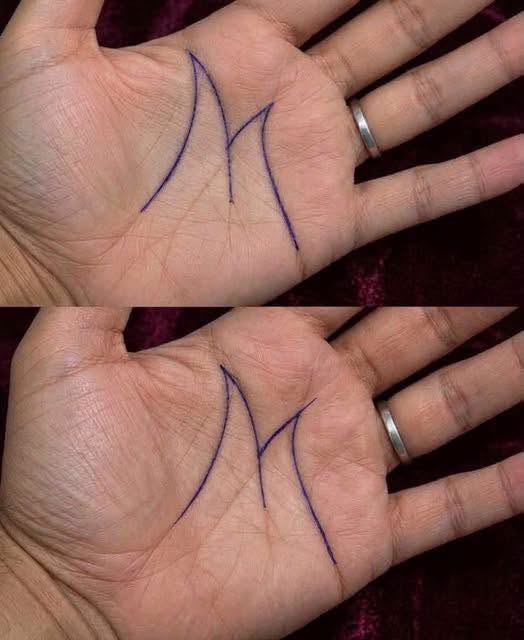
The “M” on Your Palm: What It Really Means and Why You Shouldn’t Be Speechless
Palmistry, also known as chiromancy, is the practice of evaluating a person’s character or future life by reading their palm. It is a tradition with roots stretching back thousands of years, with evidence of hand reading found in ancient Indian, Chinese, and Greek cultures. The practice is based on the belief that the lines on our hands are not random, but rather a map of our potential, our personality traits, and our destiny. In palmistry, the major lines represent different aspects of life, such as the heart, the mind, and physical vitality. The shape of the hand, the length of the fingers, and the mounts (the fleshy pads at the base of the fingers) are all analyzed to provide a comprehensive reading.
While many people view palmistry as a fun novelty or a form of entertainment, others take it very seriously. However, it is important to note that palmistry is not a science. The lines on our hands are formed by the movements we make and the way our skin folds over time, especially during fetal development and early childhood. They are determined by genetics and physical activity, not by supernatural forces. Still, the cultural fascination with palmistry remains strong, and specific patterns continue to capture the public’s imagination.