The Purpose of the Two Small Holes on a Standard Plug: Manufacturing Origins and Modern Safety Uses
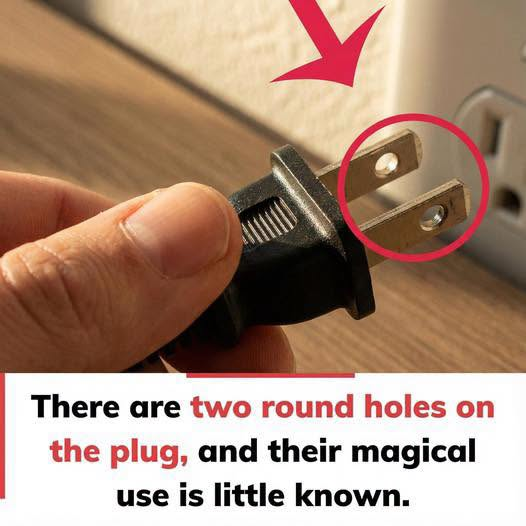
Most people plug and unplug electrical devices countless times a day without ever pausing to examine the metal prongs closely. Yet, if you look at a standard North American plug, you will notice a small, perfectly round hole near the tip of each flat blade. For decades, these holes have sparked curiosity and speculation. Some believe they are designed to lock the plug into the outlet to prevent it from falling out, while others assume they serve a purpose related to electrical current. The truth is that these holes are a fascinating artifact of manufacturing history, with a secondary, highly practical use that has become vital for workplace safety and consumer protection.
Understanding the dual nature of these holes—one born from the industrial process of molding plastic and the other from rigorous safety standards—reveals how everyday objects often carry hidden layers of functionality. The holes are not a flaw or a mystery, but a deliberate design feature that serves two very different purposes: one during the creation of the plug, and one that protects users from harm.
The Primary Purpose: A Manufacturing Necessity
The most authoritative explanation for the existence of the holes comes from the National Electrical Manufacturers Association (NEMA), the industry body that sets technical standards for electrical equipment in the United States. According to NEMA standards, the hole in the flat blade is entirely optional and is intended for manufacturing purposes only .
Holding the Prongs During Injection Molding
When a plug is manufactured, the metal prongs must be held firmly in place while the plastic or rubber body is molded around them. The holes in the prongs allow the machinery to grip the metal blades securely during the injection molding process . Without these holes, the high pressure of the molten plastic would likely displace the prongs, resulting in a misaligned and defective plug. Once the plastic cools and hardens, the prongs are permanently set, and the holes remain as a visible byproduct of their creation.
A Historical Holdover
Interestingly, the original purpose of the holes was slightly different. When Harvey Hubbell II invented the detachable electrical plug in the early 1900s, his design included small indents on the prongs. These indents were designed to lock onto corresponding nubs or ball bearings inside the outlet, physically holding the plug in place . While this locking mechanism was effective, it was eventually phased out in favor of the simpler, friction-based retention systems found in modern outlets. The holes, however, persisted because they had become integral to the manufacturing process .
The Modern Secondary Purpose: Lockout/Tagout Safety
While the manufacturing explanation accounts for why the holes exist, their most important modern function is entirely unrelated to their origins. The holes serve as a critical component of “lockout/tagout” safety procedures, a practice that has become mandatory in many industrial and workplace settings.
Preventing Accidental Energization
Lockout/tagout is a safety protocol used to ensure that dangerous machinery is completely de-energized before maintenance or repair work begins. Simply turning off a machine is not enough; if the plug remains in the outlet, there is a risk that someone else might accidentally turn it back on, leading to severe injury or even death . The holes in the prongs provide a simple but effective solution. A worker can insert a small padlock or a specialized safety device through the holes, physically preventing the plug from being inserted into an outlet . The device is then tagged with a warning label, ensuring that everyone knows the equipment is out of service.
A Mandatory Safety Standard
This safety application is so important that it became a mandatory requirement in the United States. According to the National Institute for Occupational Safety and Health (NIOSH), the holes in the flat prongs of electrical plugs became mandatory on January 2, 1990, specifically to enable this lockout capability . This regulation was a direct response to numerous accidents where workers were injured or killed because equipment was inadvertently re-energized while being serviced.
Consumer and Retail Applications
The lockout principle extends beyond heavy industry. Manufacturers often use the holes to attach warning tags or instructional placards to new appliances. By threading a plastic tie through the holes, they ensure that a consumer cannot plug in a new device without first removing the tag, which might contain crucial information about removing shipping materials or following initial setup instructions . This simple trick guarantees that the user sees the warning before the device is ever powered on.
Debunking Common Misconceptions
The dual nature of the holes has led to several persistent myths. It is helpful to separate fact from fiction to fully understand their role.
Myth: The Holes Are for Locking the Plug in Place
While this was true for very old outlets that used a mechanical detent system, modern outlets do not have the internal bumps or ball bearings required to engage the holes . Today, plugs are held in place purely by the friction and spring tension of the outlet’s metal contacts. The holes do not contribute to the plug’s grip in a standard modern outlet.
Myth: The Holes Affect Electrical Conductivity
Some people believe the holes are designed to improve the electrical connection or to allow for a better flow of current. This is incorrect. The holes are located near the tip of the prong, and they do not alter the surface area that makes contact with the outlet’s internal clips in any meaningful way. They are purely a mechanical feature .
The Question of Material Savings
A minor, often-cited benefit is that the holes reduce the amount of metal used in each prong. While this saves a tiny fraction of a cent per plug, it is not the primary reason for their existence. NEMA’s standards explicitly state the holes are for manufacturing, not for cost reduction .
Conclusion: A Small Feature with a Big Impact
The two small holes on a standard electrical plug are a perfect example of how a simple design element can serve multiple, evolving purposes over time. Originally a byproduct of the injection molding process, they have become an indispensable tool for electrical safety. From preventing accidental machinery start-ups in factories to ensuring that consumers read important warnings before using a new appliance, these holes play a quiet but crucial role in protecting people from harm. The next time you plug in a device, take a moment to appreciate this small, unassuming feature that bridges the gap between industrial manufacturing and everyday safety.
Frequently Asked Questions
Why do some plugs have holes and others do not?
The holes are optional according to NEMA standards. Some manufacturers choose to include them for the manufacturing benefits or to allow for lockout/tagout applications, while others may omit them to save on tooling costs or because their specific manufacturing process does not require them .
Can I use the holes to lock out a plug at home?
Yes. You can use a small padlock or a zip tie through the holes to prevent a plug from being inserted into an outlet. This is a useful safety measure if you have a faulty appliance or want to prevent children from using a dangerous power tool .
Do the holes make the plug fit more securely?
No. In modern outlets, the plug is held in place by friction and the spring tension of the outlet’s internal contacts. The holes do not engage with any locking mechanism in a standard modern outlet .
Are the holes dangerous?
No. The holes are located on the prongs, which are designed to be inserted into the outlet. They do not expose any live electrical components when the plug is in use. However, you should never insert anything into the holes while the plug is partially inserted, as this could pose a shock risk.
What does NEMA say about the holes?
The National Electrical Manufacturers Association (NEMA) states that the hole in the flat blade is optional and is intended for manufacturing purposes only .