The Real Meaning Behind the “Upside Down” Outlet: It’s Not a Mistake
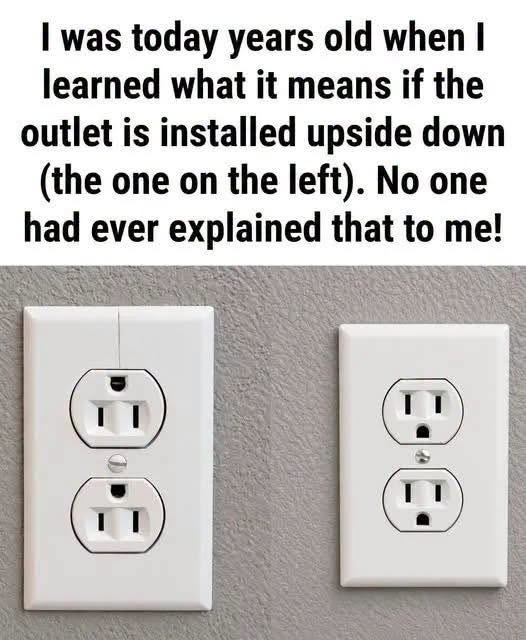
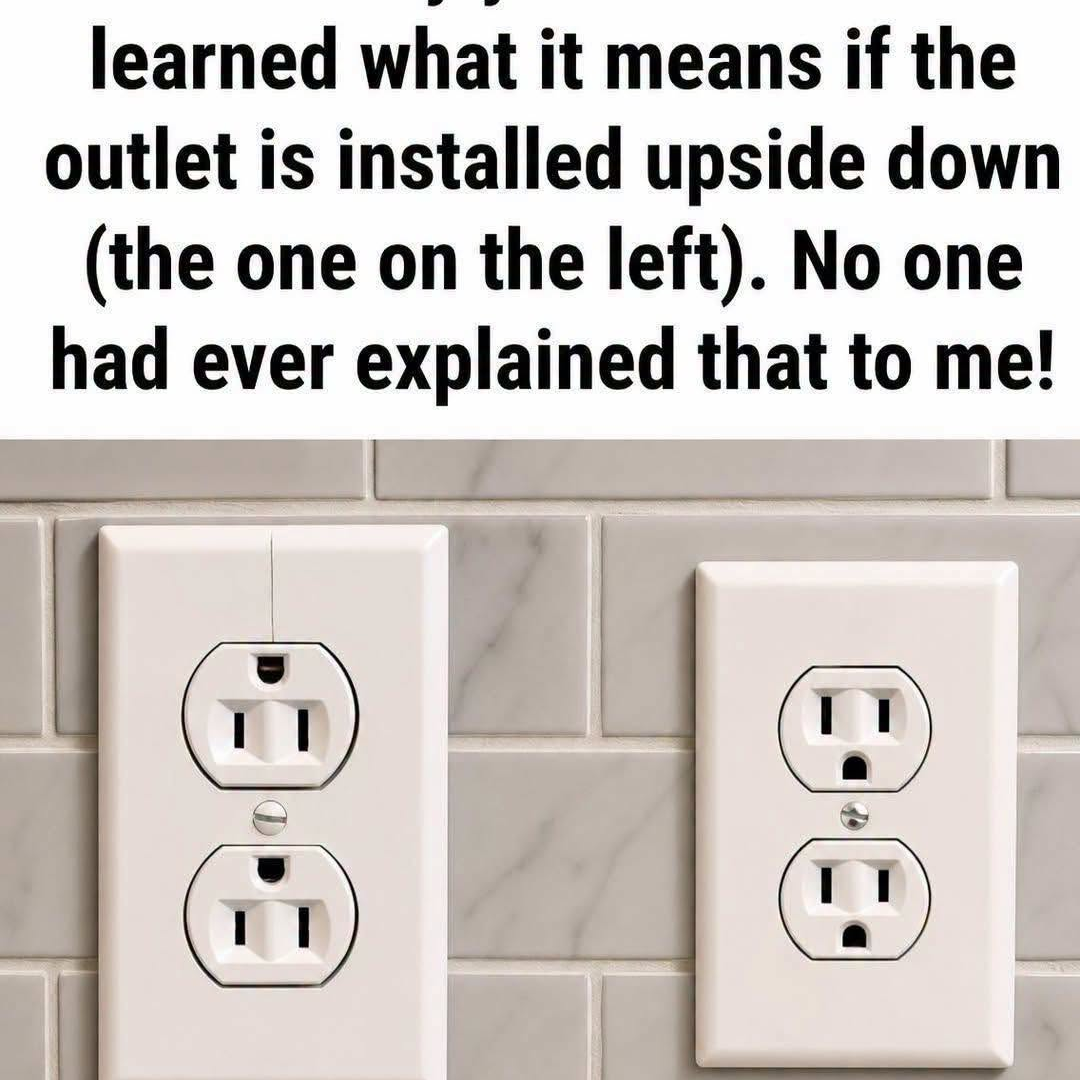
You have probably seen it a hundred times: an electrical outlet where the grounding hole—the small, round opening—sits at the top instead of the bottom. Most people assume it is a careless installation error or a quirk of old wiring. But as the viral image suggests, there is a reason behind this orientation, and once you learn it, you will never look at an outlet the same way again.
The truth is that an “upside down” outlet is rarely a mistake. In most residential settings, it is a deliberate signal that the outlet is controlled by a wall switch, designed to make life more convenient in rooms without overhead lighting. In commercial and industrial settings, the same orientation serves a different purpose: safety. Understanding the distinction between these two uses is the key to decoding the outlets in your own home.
The Most Common Reason: A Switched Outlet
In the vast majority of homes, an outlet installed with the ground pin facing up is a visual cue that it is a switched outlet . This means that a standard wall switch by the door controls the power to part or all of that specific receptacle.
Builders frequently used this setup in older homes, particularly in bedrooms and living rooms that were designed without a built-in ceiling light fixture. Rather than running expensive overhead wiring, electricians wired a specific wall plug to connect directly to the wall switch. When you walk into a dark room, you flip the switch, and your table lamp or floor lamp instantly turns on .
Typically, only one half of the outlet responds to the switch. The other half remains “always-on,” allowing you to plug in a clock radio, phone charger, or TV without losing power. This clever design turns a standard plug into a convenient remote control for your lighting, eliminating the need to fumble for a lamp switch in the dark.
Why the Visual Cue Matters
The flipped orientation is not just a byproduct of the wiring; it is a deliberate visual signal. When an electrician installs an outlet upside down, it stands out immediately. Homeowners, inspectors, and future buyers can spot it from across the room because it breaks the pattern of every other standard plug .
This simple cue saves time and guesswork. Instead of walking around a new house testing every single plug with a lamp to find out which one controls the lighting, you simply look for the flipped one. It is one of those tiny, thoughtful construction details that makes navigating an older home much easier.
The Safety Reason: Commercial and Industrial Standards
While the switched-outlet explanation covers most residential cases, there is a second, entirely different reason for the ground-up orientation that is far more common in commercial spaces.
In hospitals, schools, and corporate offices, you will find almost every electrical outlet installed with the ground pin firmly on top . This is not a stylistic choice; it is a safety standard. The logic is simple: if a plug is partially pulled out of the outlet, the ground pin—which is the longest prong—will be the last to disconnect. If a metal object, such as a wire hanger or a piece of furniture, falls between the plug and the wall, it will hit the ground pin first. This prevents a dangerous short circuit and reduces the risk of electric shock or fire .
In a residential setting, this safety benefit is less critical, which is why many electricians still install outlets ground-down out of habit or personal preference. But in high-traffic commercial environments where cords are frequently pulled and equipment is moved, the ground-up orientation provides an extra layer of protection.
Is There a National Code?
A common misconception is that the National Electrical Code (NEC) mandates one orientation over the other. This is not true. The NEC focuses on safety, proper grounding, and secure wire connections, but it remains completely silent on whether the grounding hole should be on the top or the bottom .
Because there is no universal law, the orientation of an outlet typically comes down to three factors: the personal preference of the original electrician, local building traditions, and the specific function of the outlet . This is why you can find both orientations in the same building, and why an outlet that looks “wrong” to one person may be perfectly correct to another.
How to Know for Sure
Because there is no universal rule, the “upside down” orientation is a fantastic clue, but it is never a 100% guarantee. A flipped outlet might be a switched outlet, but it could also be a result of a previous DIY replacement or a commercial-style installation. The only way to know for certain is to test it.
Plug a lamp or a small appliance into the outlet and flip the wall switch. If the device turns on and off, you have found a switched outlet. If it stays on regardless of the switch, the outlet is always-on. This simple test takes seconds and provides definitive confirmation, eliminating any guesswork.
Conclusion
The “upside down” outlet is not a mistake, a defect, or a sign of sloppy workmanship. In most homes, it is a deliberate design choice that signals a switched outlet, making it easier to control lamps in rooms without ceiling lights. In commercial spaces, it is a safety measure that protects against electrical hazards. The next time you see an outlet with the ground pin facing up, take a moment to appreciate the quiet logic behind it—and if you are curious, plug in a lamp and flip the switch to see for yourself.
Frequently Asked Questions
Does an upside-down outlet mean it is wired incorrectly?
No. An upside-down outlet is usually intentional. In residential settings, it typically indicates a switched outlet controlled by a wall switch. In commercial settings, it is a safety standard. The orientation is a matter of function and preference, not a wiring error .
Is it safe to have an outlet installed upside down?
Yes, it is safe. The orientation of the outlet does not affect its electrical function or safety. The ground pin still provides the same protection regardless of whether it is at the top or bottom. In fact, some electricians argue that the ground-up orientation is slightly safer in certain situations .
How can I tell if my upside-down outlet is switched?
Plug a lamp or small appliance into the outlet and flip the wall switch. If the device turns on and off, the outlet is switched. If it stays on regardless of the switch, the outlet is always-on. This is the only reliable way to confirm its function.
Why do some outlets have the ground pin on top in commercial buildings?
In commercial and industrial settings, the ground-up orientation is a safety standard. If a plug is partially pulled out, a falling metal object will hit the ground pin first, preventing a short circuit. This reduces the risk of electric shock and fire in high-traffic environments .
Can I change the orientation of my outlet?
Yes, an electrician can easily flip an outlet to the other orientation. However, if the outlet is switched, flipping it will not change its function—it will simply change its appearance. If you are unsure why an outlet is oriented a certain way, consult a licensed electrician before making any changes.