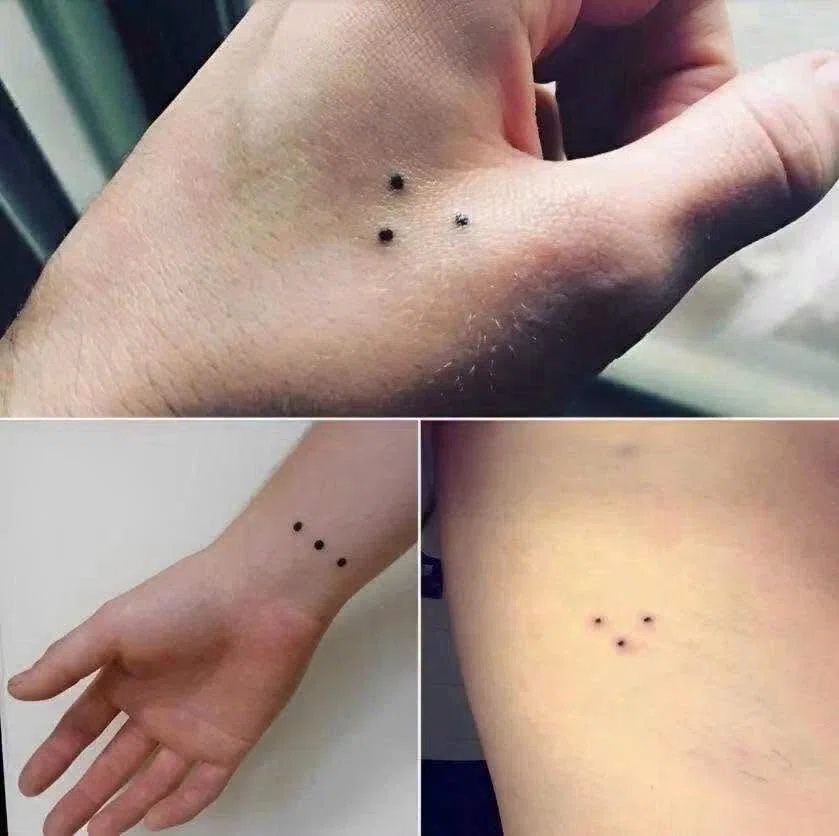
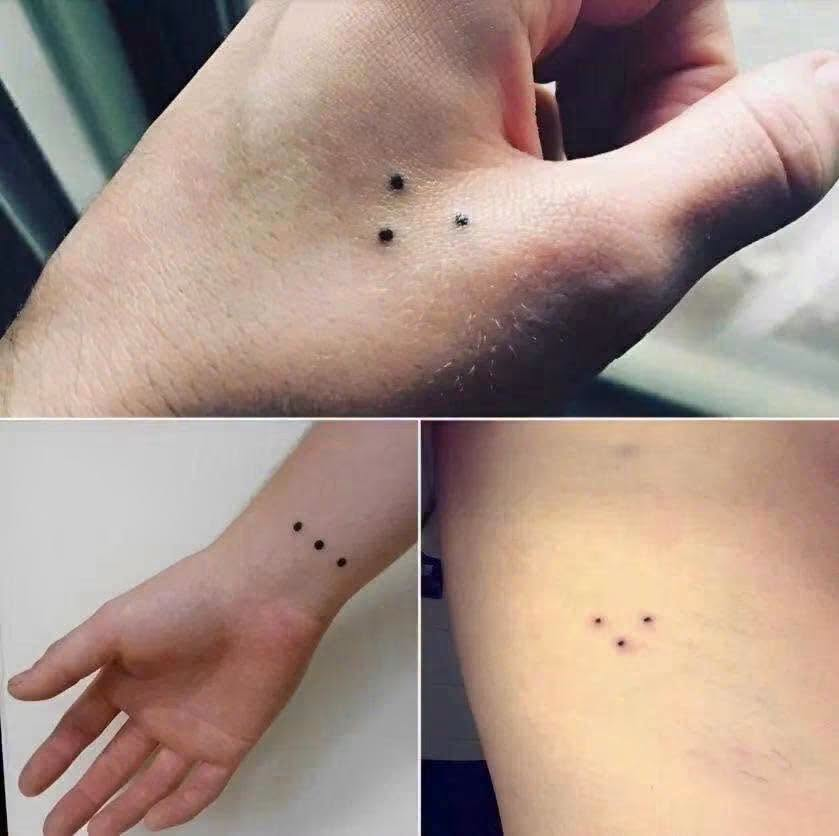
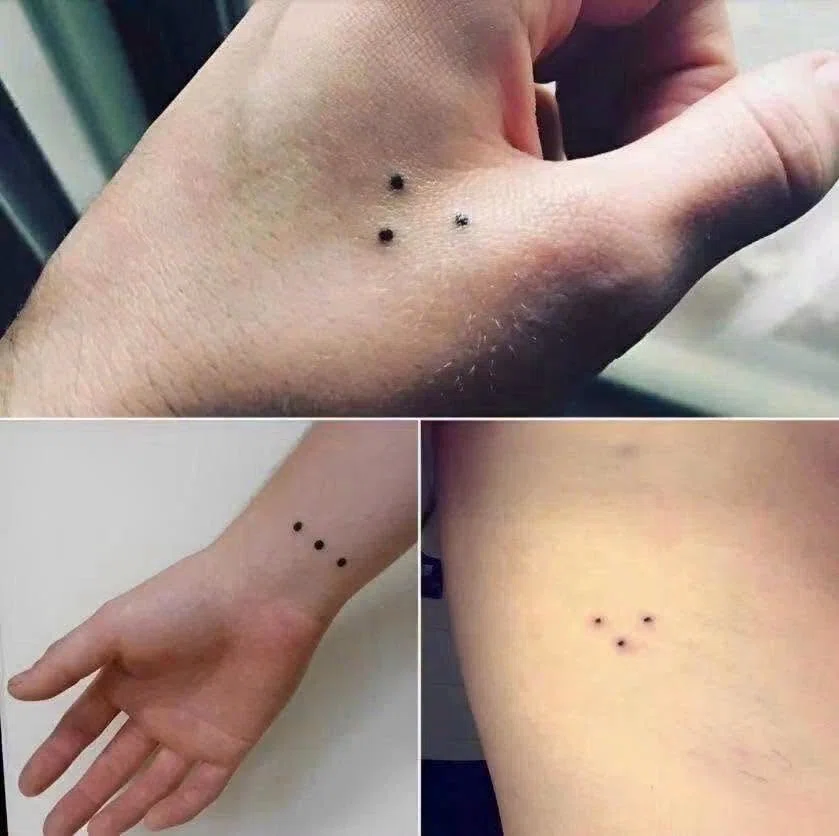
The Truth Behind the “Three-Point Tattoo”: Separating Urban Legend from Reality
The warning to “run as far as you can” is a classic example of fear-mongering. It is dangerous for several reasons:
It Promotes Stigma: Assuming that anyone with a small dot tattoo is dangerous or involved in criminal activity is unjust and promotes prejudice. It could lead to innocent people being unfairly judged or harassed.
It Distracts from Real Issues: By focusing on imaginary secret codes, people may overlook the real, documented signs of human trafficking and abuse, which are often behavioral rather than visual.
It Relies on Misinformation: Law enforcement experts have clarified that there is no database of “trafficker tattoos.” Traffickers do not typically mark their victims with visible, identifiable symbols, as this would make them easier to catch.
How to Actually Spot a Dangerous Situation
Instead of looking for secret tattoos, it is far more useful to understand the real warning signs of dangerous situations. According to anti-trafficking organizations, these include:
A person who appears to be controlled by another person, who speaks for them or refuses to let them speak alone.
Signs of physical abuse, malnutrition, or poor hygiene.
A person who is unable to provide identification or seems disoriented.
A person who exhibits fear, anxiety, or submission.
If you ever encounter a situation that feels genuinely unsafe, the best course of action is to contact local authorities or a dedicated helpline. Do not rely on internet rumors to identify danger.
Conclusion
The viral claim that a three-point tattoo is a universal sign to “run away” is a myth. While the tattoo has historical associations with specific gang cultures in the past, it has been widely adopted by the general public as a minimalist aesthetic choice. It is important to approach such social media warnings with a critical eye. By focusing on real behavioral signs of distress rather than imagined secret codes, we can create a safer and more compassionate society.
Frequently Asked Questions
Is the three-point tattoo a real gang symbol? Historically, the three-dot tattoo was associated with the “Mi Vida Loca” culture among some Chicano gangs in Los Angeles. However, it is not a universal symbol used by all gangs or criminal organizations, and it has since been widely adopted by people with no gang affiliation.
Does the three-point tattoo mean someone is a human trafficker? No. Anti-trafficking organizations and law enforcement have repeatedly debunked the claim that there is a specific tattoo that identifies traffickers or their victims. Human trafficking is a complex crime, and traffickers do not use a universal, identifiable tattoo to mark their victims.
Why do people get three-dot tattoos today? Many people get three-dot tattoos for purely aesthetic reasons. It is a popular minimalist design that is subtle, simple, and easy to place on small areas like the wrist, hand, or ankle.
Should I be worried if I see someone with three dots? No. A tattoo alone is not a reliable indicator of a person’s character or intentions. It is important not to judge people based on their body art. If you are ever in a situation where you feel genuinely unsafe, focus on the behavior of the people involved and contact local authorities if necessary.
What are the real signs of human trafficking? Real signs of human trafficking are often behavioral. They include a person who is controlled by another, appears fearful or anxious, lacks identification, shows signs of physical abuse, or is unable to speak for themselves. If you suspect human trafficking, contact local law enforcement or a national anti-trafficking hotline.