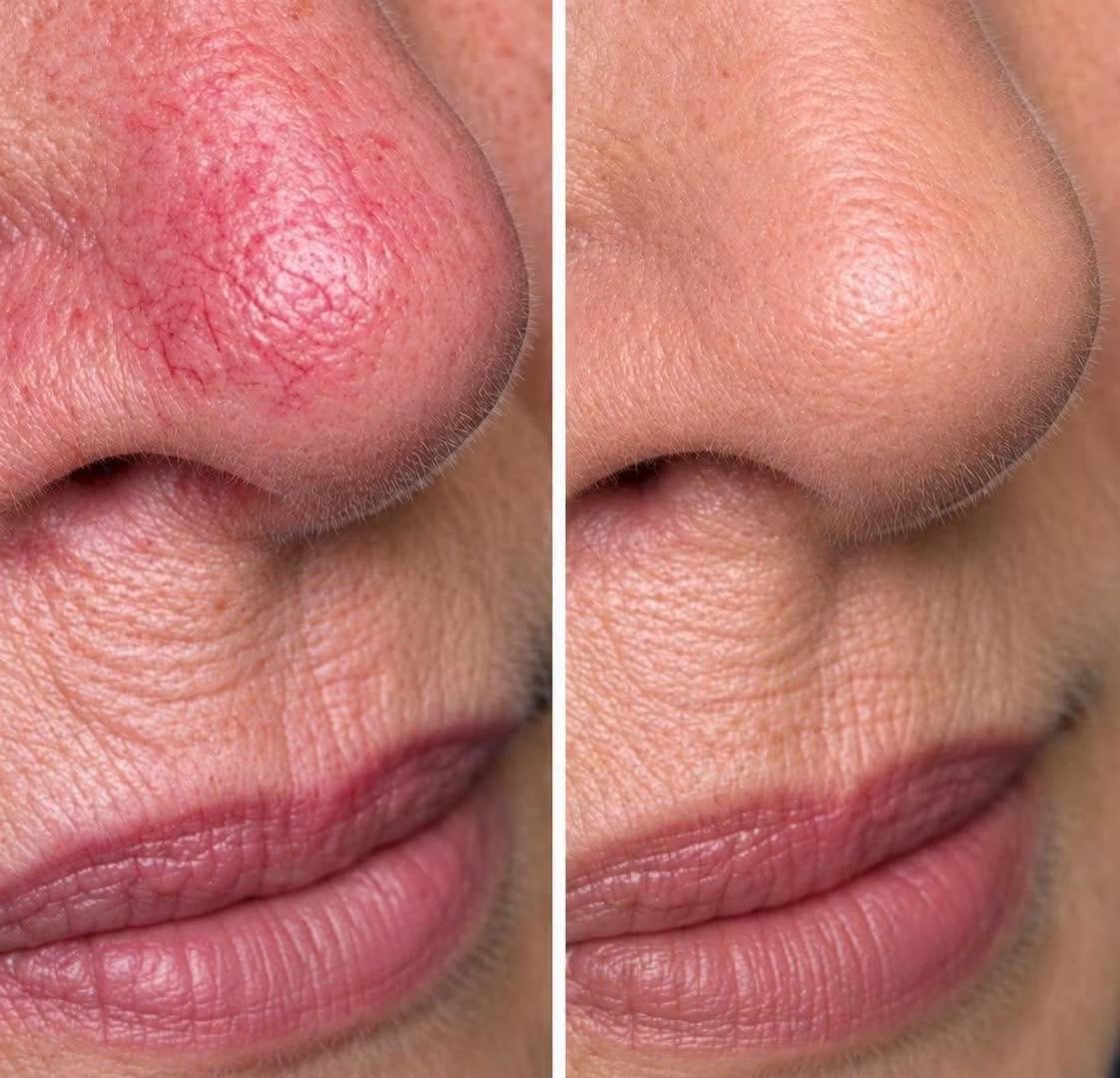
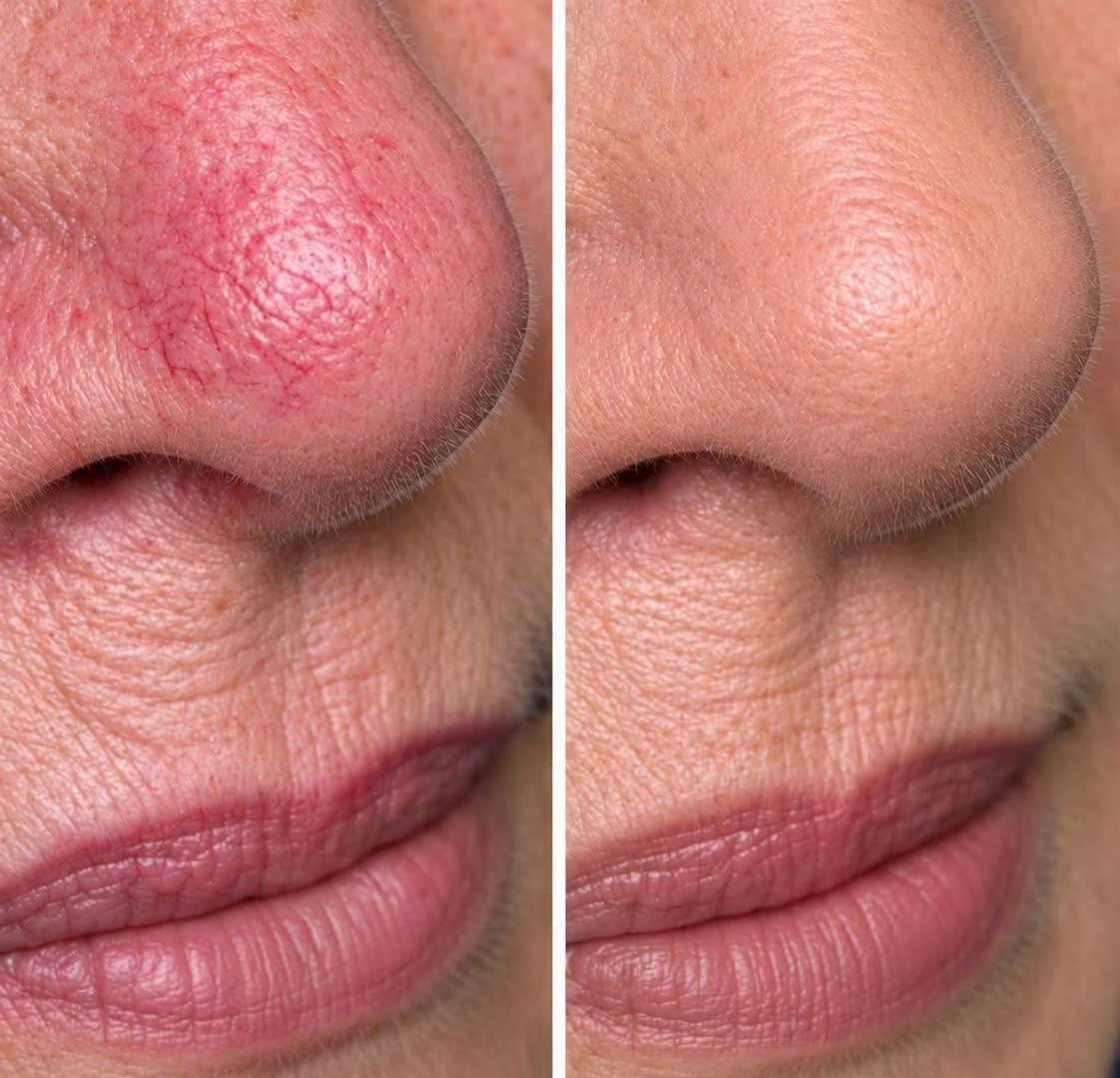
These Are the First Symptoms of Rosacea: Recognizing the Early Signs on Your Nose
If you notice persistent redness on your nose or cheeks that does not go away, or if you develop visible blood vessels or acne-like bumps, it is a good idea to see a doctor. Early diagnosis and treatment can help manage symptoms and prevent the condition from progressing to more severe stages.
Conclusion
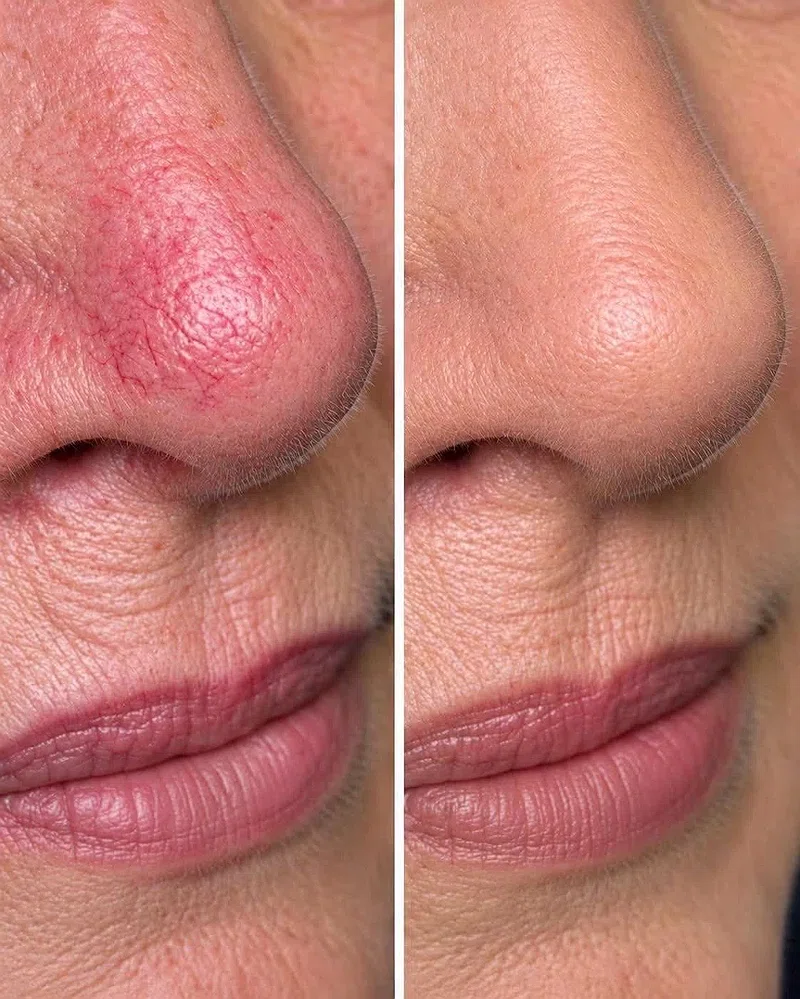
The redness and visible blood vessels shown in the image are classic early signs of rosacea, a common and manageable skin condition. While it cannot be cured, a combination of medical treatment and trigger avoidance can significantly reduce symptoms and improve the appearance of the skin. If you recognize these signs on yourself or someone you know, consulting a healthcare provider is the first step toward getting the condition under control.
Frequently Asked Questions
Is rosacea contagious? No. Rosacea is not contagious and cannot be spread from person to person. It is also not caused by poor hygiene.
Can rosacea be cured? There is no cure for rosacea, but treatment can help control the symptoms and keep the condition from getting worse.
What is the best way to treat visible blood vessels on the nose? Visible blood vessels can be treated with laser therapy or intense pulsed light (IPL) treatments, which target and reduce the appearance of dilated vessels.
Does rosacea only affect the nose? No. While the nose is commonly affected, rosacea can also cause redness and symptoms on the cheeks, chin, forehead, and even the eyes.
Can rosacea cause the nose to become enlarged? In some cases, especially in men, long-term untreated rosacea can lead to a condition called rhinophyma, where the skin on the nose thickens and the nose appears larger and bumpy.