Those Two Dimples on Your Lower Back: What They Really Mean (And What They Don’t)
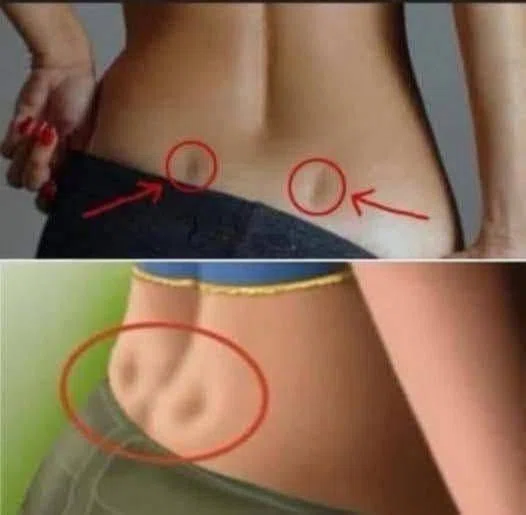
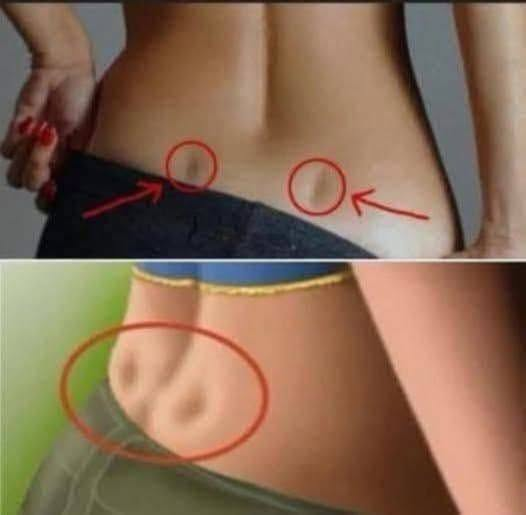
The image of a woman’s lower back with two distinct indentations circled in red has sparked a wave of curiosity and, frankly, a lot of myths. The caption, teasing that having these holes means “you don’t…” playfully taps into the internet’s fascination with physical quirks. These indentations are incredibly common, yet they are frequently misunderstood. Are they a sign of a specific health condition? A mark of beauty? Or just a random anatomical feature? The truth is that these “holes” are known as Dimples of Venus (or fossae lumbales laterales), and they are a completely normal, harmless anatomical feature. However, understanding what they are—and what they are not—is key to separating fact from viral fiction.
What Are the Dimples of Venus?
The Dimples of Venus are the medical term for the two symmetrical indentations located on the lower back, just above the buttocks. They are caused by the underlying anatomy of the pelvis. Specifically, they occur where the posterior superior iliac spine (a bony prominence of the pelvis) meets the skin and the ligaments that connect the sacrum to the ilium.
Because these dimples are formed by the structure of the bones and ligaments beneath the skin, they are essentially a genetic trait. You are either born with them or you are not. They are most prominent in people who have a lower percentage of body fat and well-developed muscles in the gluteal and lower back region, which is why they are often associated with a fit physique.
The Myth: Do They Mean You Are a Virgin?
The most persistent and absurd myth surrounding the Dimples of Venus is the claim that they are a sign of virginity. In some online forums and old wives’ tales, these dimples are referred to as “virgin dimples.”
This is completely false. There is absolutely no anatomical or medical connection between the presence of these dimples and a person’s sexual history. The shape of your lower back is determined by your bone structure, your genetics, and your body composition—nothing else. The myth likely persists because the dimples are sometimes considered aesthetically pleasing or “cute,” leading to bizarre folklore. It is important to dismiss this myth, as it is both scientifically baseless and socially harmful.
The Myth: Are They a Sign of Good Health or Fertility?
Another popular belief is that the Dimples of Venus are a sign of good health, fertility, or a “perfect” body. Historically, in some cultures, these dimples were celebrated as a mark of beauty and were even associated with the goddess Venus (hence the name).
While it is true that the dimples are often more visible on people who are physically fit and have low body fat, they are not a medical indicator of health or fertility. A person with a higher body fat percentage might not have visible dimples, but they can be perfectly healthy. Conversely, a person with visible dimples can still have underlying health issues. The dimples are simply a structural feature, not a diagnostic tool.
The Myth: Can You Get Them Through Exercise?
Many people who do not have the Dimples of Venus wonder if they can “earn” them through diet and exercise. The answer is no. Because the dimples are anchored to the bone structure of the pelvis, you cannot create them if you are not genetically predisposed to have them.
However, you can make existing dimples more prominent by reducing overall body fat and strengthening the muscles in the lower back and glutes. Exercises like squats, deadlifts, and glute bridges can enhance the definition of the area, but they will not create the indentations from scratch if the underlying bone structure does not support them.
When Should You Be Concerned?
For the vast majority of people, the Dimples of Venus are completely harmless. However, if you notice a sudden change in the appearance of your lower back, you should consult a doctor.
You should seek medical attention if:
You develop a new dimple or indentation that was not there before.
The dimple is accompanied by pain, swelling, or redness.
The dimple is located in an area that is not symmetrical or is unusually deep.
You experience numbness or tingling in the lower back or legs.
In rare cases, a sudden indentation on the lower back could be a sign of a spinal issue or a problem with the sacroiliac joint. But for the millions of people who have had these dimples since childhood, they are simply a unique part of their anatomy.
Conclusion
The two “holes” in the lower back are the Dimples of Venus, a normal and often admired anatomical feature. They are a result of genetics and bone structure, not a sign of virginity, fertility, or a specific health status. While they are more visible on people with lower body fat, they cannot be created through exercise alone. The next time you see a viral post claiming that these dimples mean something mystical or medical, you can rest assured knowing the truth: they are just a beautiful, harmless quirk of human anatomy.
Frequently Asked Questions
What are the two dimples on the lower back called? They are medically known as the Dimples of Venus or fossae lumbales laterales. They are indentations located just above the buttocks.
Do the Dimples of Venus mean you are a virgin? No. This is a complete myth. There is no connection between the dimples and sexual history. They are determined by genetics and bone structure.
Can you get Dimples of Venus through exercise? No, you cannot create them if you are not born with them. However, you can make them more visible by reducing body fat and strengthening the muscles in the lower back and glutes.
Are Dimples of Venus a sign of good health? They are not a medical indicator of health. They are simply a structural feature of the body. While they are more common in fit individuals, they do not guarantee good health.
When should I be worried about a dimple on my lower back? If you notice a new, sudden indentation that is accompanied by pain, swelling, or other symptoms, you should consult a doctor to rule out any underlying issues.