What Is Your Tongue Telling You About Your Health?
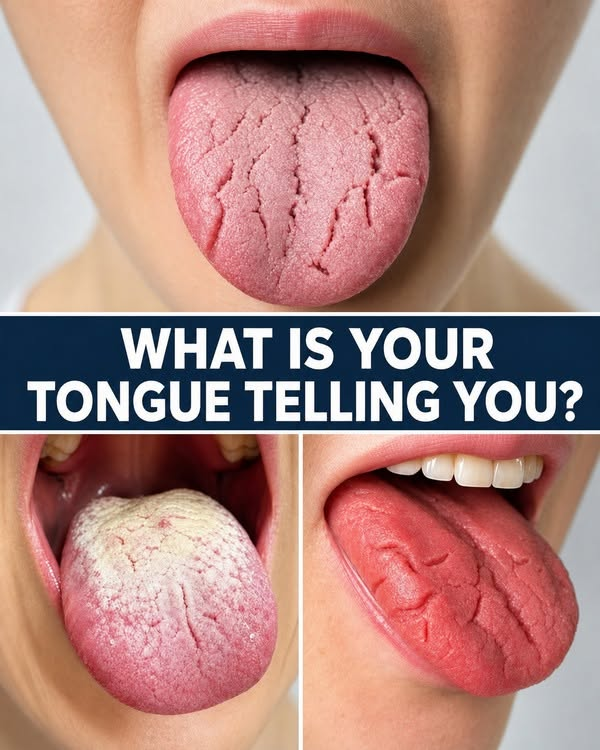
The image above shows three different photos of tongues. The top photo shows a tongue with deep cracks. The bottom left shows a tongue with a white coating. The bottom right shows a tongue with a reddish, textured surface. The text asks a simple question: what is your tongue telling you? The tongue can be a useful indicator of overall health. Changes in its appearance, texture, or color can sometimes signal underlying issues. However, it is important to remember that self-diagnosis is not reliable. Always consult a healthcare professional for an accurate assessment.
What a Healthy Tongue Looks Like
A healthy tongue is typically pink, moist, and covered with small bumps called papillae. It should be free of cracks, sores, and unusual coatings. The papillae give the tongue its slightly rough texture. They help with tasting and swallowing. A healthy tongue should also be able to move freely and without pain.
Common Tongue Conditions
Several common conditions can affect the tongue. A white coating on the tongue can be caused by a buildup of bacteria, dead cells, and debris. It can be a sign of poor oral hygiene, dehydration, or a fungal infection like oral thrush. Deep cracks in the tongue, known as fissured tongue, are often harmless. They can be present from birth or develop over time. A red, smooth tongue can be a sign of a vitamin deficiency, such as vitamin B12 or iron. It can also be caused by certain medications or medical conditions.
When to See a Doctor
You should see a doctor if you notice persistent changes in your tongue. These include a white or red patch that does not go away, pain, swelling, bleeding, or difficulty moving your tongue. These can be signs of a more serious condition that requires medical attention. Early diagnosis and treatment are important.
Everyday Tips for Tongue Health
To keep your tongue healthy, practice good oral hygiene. Brush your teeth twice a day and floss daily. Gently brush your tongue with a toothbrush or use a tongue scraper to remove bacteria and debris. Stay hydrated. Avoid smoking and excessive alcohol consumption. Eat a balanced diet rich in vitamins and minerals. And visit your dentist regularly for checkups.
The Bottom Line
The tongue can provide clues about your health. But it is not a substitute for professional medical advice. If you notice any concerning changes, see a doctor. Do not rely on social media images for a diagnosis. Your health is important, and a professional can provide the care you need.
Have you ever noticed changes in your tongue? Share your experience in the comments below.