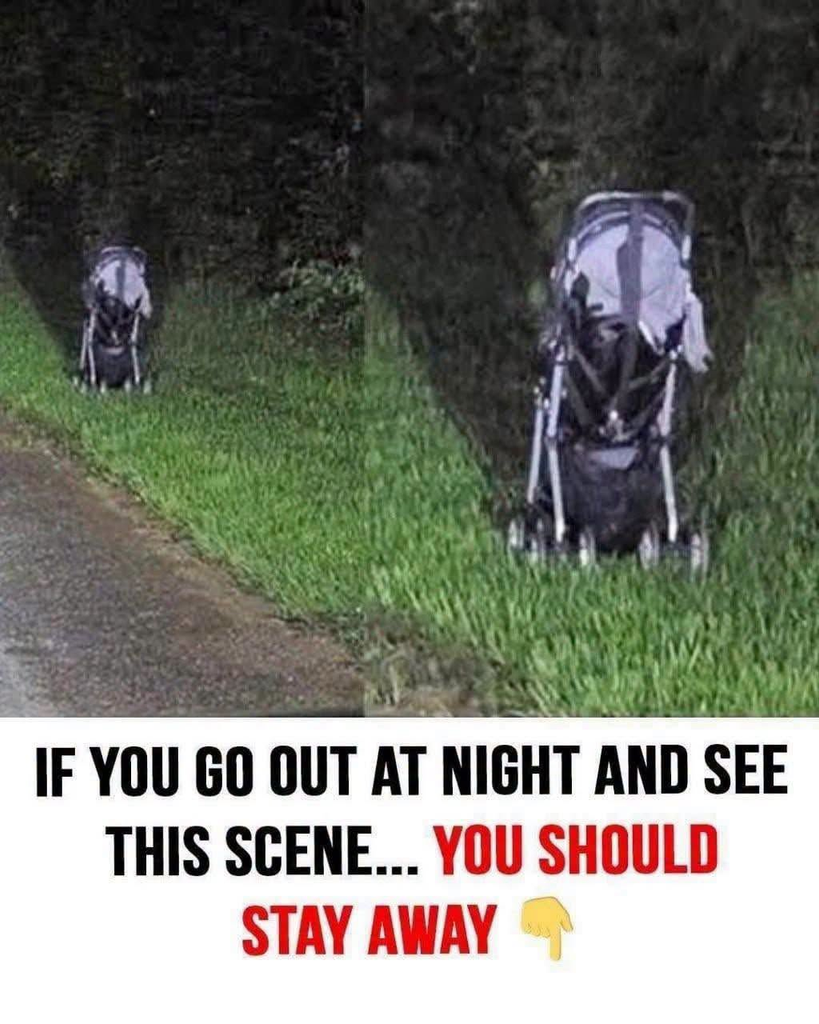
If You Go Out at Night and See This Scene, You Should Stay Away: The Truth Behind the Empty Strollers
When you encounter a viral image or post that warns you to “stay away” from something, ask yourself a few questions:
Who is the source? Is it an official safety organization, or an anonymous social media account?
Is the claim specific? Does it explain what the threat is and why it is dangerous, or does it rely on vague insinuation?
Is there corroborating evidence? Have reputable news outlets or authorities reported on this threat?
What is the emotional tone? Is the post designed to inform you, or to frighten you into sharing it?
In the case of the empty stroller image, the answers point clearly toward a manufactured scare. The source is unidentified, the claim is vague, there is no corroborating evidence, and the emotional tone is one of deliberate unease.
Conclusion
The image of empty strollers by a dark road is a piece of viral horror content, not a genuine safety warning. It is designed to frighten, engage, and spread, and it succeeds because it taps into primal anxieties about vulnerability and the unknown. While it is always wise to be cautious when walking alone at night, the specific threat implied by this image is not real. The best defense against this kind of manipulation is critical thinking: questioning the source, demanding specificity, and refusing to let fear dictate behavior. Real safety comes from awareness and preparation, not from viral warnings about abandoned strollers.
Frequently Asked Questions
Is it dangerous to see empty strollers at night?
No. Empty strollers are not a recognized threat. They are more likely to be discarded items, pranks, or staged images for social media. There is no documented criminal tactic involving abandoned strollers.
What should I do if I see something suspicious at night?
If you see something that genuinely concerns you, move to a safe, well-lit area and contact local authorities. Do not approach the object or situation yourself. Trust your instincts, but base your actions on real observations, not on viral warnings.
Why do these images go viral?
Fear and curiosity are powerful drivers of social media engagement. Images that are unsettling but ambiguous encourage people to share them, comment on them, and ask questions, all of which increase visibility. The content is designed to manipulate these instincts.
How can I tell if a viral safety warning is real?
Check the source. Official warnings come from police, government agencies, or established news outlets. Look for specific, actionable information. Be skeptical of vague claims and emotionally manipulative language.
What are the real risks of walking at night?
The real risks include poor visibility, isolation, uneven terrain, and encounters with people who may have ill intentions. Taking sensible precautions—walking in well-lit areas, staying aware, and telling someone your plans—is more effective than worrying about viral horror scenarios.