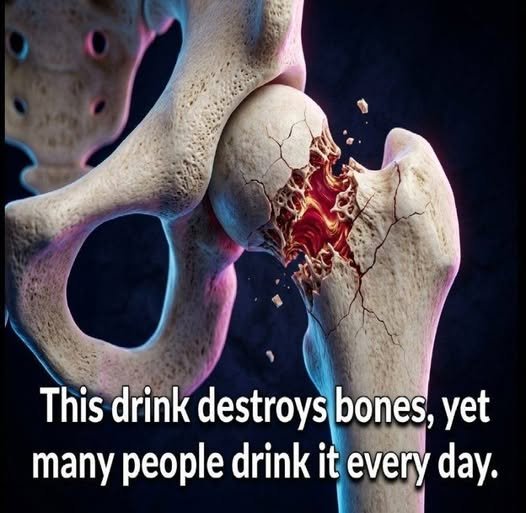
The Five Drinks That Are Most Harmful to Your Bones, According to Health Experts
Carbonated soft drinks, particularly cola-type beverages, have the most consistent body of evidence linking them to poor bone health. A cross-sectional study involving 36,740 participants found that people who drank carbonated beverages three or more times per week had a higher fracture risk than those who never drank them .
The mechanisms are twofold. First, many carbonated drinks contain phosphoric acid, which can disrupt the body’s calcium-phosphorus balance. When phosphorus intake is excessive, the kidneys may respond by pulling calcium from the body to maintain equilibrium, leading to passive calcium loss . Second, the high sugar content can trigger osmotic diuresis—increased urination—which carries calcium out of the body along with excess fluid . Long-term high sugar intake may also promote mild inflammation that suppresses osteoblast activity, the cells responsible for building new bone.
The evidence is particularly strong for colas. A 2006 study from the Framingham Osteoporosis Study found that regular cola intake was associated with lower bone mineral density in older women, while non-cola carbonated beverages did not show the same association . A larger 2014 study following over 73,000 women for 30 years found that those who drank more than 10 sodas per week had a 42 percent increased risk of hip fracture compared with non-drinkers . Notably, the increased risk was seen in both caffeinated and non-caffeinated sodas, suggesting that factors beyond caffeine—likely the phosphoric acid and the displacement of calcium-rich beverages like milk—are at play.