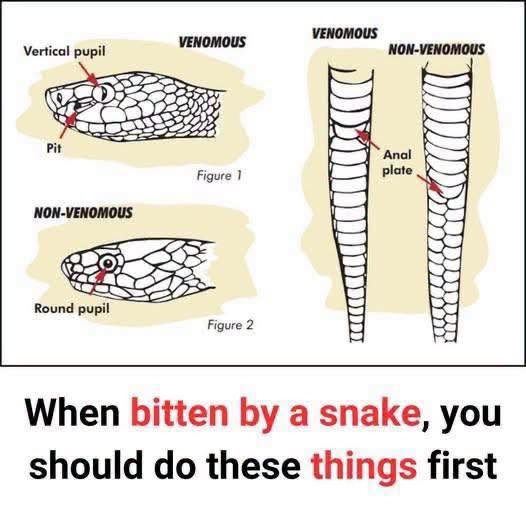
The image above shows illustrations comparing venomous and non-venomous snakes. It highlights features such as pupil shape and the presence of a pit. The text says that if you are bitten by a snake, you should do certain things first. Snake bites are a serious medical emergency. Knowing how to identify a snake and what steps to take can make a significant difference in the outcome.
Identifying a Snake
The illustrations show two common ways to distinguish venomous from non-venomous snakes. Venomous snakes often have vertical, slit-like pupils, while non-venomous snakes typically have round pupils. Venomous snakes may also have a heat-sensing pit between the eye and the nostril. However, these are general guidelines. Some venomous snakes have round pupils, and some non-venomous snakes can mimic venomous ones. It is always best to treat any snake bite as a medical emergency.
First Steps After a Bite
If you or someone else is bitten by a snake, follow these critical steps immediately.
First, move away from the snake to a safe distance. Do not try to catch or kill the snake, as this can lead to additional bites. Try to remember the snake’s color, shape, and size to help medical professionals identify it.
Second, keep the person calm and still. Panic and movement can cause the venom to spread more quickly through the body. Have the person lie down and keep the bitten limb at or below the level of the heart.
Third, remove any tight clothing or jewelry near the bite area. Swelling can occur quickly, and these items may restrict blood flow.
Fourth, do not attempt to suck out the venom, cut the wound, or apply a tourniquet. These outdated methods can cause more harm than good.
Fifth, call for emergency medical help immediately. Do not drive yourself to the hospital if you are the one who was bitten.
What Not to Do
There are many myths about treating snake bites. Do not apply ice or heat to the wound. Do not drink alcohol or caffeine. Do not try to catch the snake. These actions can worsen the situation.
Prevention Tips
The best way to avoid snake bites is to be aware of your surroundings. Wear closed-toe shoes and long pants when hiking or walking in tall grass. Avoid reaching into dark crevices or under rocks. If you see a snake, back away slowly and give it plenty of space.
The Bottom Line
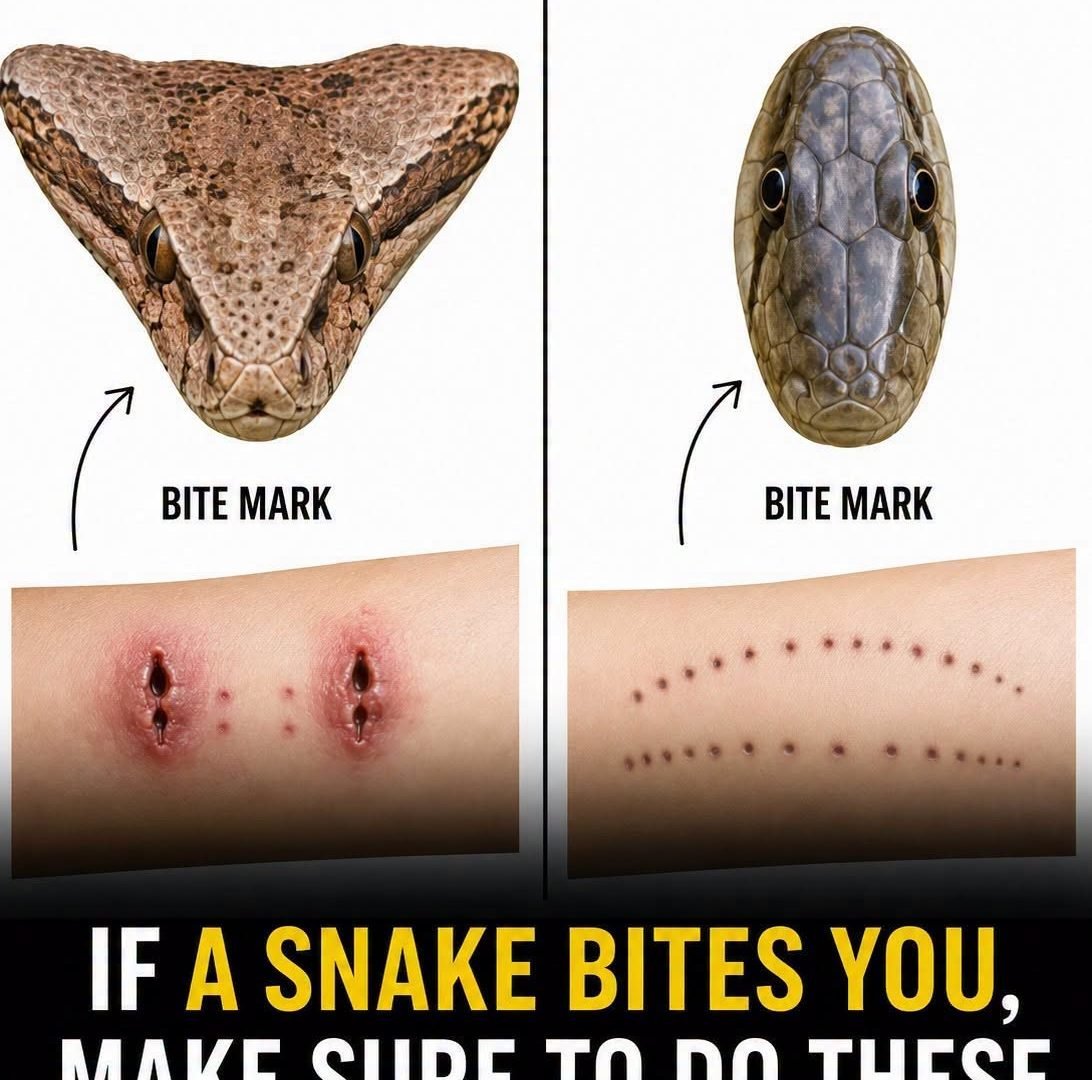
Snake bites require immediate medical attention. Knowing the difference between venomous and non-venomous bites can help you react appropriately. Always prioritize safety, stay calm, and seek professional help.